Algeria
 Egypt
 Libya
 Morocco
 Sudan
 Tunisia
 Benin
 Burkina Faso
 Cabo Verde
 Côte d'Ivoire
 Ghana
 Guinea-Bissau
 Liberia
 Mali
 Mauritania
 Niger
 Nigeria
 Senegal
 Sierra Leone
 The Gambia
 Togo
 Cameroon
 Central African Republic
 Chad
 DR Congo
 Equatorial Guinea
 Gabon
 Republic of the Congo
 São Tomé and Príncipe
 Burundi
 Comoros
 Djibouti
 Eritrea
 Ethiopia
 Kenya
 Madagascar
 Malawi
 Mauritius
 Mozambique
 Rwanda
 Seychelles
 Somalia
 South Sudan
 Tanzania
 Uganda
 Angola
 Botswana
 Eswatini
 Lesotho
 Namibia
 South Africa
 Zambia
 Zimbabwe
In Guinea, the Simandou project is entering a phase in which rail performance will matter as much as ore extraction. The rail corridor is to link deposits in the country’s south-east to the port of Morebaya, while creating sustainable transport capacity for freight and, eventually, passengers.
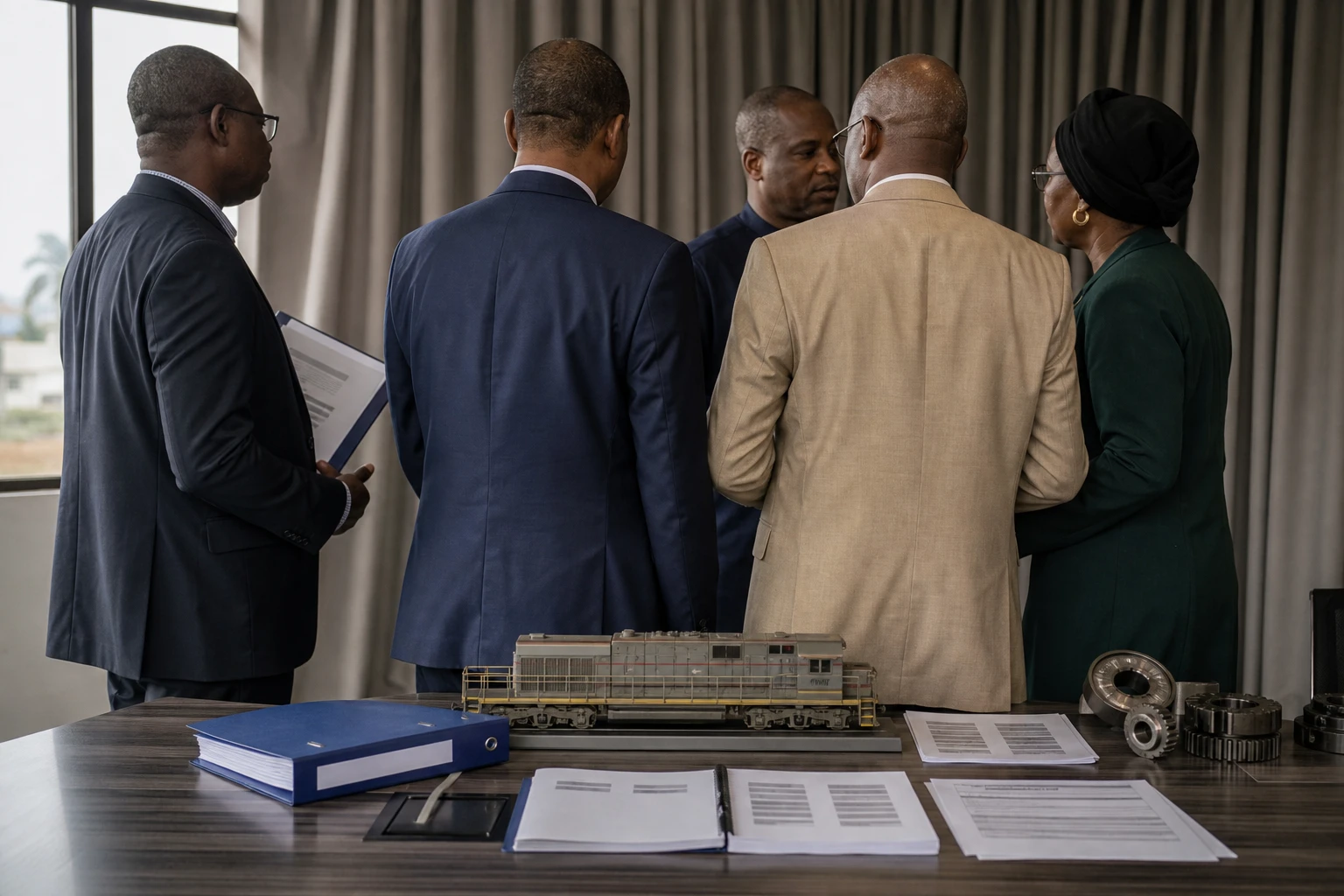
On 21 September 2026, in New York, the Compagnie du TransGuinéen (CTG) signed a rail services agreement worth more than $700 million with US equipment manufacturer Wabtec. The contract covers the operation and maintenance of the locomotive fleet assigned to the Simandou project. Wabtec describes it as its largest services contract signed in Africa.
A contract extending beyond maintenance
The agreement goes beyond routine repairs. It is to cover locomotive maintenance, spare-parts management, logistical support, remote diagnostics and team training. A component focused on developing local skills is also planned in Guinea, according to information provided by the project partners.
The locomotives concerned belong to Wabtec’s Evolution Series. Some models produce 4,500 horsepower and are designed for heavy haulage over long distances. Their availability will be crucial to transporting iron ore from Simandou to the coast.
Including locomotive orders placed in 2024, the cumulative value of Wabtec’s commitments to the project now exceeds $1.2 billion. This estimate was announced by the US company and reported by several Guinean media outlets, including Guinéenews.
The first locomotive destined for the corridor was unveiled in India in May 2025. It was part of an order placed by SimFer, the joint venture bringing together the Guinean state, Rio Tinto and Chalco Iron Ore Holdings. The Winning Consortium Simandou has also signed contracts to acquire Wabtec locomotives.
Rail, the backbone of the Simandou project
The TransGuinean is to extend for more than 600 kilometres between the Simandou mining area and the port of Morebaya. It is one of the main infrastructure components associated with the development of the mountain range’s iron ore blocks.
CTG is responsible for operating the rail and port infrastructure co-developed by the Guinean state, SimFer and Winning Consortium Simandou. The line will primarily serve mining transport needs. However, it is also designed to carry non-mining freight and passenger services.
This dual purpose gives the project national significance. For mining companies, a reliable railway network should reduce the risk of logistical disruption. For the Guinean state, the challenge is to ensure that infrastructure built around ore does not operate as a mere export corridor without wider benefits for the areas it crosses.
Expected effects will not be the same everywhere. Areas near the mines and port facilities should benefit directly from jobs in construction, maintenance and rail operations. Towns along the route could gain from new exchanges. However, these benefits will depend on CTG and its partners’ ability to develop local suppliers and maintain services accessible beyond the needs of mining companies.
Local training at the heart of expectations
Skills transfer is one of the most sensitive aspects of the contract. In January 2025, Guinea’s presidency had already said that Wabtec was to help establish a training centre dedicated to locomotive maintenance. The stated aim was to strengthen local content and prepare Guinean technicians to work on TransGuinean equipment.
This aspect will be closely watched in Conakry and in the regions concerned. A long-term maintenance contract can create skilled jobs, but it can also leave the country heavily dependent on outside expertise if the most specialised functions remain outsourced. The question is therefore not only how many jobs are created. It also concerns the extent to which Guinean workers are entrusted with greater responsibilities.
Maintenance, spare parts and remote diagnostics form an industrial ecosystem in their own right. If they are progressively established in Guinea, they can support local businesses in mechanical engineering, electronics, logistics and vocational training. Otherwise, a significant share of the project’s value will continue to flow outside the country.
Diversifying partners, while demanding transparency
The partnership with Wabtec illustrates Guinea’s intention to broaden its range of partners in a project dominated by Chinese, Singaporean, Australian and Guinean mining interests. This diversification gives Conakry greater room to negotiate over equipment, services and technical standards.
It does not, however, remove the project’s governance challenges. The sums committed are considerable, and the contracts run for more than a decade. Publishing the respective obligations, oversight mechanisms and local-content commitments will therefore be essential to assessing the investment’s actual benefits.
The choice of a US supplier also comes amid international competition over strategic minerals. Simandou’s iron ore attracts mining groups and equipment manufacturers because it is considered a high-quality resource. Guinea’s challenge is to turn this global interest into useful infrastructure, well-managed public revenues and lasting industrial capacity.
A project watched beyond Guinea’s borders
The TransGuinean primarily concerns Guinea, but its effects could be felt across West Africa. A new link between mining areas and the Atlantic coast could reshape export routes, boost port activity and strengthen trade with neighbouring countries.
The regional dimension also arises in the context of ECOWAS, the economic community comprising several West African countries. Although the corridor remains a national project, its operation will have implications for the movement of goods, transport standards and the competitiveness of infrastructure across the region.
The next stage will be operational. The timetable for locomotive deliveries, the phased commissioning of the line, team training and CTG’s ability to provide a reliable service will all need to be monitored. For Guineans, the success of the TransGuinean will not be measured solely by the tonnage of ore exported. It will also be judged by the place given to local skills, the areas along the route and non-mining uses of the railway.