Algeria
 Egypt
 Libya
 Morocco
 Sudan
 Tunisia
 Benin
 Burkina Faso
 Cabo Verde
 Côte d'Ivoire
 Ghana
 Guinea-Bissau
 Liberia
 Mali
 Mauritania
 Niger
 Nigeria
 Senegal
 Sierra Leone
 The Gambia
 Togo
 Cameroon
 Central African Republic
 Chad
 DR Congo
 Equatorial Guinea
 Gabon
 Republic of the Congo
 São Tomé and Príncipe
 Burundi
 Comoros
 Djibouti
 Eritrea
 Ethiopia
 Kenya
 Madagascar
 Malawi
 Mauritius
 Mozambique
 Rwanda
 Seychelles
 Somalia
 South Sudan
 Tanzania
 Uganda
 Angola
 Botswana
 Eswatini
 Lesotho
 Namibia
 South Africa
 Zambia
 Zimbabwe
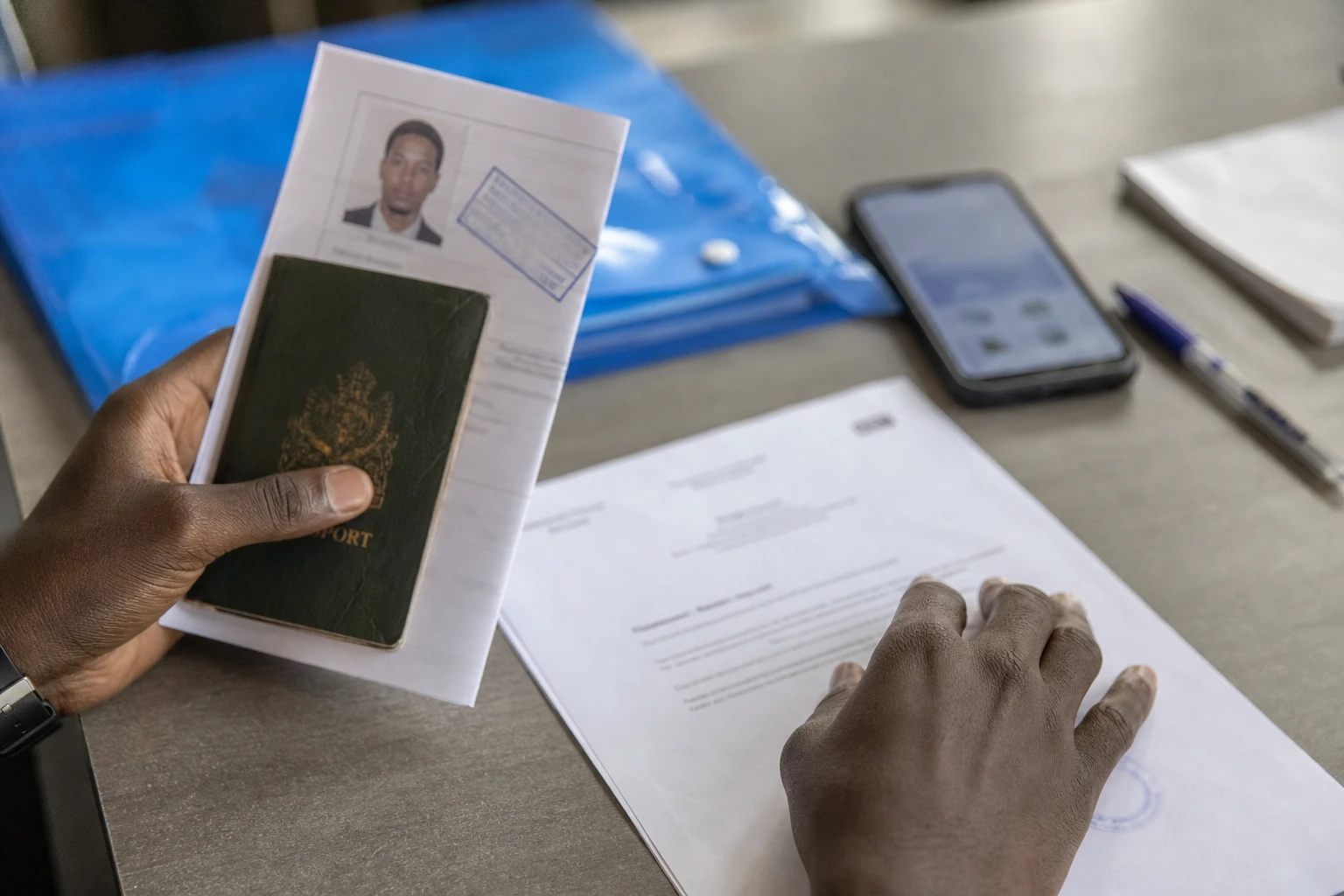
Term begins at the visa counter too
For a Guinean student admitted to study in France, the difficulties do not always begin in the lecture hall. They can arise much earlier, when putting together a visa application, getting accommodation approved and keeping to a tight timetable ahead of the start of the academic year. In Guinea, applicants say they have been facing for several weeks what they consider an inconsistent requirement: proving their accommodation with a certificate provided by someone of the same sex as themselves. This alleged practice has put study plans on hold and fuelled a sense of injustice among young people who had already secured admission.
The issue goes beyond a simple formality. It concerns student mobility, an important pathway between Conakry and French universities. It also affects confidence in the administrative process, from the “Études en France” procedure to the submission of a visa application. Yet the official rules published for Guinea mainly state that students must provide a temporary or permanent address for their first three months of stay, together with accommodation documents appropriate to the type of lodging. None of the public rules consulted mentions a requirement based on the sex of the host.
What the rules say, and what students allege
The process set out on the official websites consulted is straightforward. Campus France Guinea says students must first obtain their pre-enrolment certificate and then make a visa appointment. Its page on visa applications also warns against buying fake financial or accommodation documents. France-Visas, for its part, requires a temporary address for the first three months of stay, or a permanent address if accommodation has already been found. Again, there is no mention of a condition linked to the sex of the person providing accommodation.
It is precisely this discrepancy that is fuelling the protest. A petition launched by Guinean students says applications are being blocked because the accommodation certificate was not provided by someone of the same sex as the applicant. The organisers say they have collected several hundred signatures and are preparing to refer the matter to France’s Defender of Rights. Their complaint is clear: they see the practice as discriminatory, as well as a practical obstacle to starting the academic year, since every week lost reduces the chances of obtaining a visa in time.
Accounts gathered from students give the same impression of a recent blockage. Some say they have repeatedly been refused an appointment since late July or early August. Others say the problem did not arise for previous cohorts. At this stage, these remain applicants’ accounts, not positions officially confirmed in public. But they are enough to create tension in Conakry, where each visa application can determine whether a student leaves or postpones their studies for an entire year.
An administrative issue becomes a social one
The case concerns a very practical matter: accommodation. In France, proof of accommodation is not an abstract formality. It helps secure the first months of a stay and provides an arrival address. France-Visas requires this document when a student plans to stay with a private individual, while Campus France notes that accommodation may be in a residence, with a host or in a private rental. The Guinean students concerned say they do not understand why a certificate signed by a sister, brother or other relative should not be sufficient, provided it meets the usual criteria.
The debate is all the more sensitive because the cost of moving to France has risen. France-Visas says that, for applications submitted from 1 August 2026, proof of financial resources must show a minimum of €877.50 per month for long-stay study visas. Meanwhile, Campus France Guinea notes that a student visa covers only the first phase of a stay, with administrative validation on arrival and residence permit procedures to follow. For many Guinean families, every additional document already costs money and time. Adding a requirement that is difficult to understand could therefore derail a study plan.
The issue also has legal and symbolic significance. In France, international students are allowed to work within certain limits during their studies, and the visa process is based on common rules, not distinctions between women and men in proof of accommodation. If the practice alleged in Guinea is confirmed, it would raise a simple question: why should a student’s application depend on a criterion absent from the public rules? In a country where going abroad remains an important educational strategy, the answer matters both to applicants and to the families financing their studies.
What the case says about African student mobility
Beyond Guinea, the case exposes a vulnerability shared by many African students: dependence on procedures that can sometimes be opaque, where the slightest local interpretation can turn a technical rule into a social obstacle. Guinea is part of the wider “Études en France” system, which covers several African countries and relies on platforms, service providers and consulates. When a decision is not clearly explained, mistrust can grow quickly, and rumours fill the vacuum left by the administration.
In Guinea, the case comes at a time when ties with France remain close in higher education, while also being closely watched by students who hope to return and put their training to use in their country. In Conakry, the question is therefore not only whether to leave to study. It is also about the administrative conditions under which that departure takes place, and how fair and transparent they are. The credibility of a mobility system that is supposed to facilitate study, rather than hinder it, is at stake.
If the protest continues, the key issue will be whether the authorities concerned publicly clarify the rule before the start of the academic year gets fully under way, and whether blocked applications can be reviewed without discriminatory treatment. In West Africa, where student mobility to France remains significant, this kind of precedent could quickly extend beyond Guinea and become a test of good administration for the entire Campus France system.