Algeria
 Egypt
 Libya
 Morocco
 Sudan
 Tunisia
 Benin
 Burkina Faso
 Cabo Verde
 Côte d'Ivoire
 Ghana
 Guinea-Bissau
 Liberia
 Mali
 Mauritania
 Niger
 Nigeria
 Senegal
 Sierra Leone
 The Gambia
 Togo
 Cameroon
 Central African Republic
 Chad
 DR Congo
 Equatorial Guinea
 Gabon
 Republic of the Congo
 São Tomé and Príncipe
 Burundi
 Comoros
 Djibouti
 Eritrea
 Ethiopia
 Kenya
 Madagascar
 Malawi
 Mauritius
 Mozambique
 Rwanda
 Seychelles
 Somalia
 South Sudan
 Tanzania
 Uganda
 Angola
 Botswana
 Eswatini
 Lesotho
 Namibia
 South Africa
 Zambia
 Zimbabwe
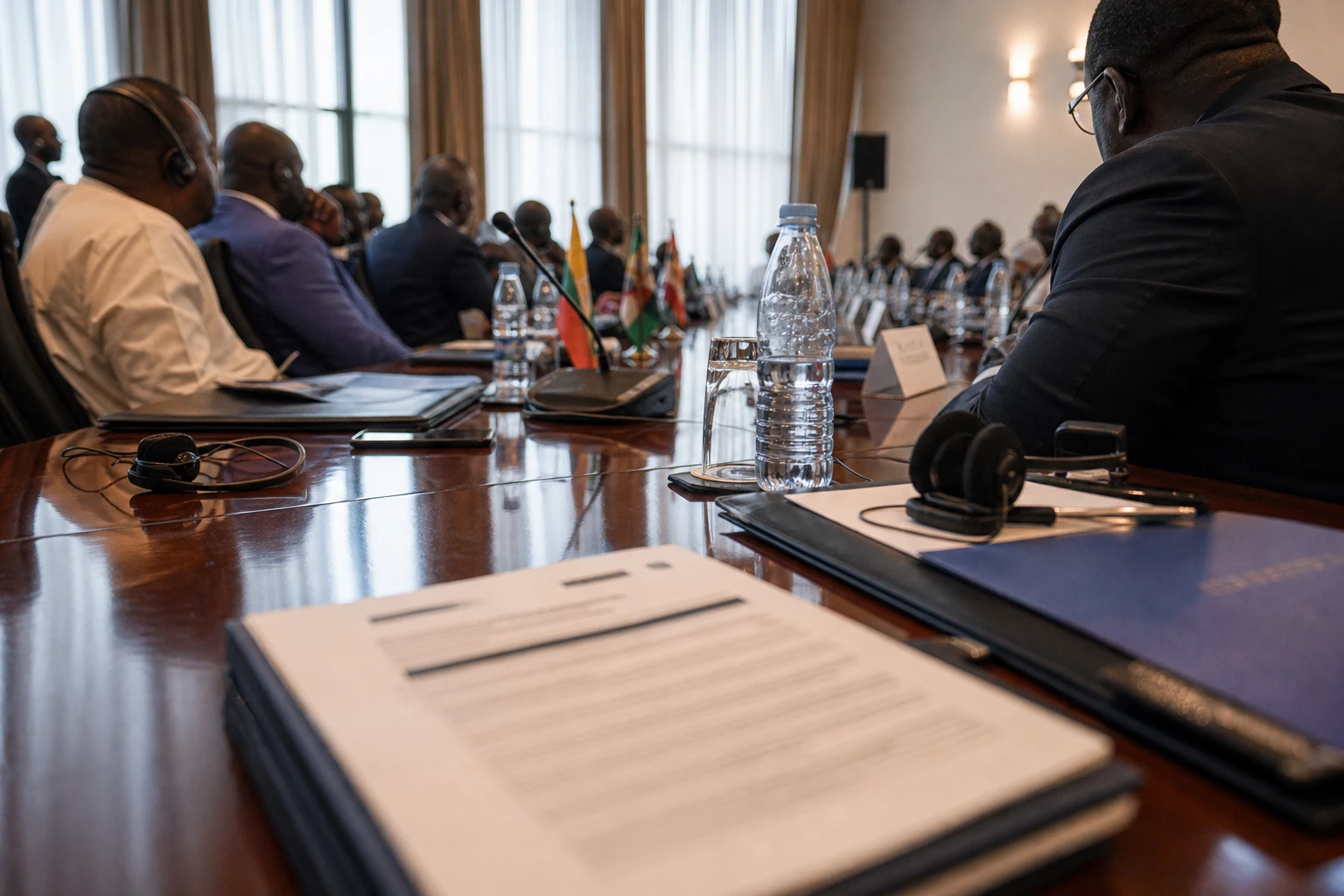
A road that represents more than a construction project
Between Coyah, Kindia and Mamou, the road does more than connect three towns. It also links the port, consumer centres, production zones and the country’s interior. In Guinea, every kilometre upgraded affects transport costs, the movement of goods and the state’s ability to deliver on its promise to connect isolated areas.
The launch of the first phase of the Coyah-Kindia-Mamou highway is part of this approach. The project covers 170 km and is intended to form part of a planned 855-km southern corridor, which will run to the Ivorian border, passing through Faranah, Kissidougou, Kérouané, Beyla and Sinko, among other places. The authorities present this route as one of the links in the transformation envisaged by the Simandou 2040 programme, which puts infrastructure at the heart of the national strategy.
This is no trivial choice. Urban pressure around Conakry is increasing. Further afield, mining and agricultural regions need more reliable connections. And in a transit country such as Guinea, a well-maintained road can make the difference between a connected territory and a region that remains distant from markets. The project therefore affects logistics as much as the daily lives of Guineans.
Reconnecting the economic geography from the coast to the interior
Guinea is moving ahead against a backdrop of a still-fragile road network. Data cited by the authorities and by World Bank analyses describe an extensive but unevenly maintained network, with only a small proportion of roads in good condition and major disruptions during the rainy season. This is a longstanding issue: the challenge is not just to build, but to ensure roads last.
In this context, the state has made a series of announcements and signed contracts in recent months for several major routes. On 1 April 2025, for example, the presidency announced reconstruction contracts for Mamou-Faranah and Mamou-Labé, two strategic links for Middle Guinea and the centre of the country. This sequence points to a clear approach: make the road network an instrument of territorial integration, rather than simply a public works issue.
The new Coyah-Kindia-Mamou section also has regional significance. To the west, it connects the economic capital with the rest of the country. To the east, it better prepares trade links to border areas and, beyond them, to the West African corridor. Within ECOWAS, a road of this kind concerns more than Guinea alone: it also affects the speed of trade, freight costs and the competitiveness of local producers against their neighbours in the sub-region.
What a 170-km highway could change
According to the specifications made public, the road is to be built as a dual carriageway with two lanes in each direction, featuring interchanges, automated toll and weigh stations, rest areas and road safety equipment. This design serves two objectives. First, to ease traffic on a heavily used route. Second, to improve load controls, limit premature damage and make journeys safer. The planned model resembles that of modern infrastructure combining traffic flow, monitoring and maintenance funding.
Funding and maintenance, however, remain the real fault lines. In Guinea, road projects rarely fail for lack of intent. More often, they run into problems with land acquisition, compensation, disbursement delays, contractor coordination or post-completion maintenance. That is where the programme’s credibility will be tested. A highway without regular maintenance quickly becomes a costly promise. A well-managed road, by contrast, reduces costs for transport operators, supports traders and improves rural producers’ access to urban centres.
The effects will not be the same for everyone. In Conakry and Greater Conakry, the expected impact will first be measured in journey times and reduced congestion. In the regions along the route, it will be about access to markets, getting agricultural produce to market and greater prospects for mining and tourism activities. For transport operators, the issue will be operating costs. For households, it will be the final price of goods. For the state, the project will be a test of capacity: can it move from announcement to delivery, and then to maintenance?
A test for Simandou 2040 and West Africa
The Coyah-Kindia-Mamou project goes beyond the national context. It illustrates how several West African states are now seeking to link natural resources, logistics corridors and territorial development. In Guinea, the expansion of infrastructure is accompanying mining operations and efforts to diversify the economy. But it must also serve domestic trade, social mobility and cohesion between regions.
At continental level, this project is a reminder of a simple reality: African integration depends as much on roads as on summits. A well-designed road can bring borders closer, cut transport costs and strengthen regional value chains. A poorly maintained road, by contrast, holds back trade and isolates producers. That is why the project is being closely watched beyond Guinea, in a region where ECOWAS has long promoted the movement of goods and people, even as infrastructure has not always kept pace.
What happens next will therefore depend less on the launch ceremony than on the actual pace of construction, transparency over contracts and the ability to maintain the road. If the southern corridor progresses as announced, it could become one of the backbones of mobility in Guinea. If it stalls, it will join the long list of road promises that raised great hopes but did too little to change daily life.