Algeria
 Egypt
 Libya
 Morocco
 Sudan
 Tunisia
 Benin
 Burkina Faso
 Cabo Verde
 Côte d'Ivoire
 Ghana
 Guinea-Bissau
 Liberia
 Mali
 Mauritania
 Niger
 Nigeria
 Senegal
 Sierra Leone
 The Gambia
 Togo
 Cameroon
 Central African Republic
 Chad
 DR Congo
 Equatorial Guinea
 Gabon
 Republic of the Congo
 São Tomé and Príncipe
 Burundi
 Comoros
 Djibouti
 Eritrea
 Ethiopia
 Kenya
 Madagascar
 Malawi
 Mauritius
 Mozambique
 Rwanda
 Seychelles
 Somalia
 South Sudan
 Tanzania
 Uganda
 Angola
 Botswana
 Eswatini
 Lesotho
 Namibia
 South Africa
 Zambia
 Zimbabwe
A contest of bids, but above all a test of credibility
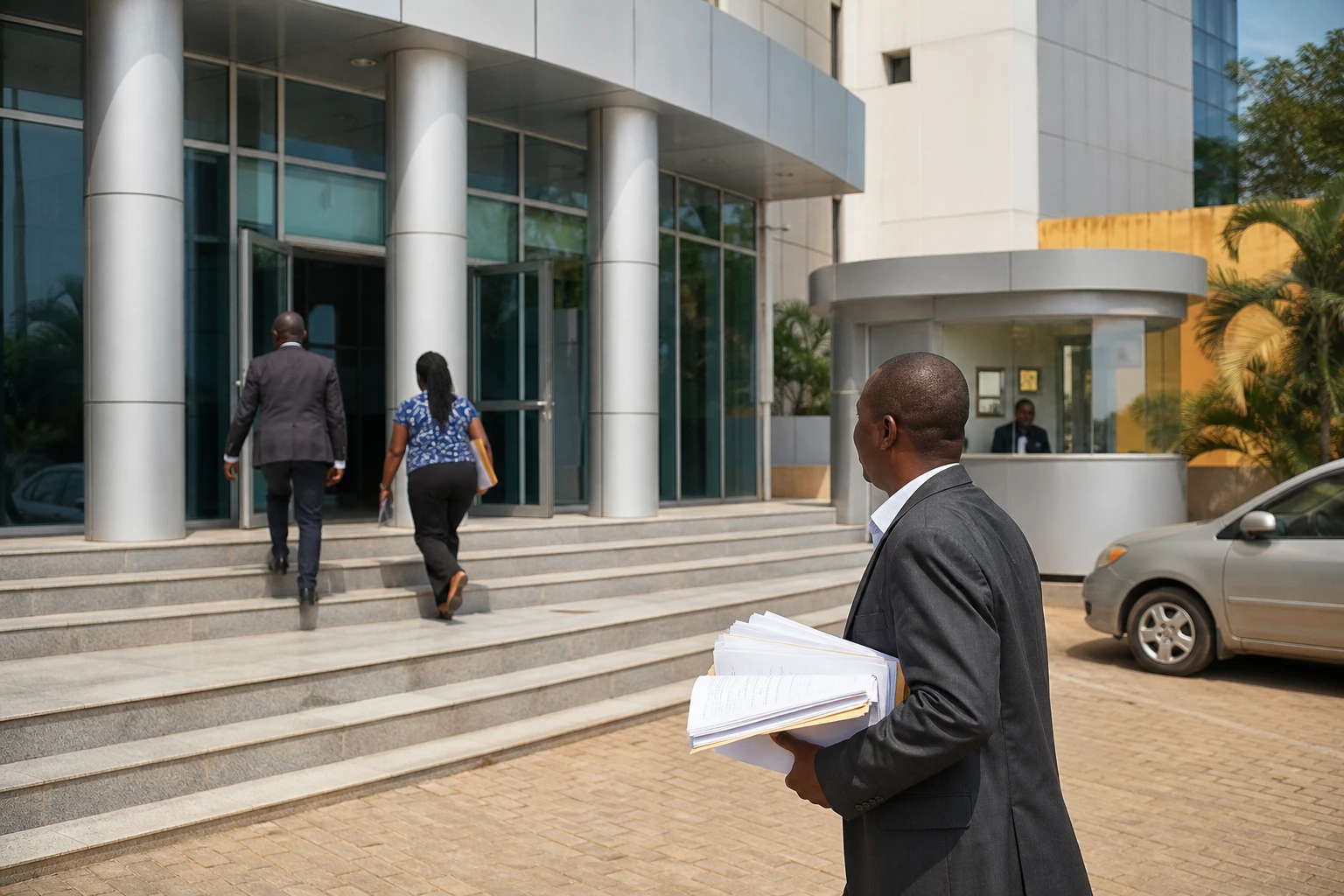
In football, a bid is never just about a tournament. It also reflects the state of a country, its ability to build quickly, persuade others and honour its commitments. For Guinea, the question is broader than the 2032 Africa Cup of Nations. It concerns the image of a state seeking to turn the page on broken promises and prove it can host a major continental event without faltering at the decisive moment.
In this context, Conakry is also looking towards Dakar. The idea of a joint Guinea-Senegal bid appears to be a pragmatic response to a reality familiar to African football federations: a 24-team AFCON requires stadiums, roads, hotels, medical centres, security arrangements and internal transport links capable of handling large crowds. In West Africa, where borders are sometimes easier to cross than construction projects are to complete quickly, geographical continuity matters as much as sporting prestige.
CAF has opened the race, and West Africa is already eyeing a place in it
The framework was set out on 3 July 2026. The Confederation of African Football invited its member associations to submit bids for the 2028, 2032 and 2036 editions of the Africa Cup of Nations. The competition remains the continent’s biggest sporting event, and CAF said it concerns all 54 member associations. The opening immediately rekindled ambitions in several West African capitals.
That same month, CAF also confirmed the joint declaration of interest by Burkina Faso, Mali and Niger for the 2032 AFCON. The three countries, united within the Alliance of Sahel States, passed an important procedural milestone following a meeting with the CAF president in New York on 18 July 2026. The signal is clear: the Sahel bid has now entered the official process.
Against this backdrop, Guinea’s proposal changes the landscape. On 31 July 2026, the Guinean Football Federation approached the Senegalese Football Federation to propose a joint bid. The news was reported by several Senegalese and Guinean media outlets, and fits within a rapprochement already evident between the two countries, which maintain close political and diplomatic ties.
Conakry seeks a shortcut to confidence
For Guinea, the stakes go far beyond football. In 2022, CAF stripped the country of the right to host the 2025 AFCON, judging that its infrastructure and facilities were not ready. The decision left a sporting and political scar. Since then, the Guinean authorities have made preparations for major events a marker of credibility. On 20 August 2026, Prime Minister Amadou Oury Bah officially signed Guinea’s bid application for the 2032 and 2036 AFCONs, according to the prime minister’s office.
The move is part of a broader strategy. For several months, the prime minister’s office has stressed infrastructure transformation, the restoration of public-sector control and a return to constitutional order. In this narrative, sport serves as a benchmark. It offers a visible way to show that the state can plan, finance and deliver. For a government seeking to consolidate its legitimacy, a successful AFCON bid is tangible proof of its ability to execute.
A partnership with Dakar would also offer financial advantages. Guinea has yet to fully upgrade its sports facilities. Senegal, meanwhile, has more modern facilities, notably in Diamniadio, and is building on investments linked to the 2026 Youth Olympic Games. By pooling their resources, the two countries could share some costs, distribute matches and ease pressure on public budgets. This is no minor consideration. For a competition of this scale, transport, accommodation and compliance costs can weigh as heavily as stadium construction.
Senegal, a potential arbiter of a regional choice
Senegal is not merely a possible partner. It has become a key player in the debate. On the one hand, Dakar has a stronger sporting and logistical base than Conakry alone. On the other, a joint bid with Guinea would make geographical sense and strengthen the image of sub-regional integration. On 10 June 2026, a Senegalese delegation received in Conakry had already highlighted the excellent relations between the two capitals during discussions on another diplomatic matter. The groundwork for broader co-operation is therefore in place.
But this opening guarantees nothing. The Senegalese Football Federation has yet to issue an official response to Guinea’s proposal. If Dakar decides to pursue an independent strategy, the partnership hoped for by Conakry will remain theoretical. If it agrees, the duo could offer a credible West African alternative to the Sahel bloc already in the running. Either way, Senegal’s decision will carry weight far beyond football, as it will also show how the sub-region’s capitals view co-operation during a period of political and institutional realignment.
The continental implications are clear. CAF is encouraging joint bids because they make it possible to pool investment and widen a tournament’s economic impact. The next stage will therefore be as political as it is technical: the validation of guarantees, the substance of the bids, the ability to deliver and the coherence of alliances. For Guinea, the challenge is easy to state but difficult to meet: turn a declared intention into an impeccable bid, and then into a concrete result.