Algeria
 Egypt
 Libya
 Morocco
 Sudan
 Tunisia
 Benin
 Burkina Faso
 Cabo Verde
 Côte d'Ivoire
 Ghana
 Guinea-Bissau
 Liberia
 Mali
 Mauritania
 Niger
 Nigeria
 Senegal
 Sierra Leone
 The Gambia
 Togo
 Cameroon
 Central African Republic
 Chad
 DR Congo
 Equatorial Guinea
 Gabon
 Republic of the Congo
 São Tomé and Príncipe
 Burundi
 Comoros
 Djibouti
 Eritrea
 Ethiopia
 Kenya
 Madagascar
 Malawi
 Mauritius
 Mozambique
 Rwanda
 Seychelles
 Somalia
 South Sudan
 Tanzania
 Uganda
 Angola
 Botswana
 Eswatini
 Lesotho
 Namibia
 South Africa
 Zambia
 Zimbabwe
A place regained, but more than a symbolic return
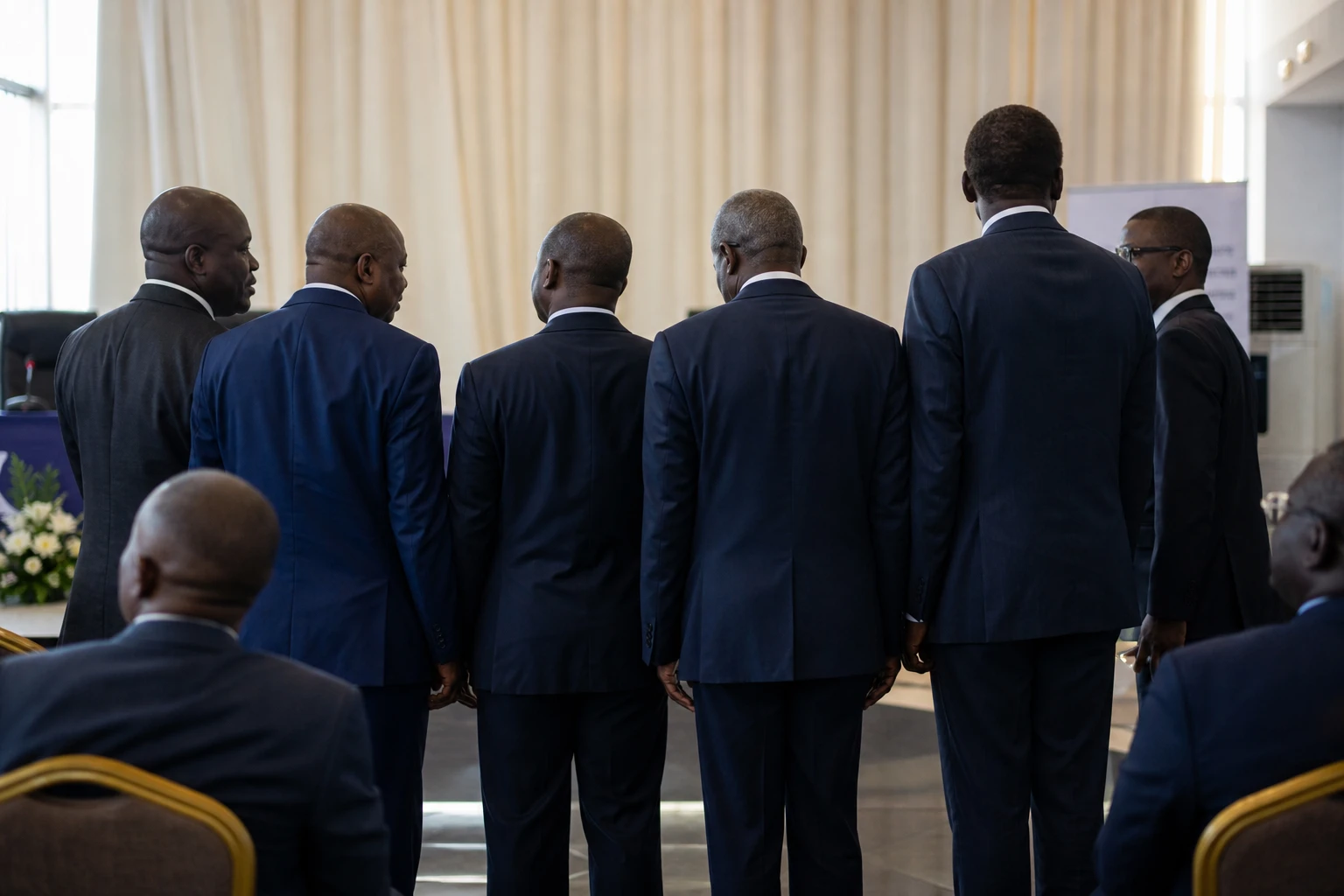
At Freetown, Guinea’s presence at the 69th ECOWAS summit carried significance beyond the family photograph. For Conakry, this was not simply about taking back a seat. It was about closing a chapter that began in 2021, when Guinea was suspended from regional bodies following the unconstitutional change of power.
The country’s return comes at a time of change in West Africa. ECOWAS, which has 12 member states and has worked towards regional integration since 1975, remains a central player in free movement, security and political coordination. But its authority has been tested by military transitions, electoral tensions and the announced departures of some Sahelian countries. In this context, every regained seat matters.
What happened in Freetown
On 19 July 2026, Guinea took part in the 69th ordinary summit of the ECOWAS Authority of Heads of State and Government, held in Freetown, Sierra Leone. According to several consistent sources, this was President Mamadi Doumbouya’s first participation in an organisation summit since he came to power in September 2021.
The groundwork for this return had been laid in advance. On 29 January 2026, ECOWAS lifted the remaining sanctions against Guinea and fully reinstated it in its decision-making bodies. The African Union followed suit on 22 January 2026, welcoming the completion of Guinea’s political transition. Both decisions came after the constitutional referendum of 21 September 2025, the presidential election of 28 December 2025 and Mamadi Doumbouya’s inauguration on 17 January 2026.
At the Freetown summit, ECOWAS also approved a change at the head of its Commission, with General Birame Diop appointed to take office on 1 September 2026. This institutional detail matters. It signals the organisation’s determination to put its house in order as it seeks to regain the initiative on security and political issues.
Why this return matters for Guinean diplomacy
For Guinea, this return does not erase the past. It places it within a broader trajectory. Since 2021, Mamadi Doumbouya’s transitional government has sought to rebuild its legitimacy through a series of political and institutional steps. The electoral process at the end of 2025 and beginning of 2026 reopened doors closed by the crisis. Renewed engagement with ECOWAS and the AU is one of its most visible markers.
But its significance goes beyond ceremony. In a country whose economy depends heavily on mineral exports and regional supply chains, full reintegration into ECOWAS facilitates trade, strengthens diplomatic standing and reduces institutional isolation. It is an asset for the state, economic operators and partners closely following the reform timetable, notably the Simandou 2040 programme, presented as a long-term transformation roadmap.
For the population, the stakes are even more tangible. Regional normalisation does not, on its own, create jobs or public services. It can, however, remove administrative obstacles, smooth some transactions and restore visibility to both the formal and informal economies. In Guinea, where public investment is often expected to drive growth, returning to the West African fold also signals stability.
One fundamental question remains. ECOWAS has welcomed the return to constitutional order. But recent transitions across the sub-region have shown that an electoral timetable is not enough to dispel doubts about the balance of power, political openness and the quality of national dialogue. In Guinea, this remains a sensitive issue, even after the vote and inauguration.
A test for West Africa
The Guinean case resonates far beyond Conakry. ECOWAS has to deal with several issues at once: cross-border security, political transitions, the credibility of mediation efforts and relations with regimes that have come to power through coups or prolonged transitions. Guinea’s return gives the organisation a tangible result to point to. It does not, however, resolve the crisis of confidence that still affects parts of the West African region.
At continental level, the episode also serves as a reminder that the African Union and sub-regional organisations remain the primary frameworks for political validation of transitions. When these frameworks coordinate, as they did on Guinea in January 2026, they strengthen their influence. When they contradict each other, they weaken it. Guinea, for its part, is now playing a different tune: proving that its institutional reintegration can lead to lasting stability, rather than mere normalisation on the surface.
The next point to watch is the regional timetable. With a new Commission due to take office in Abuja from 1 September 2026 and a sub-region still beset by political tensions, Guinea’s return will be judged by its ability to exert influence, not merely to return. That is where the true measure of the Freetown summit for Guineans and West Africa will be determined.