Algeria
 Egypt
 Libya
 Morocco
 Sudan
 Tunisia
 Benin
 Burkina Faso
 Cabo Verde
 Côte d'Ivoire
 Ghana
 Guinea-Bissau
 Liberia
 Mali
 Mauritania
 Niger
 Nigeria
 Senegal
 Sierra Leone
 The Gambia
 Togo
 Cameroon
 Central African Republic
 Chad
 DR Congo
 Equatorial Guinea
 Gabon
 Republic of the Congo
 São Tomé and Príncipe
 Burundi
 Comoros
 Djibouti
 Eritrea
 Ethiopia
 Kenya
 Madagascar
 Malawi
 Mauritius
 Mozambique
 Rwanda
 Seychelles
 Somalia
 South Sudan
 Tanzania
 Uganda
 Angola
 Botswana
 Eswatini
 Lesotho
 Namibia
 South Africa
 Zambia
 Zimbabwe
A mining takeover that means more than a simple transfer of title
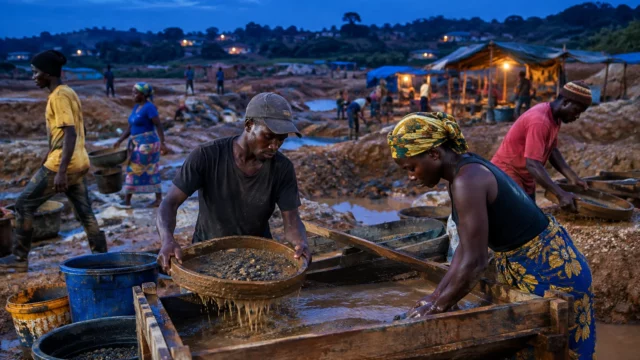
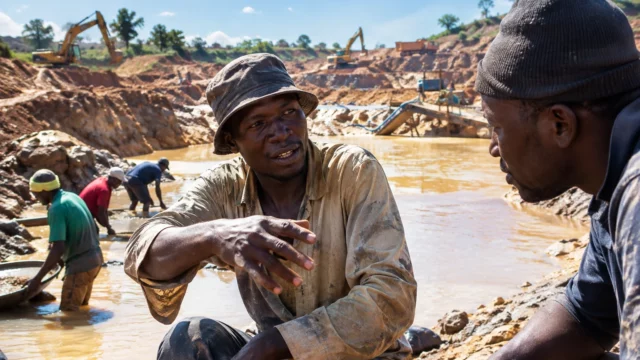
In Boké, western Guinea, the question is not simply who extracts the bauxite. It is also about how much value stays in the country, local jobs and the Guinean state’s ability to impose its rules on powerful operators. In a sector where bauxite feeds global aluminium supply chains, every change of ownership becomes a test of economic sovereignty.
This case is part of a trajectory already under way since 2025. After the concession held by GAC, a subsidiary of Emirates Global Aluminium, was withdrawn, the authorities created Nimba Mining Company, a state-owned company tasked with taking over the mine’s operations and preparing an alumina refinery. The agreement announced on Monday 3 August is therefore part of a wider sequence: taking back control of the resource, then trying to go beyond raw exports.
Guinea’s framework: mining rules, a promised refinery and pressure to add value
In Guinea, the mining sector does not operate on permits alone. It also relies on a mining agreement, a framework contract that sets out the holder’s tax, customs, environmental and social obligations. Guinea’s mining code also provides for the state to receive a 15% free carried interest in mining projects, and requires the publication of decisions to withdraw, transfer or award concessions. This legal framework explains why Nimba Mining’s new agreement must still be ratified by Parliament before publication.
The political context is just as important. In Conakry, the authorities have repeatedly stressed their determination to break with an economy driven by extraction without sufficient local processing. This message, advanced since the transition, is linked to the Simandou 2040 programme, which presents industrial processing as a central objective. In this approach, Boké’s bauxite is no longer simply a raw material to be exported to Asia or the Middle East; it is a lever for capturing more revenue and, ultimately, producing more on Guinean soil.
The facts: an agreement signed, Parliament’s approval pending and a long timetable
Guinea’s presidency announced that Nimba Mining Company’s mining agreement had been signed on Monday 3 August. The text must now be ratified by Parliament before its official publication. This step matters because it turns a political decision into a legally binding framework, with more clearly defined commitments for the state and the state-owned operator.
According to information made public by the company and corroborated by Guinean media, Nimba Mining operates the Tinguilinta deposit in Boké prefecture and resumed operations in 2025. The company says it has already restarted exports, with a first shipment announced at Kamsar in November 2025, followed by a gradual ramp-up. It also says it is targeting 10 million tonnes of bauxite in 2026 and 14 million in 2027, while preparing a future alumina refinery.
On the industrial front, however, the timetable remains cautious. Chief executive Patrice L’Huillier said an engineering firm still had to be selected to carry out the refinery’s feasibility studies, which are expected to take 18 months. This would push the effective start of construction back to mid-2028. In other words, the political decision has been taken, but local processing of bauxite remains at the preparatory stage for now.
Financing is following the same gradual ramp-up. Nimba Mining has announced an agreement with Glencore, which is to advance $350 million against future bauxite production. The state-owned company has also opened a gold exploration venture with Resolute Mining, through a memorandum of understanding signed in spring 2026. These choices show that Nimba Mining does not want to be confined to bauxite, even though this ore still underpins most of its business model.
What this means for Boké, the state and foreign partners
For the Guinean state, the message is clear: broad exemptions are no longer the stated norm. Nimba Mining’s chief executive says the agreement returns to the mining code framework, ending the exemptions enjoyed by GAC, particularly on export and extraction taxes. If this approach is maintained, it could increase public revenues. But it also puts greater responsibility on the state to ensure industrial continuity, maintenance, transport, security and relations with subcontractors.
For the people of Boké, the stakes are more tangible. A mine restarting can support direct and indirect employment, transport, services and local SMEs. But a rapid resumption does not, by itself, guarantee higher incomes for communities. Much will depend on the quality of subcontracting agreements, compliance with environmental obligations, the condition of roads and port facilities, and how the benefits are shared between the capital, the mining region and transit areas.
For foreign partners, the signal is twofold. On the one hand, Guinea remains open to capital, trade finance and international technical expertise. On the other, Conakry wants to impose tighter rules on industrial and tax commitments. The dispute over GAC showed the political and economic cost of an unfulfilled refinery promise. The new phase is therefore intended to avoid a simple cycle of withdrawal and takeover by imposing clearer commitments, more closely aligned with Guinea’s mining code.
Regional significance beyond Guinea
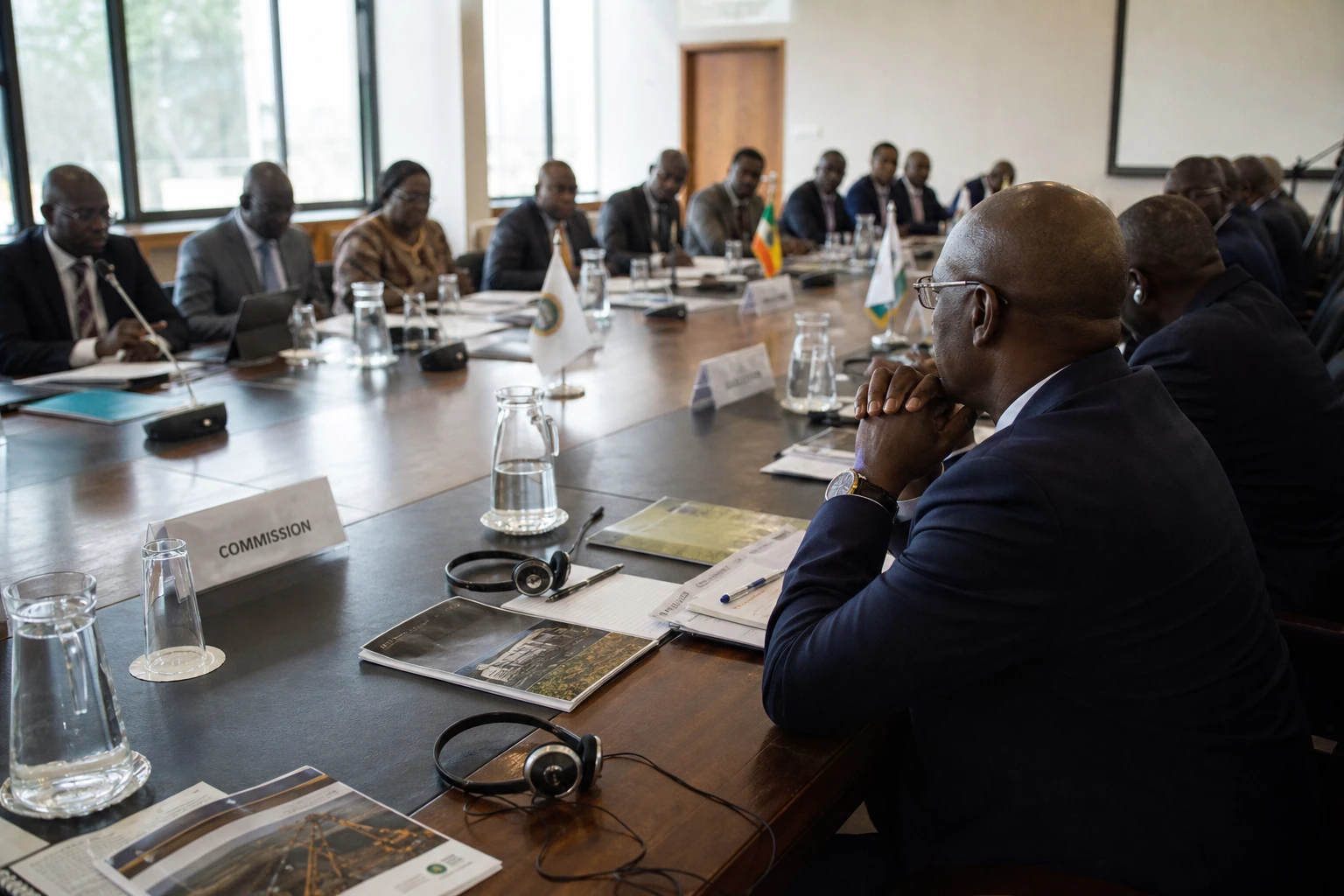
Across West Africa, Guinea’s decision matters beyond Boké. ECOWAS, which brings together West African states, is closely monitoring issues of regulatory stability, investment and the local processing of raw materials. Guinea is sending a signal to all the sub-region’s major mining countries: concessions are no longer judged solely by the volumes exported, but also by the value added locally.
The continental significance is similar. Many African countries still export raw minerals, with little local processing. Guinea’s attempt to link a state takeover, commercial negotiations and a future refinery will therefore be watched far beyond Conakry. If the agreement is ratified, and the studies and financing then make real progress, Guinea could become a case study in the state regaining control of a strategic resource. If the timetable slips too far, it will also highlight the difficulty, across the continent, of turning political will into sustainable heavy industry.