Algeria
 Egypt
 Libya
 Morocco
 Sudan
 Tunisia
 Benin
 Burkina Faso
 Cabo Verde
 Côte d'Ivoire
 Ghana
 Guinea-Bissau
 Liberia
 Mali
 Mauritania
 Niger
 Nigeria
 Senegal
 Sierra Leone
 The Gambia
 Togo
 Cameroon
 Central African Republic
 Chad
 DR Congo
 Equatorial Guinea
 Gabon
 Republic of the Congo
 São Tomé and Príncipe
 Burundi
 Comoros
 Djibouti
 Eritrea
 Ethiopia
 Kenya
 Madagascar
 Malawi
 Mauritius
 Mozambique
 Rwanda
 Seychelles
 Somalia
 South Sudan
 Tanzania
 Uganda
 Angola
 Botswana
 Eswatini
 Lesotho
 Namibia
 South Africa
 Zambia
 Zimbabwe
At the pump, the posted price protects Guinean household budgets. But keeping a litre at 12,000 Guinean francs (GNF) shifts part of the bill onto public finances, at a time when the state must also fund services and infrastructure.
A budget choice amid external shocks
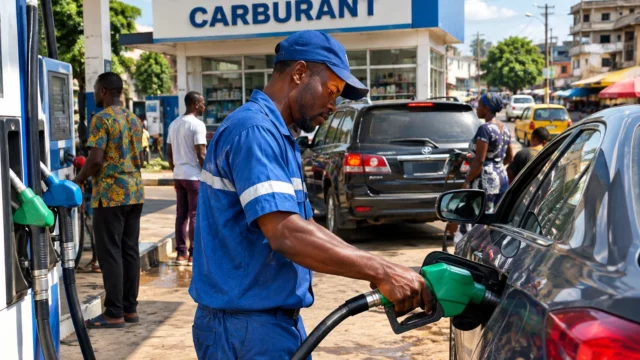
Fuel affects far more than motorists’ expenses. It feeds into the cost of transporting people and goods, businesses’ costs and the supply of markets. A rise at the pump can therefore push up transport fares and the price of goods, even for families who do not own a vehicle.
Guinea remains exposed to fluctuations in global prices and the cost of importing petroleum products. Maintaining an administered price cushions consumers from these shocks, but requires the state to cover part of the gap between the pump price and the cost borne by the sector. This protection does not eliminate the cost: it redistributes it.
The debate is also taking place in a West African context in which governments are seeking to protect purchasing power while preserving fiscal room for manoeuvre. Guinea is a member of ECOWAS, a regional organisation for economic and political integration. Energy price swings and disruptions to trade cross borders, even though each country sets its own pricing mechanisms.
GNF 5,489.7 billion provided for in revised budget
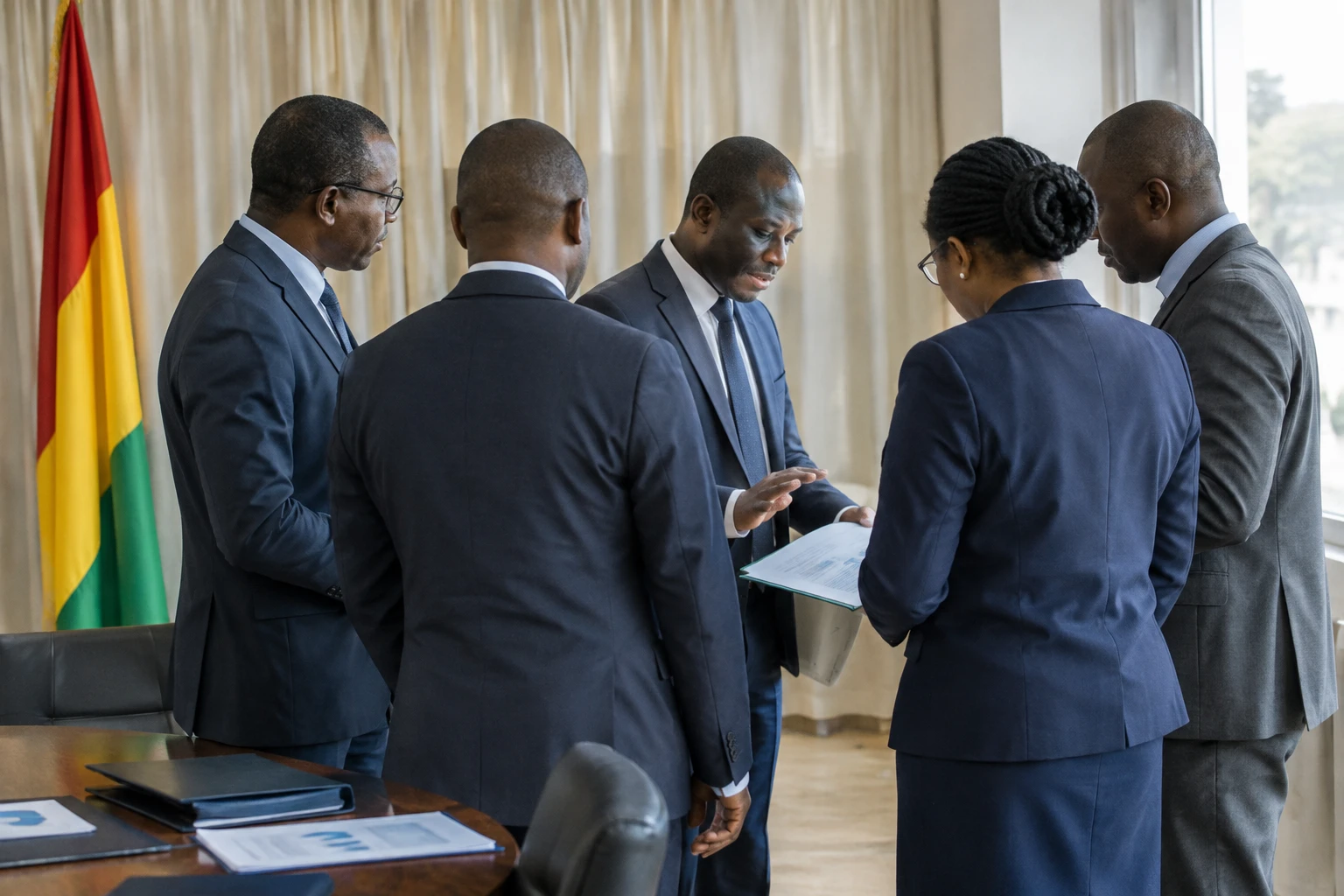
On 24 October 2026, the Minister of Economy, Finance and Budget, Mariama Ciré Sylla, presented the 2026 supplementary finance bill to MPs. The bill provides for a total allocation of GNF 5,489.7 billion to keep petroleum products at GNF 12,000 a litre. The ministry says this amount represents nearly 10% of expected tax revenue.
The budget figures presented distinguish between GNF 4,576.7 billion in revenue forgone by the state and GNF 913 billion set aside for the price-stabilisation mechanism. The two components are not the same: one represents revenue not collected, while the other is a provision to support the scheme. The total therefore reflects the scale of the trade-off, rather than a single payment made directly to consumers.
The government presents the measure as a response to geopolitical tensions and volatility in energy markets. A fixed price can give households and transport operators greater certainty. However, its practical effect also depends on product availability and the extent to which costs are passed on through distribution networks.
Local services and the question of funding
The supplementary finance bill also highlights spending for local communities. The ministry has announced operational support for 455 health centres and 2,514 health posts, as well as funding for 1,600 water points. It also provides for a 110% increase in transfers to rural councils and continued procurement of buses for public transport.
These measures address different realities. In Conakry, public buses can help improve urban mobility, while transfers to councils and water points are aimed more at rural communities and the country’s interior. However, the announced appropriations alone do not guarantee that projects will be delivered: their impact will depend on disbursements, available equipment and local capacity to keep them operating over time.
The decision to support fuel prices must therefore be assessed alongside the budget’s other priorities. A general subsidy at the pump benefits people who buy fuel, but does not target only households most exposed to the rising cost of living. Meanwhile, health services, water provision and local authorities need resources that are actually mobilised. The challenge will be to track how the funds are allocated, not just the amounts announced.
Mining growth alone does not measure the benefits
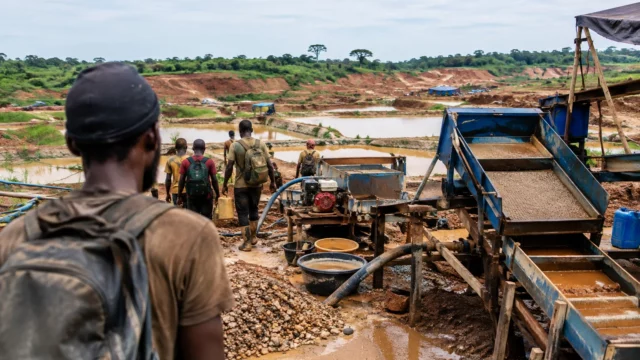
For 2026, the minister forecasts growth of 8.6%, following 5.4% in 2024 and 7.1% in 2025, according to figures presented to parliament. The authorities link this momentum to the mining sector, progress on the Simandou iron ore project and public investment. The World Bank, for its part, published a growth forecast of 8.8% for 2026 in April: the difference is a reminder that estimates vary according to assumptions and calculation dates.
GDP growth alone does not show whether incomes, jobs and services are improving for the population. The challenge is particularly significant in a country where major mining projects attract investment, while daily activities and needs are spread across the capital, secondary cities and rural areas. The central question is how local benefits are generated and translated into jobs and accessible infrastructure.
On the budget side, the authorities report an 8% increase in tax revenue and a tax-to-GDP ratio of 14.2%, compared with an initial forecast of 12.9%. The deficit is estimated at 2.01% of GDP. These indicators describe the resources and balance projected by the government; they will need to be measured against execution results once revenue has been collected and spending carried out.
An IMF programme still awaiting approval
In August 2026, International Monetary Fund (IMF) staff reached a staff-level agreement with the Guinean authorities on a 41-month programme. The proposed financing of around $425 million remains subject to the Fund’s approval procedures. It is therefore not yet a confirmed disbursement. The government has also referred to additional budget support from the World Bank and the African Development Bank.
For Guineans, there are two points to watch: keeping the pump price stable must provide effective protection against shocks, and other budget commitments must reach their intended recipients. For the region, the issue illustrates a trade-off shared by many West African states: cushioning energy market fluctuations without durably reducing the resources devoted to public services and investment.
According to the parliamentary timetable presented during the session, MPs were due to examine the draft supplementary budget until 7 November 2026. Its adoption and, subsequently, the execution of appropriations will make it possible to gauge the real scope of the announcements.
Presentation of the 2026 supplementary finance bill by Guinea’s Ministry of Economy and Finance · Guinee360’s analysis of the revised budget trade-offs · IMF announcement on the staff-level agreement · World Bank economic forecasts for Guinea in 2026