Algeria
 Egypt
 Libya
 Morocco
 Sudan
 Tunisia
 Benin
 Burkina Faso
 Cabo Verde
 Côte d'Ivoire
 Ghana
 Guinea-Bissau
 Liberia
 Mali
 Mauritania
 Niger
 Nigeria
 Senegal
 Sierra Leone
 The Gambia
 Togo
 Cameroon
 Central African Republic
 Chad
 DR Congo
 Equatorial Guinea
 Gabon
 Republic of the Congo
 São Tomé and Príncipe
 Burundi
 Comoros
 Djibouti
 Eritrea
 Ethiopia
 Kenya
 Madagascar
 Malawi
 Mauritius
 Mozambique
 Rwanda
 Seychelles
 Somalia
 South Sudan
 Tanzania
 Uganda
 Angola
 Botswana
 Eswatini
 Lesotho
 Namibia
 South Africa
 Zambia
 Zimbabwe
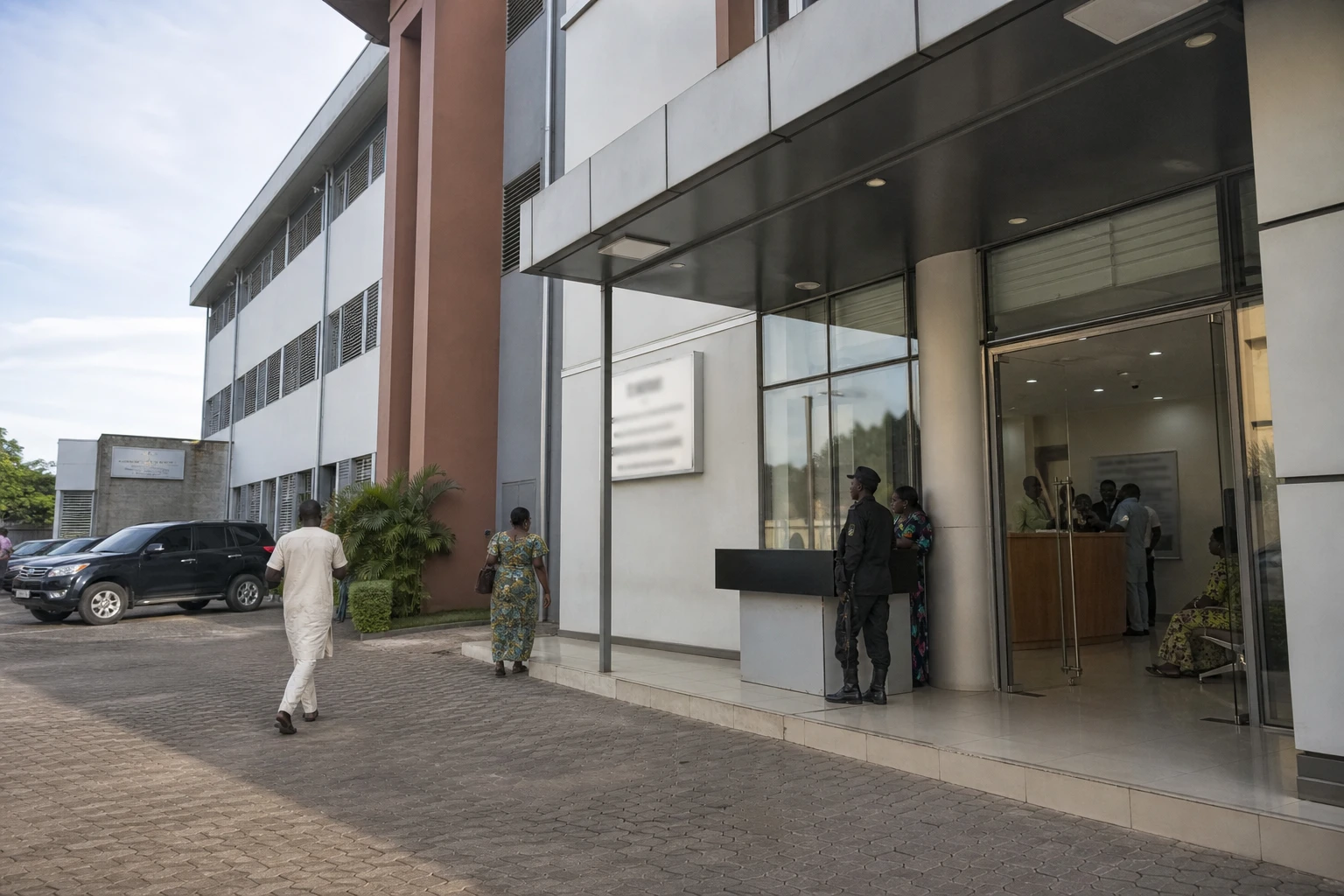
In Conakry, a single word was enough to revive an old question: how far does control over public discourse extend? In Guinea, the answer now lies less in debate than in punishment. The entire media ecosystem is under pressure.
Guinea, whose capital is Conakry, has been experiencing a period of tightening media controls for several years. The country saw a coup on 5 September 2021, followed by a military transition, before the presidential election on 28 December 2025 and Mamadi Doumbouya’s inauguration on 17 January 2026. The authorities present this period as the beginning of a new Republic. Press freedom organisations, meanwhile, describe a climate of restrictions that has taken hold over time.
Against this backdrop, the High Authority for Communication, Guinea’s media regulator, took decisive action on 16 and 17 September 2026. It first issued a formal warning to France 24 after the broadcast, on 15 September, of a segment in which the head of state was described as a “coup president”. It then banned the channel from broadcasting throughout the country, “by all technical means”, including satellite, cable, mobile applications, websites and social media. The decision was accompanied by the withdrawal of accreditation for the channel’s journalists and staff.
The affair immediately took on a political dimension because it concerns how Mamadi Doumbouya is described. The authorities say the disputed term no longer reflects the country’s institutional situation since the December 2025 election and his January 2026 swearing-in. France 24, for its part, acknowledged an error and apologised, according to several press reports and AFP. But these corrections did not prevent the High Authority for Communication from taking its final decision.
A case that reflects wider control of the public sphere
The move is not an isolated one. Since 2023, and especially in 2024, several private media outlets in Guinea have lost access to the public. In December 2023, the High Authority for Communication asked Canal+ to suspend the broadcasting of Djoma TV, Djoma FM, then Evasion TV and Espace TV. In 2024, the authorities revoked the licences of several outlets, including Espace FM, Espace TV, Sweet FM, Djoma FM, Djoma TV and FIM FM. Restrictions on independent news websites and social media have also been reported by international organisations.
The France 24 case also comes just days after the withdrawal of the press accreditation of Jeune Afrique’s correspondent in Guinea, officially for “professional failings”. That measure, too, was challenged by the media outlet concerned and criticised by Reporters Without Borders, which described it as an attack on press freedom and the public’s right to pluralistic information. For civil liberties advocates, the message is clear: the regulator is no longer merely overseeing the media; it is now deciding which narratives are acceptable.
This tightening of controls resonates beyond Conakry. Guinea is a member of ECOWAS, the Economic Community of West African States, where military transitions and debates over freedom of expression remain sensitive issues. The country has already experienced tensions with its neighbours and external partners over constitutional order. In the region, the media is often one of the first arenas in which the balance of power between the authorities, the opposition and civil society is tested.
What the case means in practice for Guineans
For the authorities, the position is one of sovereignty and respect for institutions. Several voices close to the government have argued that a foreign media outlet cannot freely describe the head of state without taking into account the legitimacy conferred by the vote. For the public, the stakes are more practical: access to information, a diversity of viewpoints and the ability to compare sources. When an international media outlet is taken off air, it is not only its subscribers who lose a signal. Public debate, observers and citizens also lose a window.
The difference can also be seen between the capital and the rest of the country. In Conakry, content continues to circulate more widely, even under constraint. In secondary cities and rural areas, television, radio and digital platforms often play a central role in providing information, sometimes more so than the print press. A nationwide suspension of an international channel therefore has a broader impact than a simple diplomatic dispute. It reduces plurality where access to sources is already limited.
Institutionally, the episode is also a reminder that media regulation in Guinea is not a purely technical matter. The High Authority for Communication operates in a political environment in which the executive has consolidated its levers of power since the transition. Constitutional reform, the move to elections and rhetoric around sovereignty give the government a new basis of legitimacy. But this does not erase criticism of freedom of expression, especially when sanctions affect foreign media and then local outlets in quick succession.
A warning for African media as a whole
Across the continent, the situation in Guinea reflects a broader trend: in several African countries, media regulators are becoming central players in political power struggles. The Guinean case will be watched in Dakar, Abidjan, Lomé and Ouagadougou, where debates over sovereignty, transition and criticism of the authorities are already highly sensitive. The question is not only whether France 24 will return to the air in Guinea. It is whether journalistic language deemed offensive can now be enough to trigger a total blackout.
What is at stake in Conakry, then, goes beyond one channel and one word. It is a test of the role of the media as a counterweight in a Guinea that asserts its sovereignty, but where civil liberties remain closely monitored. The coming weeks will show whether the High Authority for Communication’s decision sets a lasting precedent, or remains one of the most visible signs of an already entrenched cycle of tension.