Algeria
 Egypt
 Libya
 Morocco
 Sudan
 Tunisia
 Benin
 Burkina Faso
 Cabo Verde
 Côte d'Ivoire
 Ghana
 Guinea-Bissau
 Liberia
 Mali
 Mauritania
 Niger
 Nigeria
 Senegal
 Sierra Leone
 The Gambia
 Togo
 Cameroon
 Central African Republic
 Chad
 DR Congo
 Equatorial Guinea
 Gabon
 Republic of the Congo
 São Tomé and Príncipe
 Burundi
 Comoros
 Djibouti
 Eritrea
 Ethiopia
 Kenya
 Madagascar
 Malawi
 Mauritius
 Mozambique
 Rwanda
 Seychelles
 Somalia
 South Sudan
 Tanzania
 Uganda
 Angola
 Botswana
 Eswatini
 Lesotho
 Namibia
 South Africa
 Zambia
 Zimbabwe
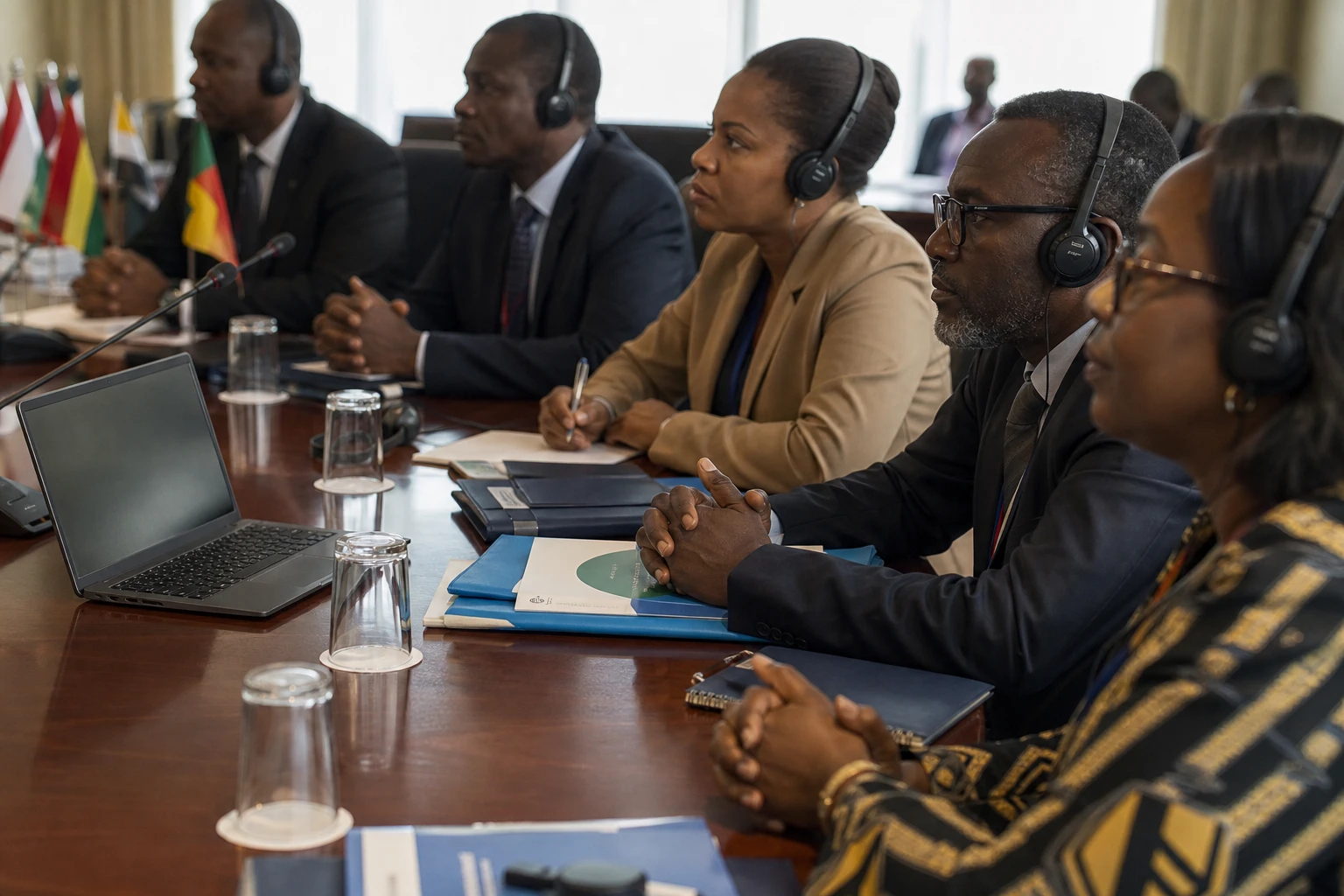
In Guinea, agricultural data becomes a field-level asset
In Conakry, the challenge is no longer simply to produce more. It is also to know who is producing, where, on which plot and facing what risks. In Guinea, this shift towards data is now emerging as a condition for agricultural finance, as the country’s government seeks to go further in achieving food self-sufficiency and reducing dependence on imports.
The logic is simple, but it changes a great deal on the ground. Without a reliable register, aid is scattered, lending remains cautious, and agricultural insurance struggles to identify actual beneficiaries. The FAO describes agricultural data systems as tools for structuring public policy, able to make services more targeted and accessible.
From census to digital card
On 16 September 2026, Guinea’s Ministry of Agriculture presented the results of the pilot phase of the National Agricultural Data Services Programme. Rolled out in the regions of Kindia, Kankan and Mamou, the initiative registered 20,463 farmers and mapped 23,507 farms. The farmers concerned receive an identification card equipped with a QR code and an NFC chip, with access to a secure portal for authorised users.
The system is not starting from scratch. Guinea already has a strengthened agricultural statistics base, supported by the National Agency for Agricultural and Food Statistics, which oversees the collection and dissemination of sector microdata. The FAO also supported workshops in Conakry in February 2026 to improve the quality of national agricultural statistics, based on an integrated survey of a sample of more than 15,000 farming households.
In other words, the card is more than a badge. It is part of a broader chain: registration, data cleaning, geolocation of farms, then administrative and financial use. This continuity can turn a simple registration into an instrument of governance.
Why banks and insurers are watching the register closely
The core issue is risk reduction. In many rural areas, banks and insurers have little information about a farmer’s exact identity, the actual size of their farm and their production history. A digital register reduces this uncertainty. It can therefore help to better target credit, crop insurance, input subsidies and public support.
The Ministry of Agriculture is aware of this, as agricultural finance has featured in Guinea’s public strategy for several months. In 2023, the African Development Bank signed a $28 million agreement with the Guinean authorities for an agropastoral project that includes digitalisation and market access. The Bank has also supported programmes focused on value chains, inputs and agricultural infrastructure.
More recently, the government has also sent repeated signals in favour of more direct support for farmers. The launch of the 2026-2027 agricultural campaign set a clear target: support 1.5 million family farmers and increase the inputs made available, with 3,000 tonnes of rice seed, 1,500 tonnes of maize seed, 34,000 tonnes of NPK fertiliser and more than 785,000 litres of herbicides announced by the authorities.
In this context, the digital card comes at the right time. It can help identify active farmers more accurately, preventing public support from being lost among incomplete, duplicated or outdated lists. But the promise is conditional: without regular updates, the register will quickly lose its operational value.
A matter of food sovereignty, not just modernisation
Guinea now wants to feed more of its domestic market with its own produce. At the launch of the agricultural campaign, the authorities spoke of food sovereignty and a sector at the heart of the Simandou 2040 programme. This framing shows that agriculture is no longer seen as a sideline, but as an economic and political pillar.
On the ground, the stakes differ among the various players. For family farmers, the card could facilitate access to inputs, agricultural advice and, perhaps, credit. For financial institutions, it provides a clearer basis for selecting beneficiaries. For the state, it offers a more precise management tool, particularly in production regions where information is still fragmented.
The challenge, however, is as much technical as political. Data reliability must be ensured, along with interoperability with banks, insurers and public programmes, as well as the protection of personal information. Otherwise, the card risks becoming just another form of identification, with no real impact on rural incomes.
What Guinea could bring to the sub-region
Guinea’s initiative is part of a broader West African trend. More and more states are seeking to create digital agricultural registers to better target subsidies, social protection and financing schemes. ECOWAS, which has been promoting regional economic integration for several years, finds a practical application here: comparable data also facilitate common policies on value chains, markets and food security.
The continental significance is clear. The African Development Bank and the FAO have for several years argued that modern agriculture also depends on information, not just seeds, fertiliser or rural roads. Guinea is testing a method that could inspire other countries facing the same problem: how to finance millions of small farms effectively without a robust register.
The next test will be scaling up. It remains to be seen whether the register will move beyond the pilot phase to cover other regions, whether the cards will actually open up access to services, and whether farmers will see a tangible difference in access to credit, insurance and markets. The programme’s credibility will be decided there.