Algeria
 Egypt
 Libya
 Morocco
 Sudan
 Tunisia
 Benin
 Burkina Faso
 Cabo Verde
 Côte d'Ivoire
 Ghana
 Guinea-Bissau
 Liberia
 Mali
 Mauritania
 Niger
 Nigeria
 Senegal
 Sierra Leone
 The Gambia
 Togo
 Cameroon
 Central African Republic
 Chad
 DR Congo
 Equatorial Guinea
 Gabon
 Republic of the Congo
 São Tomé and Príncipe
 Burundi
 Comoros
 Djibouti
 Eritrea
 Ethiopia
 Kenya
 Madagascar
 Malawi
 Mauritius
 Mozambique
 Rwanda
 Seychelles
 Somalia
 South Sudan
 Tanzania
 Uganda
 Angola
 Botswana
 Eswatini
 Lesotho
 Namibia
 South Africa
 Zambia
 Zimbabwe
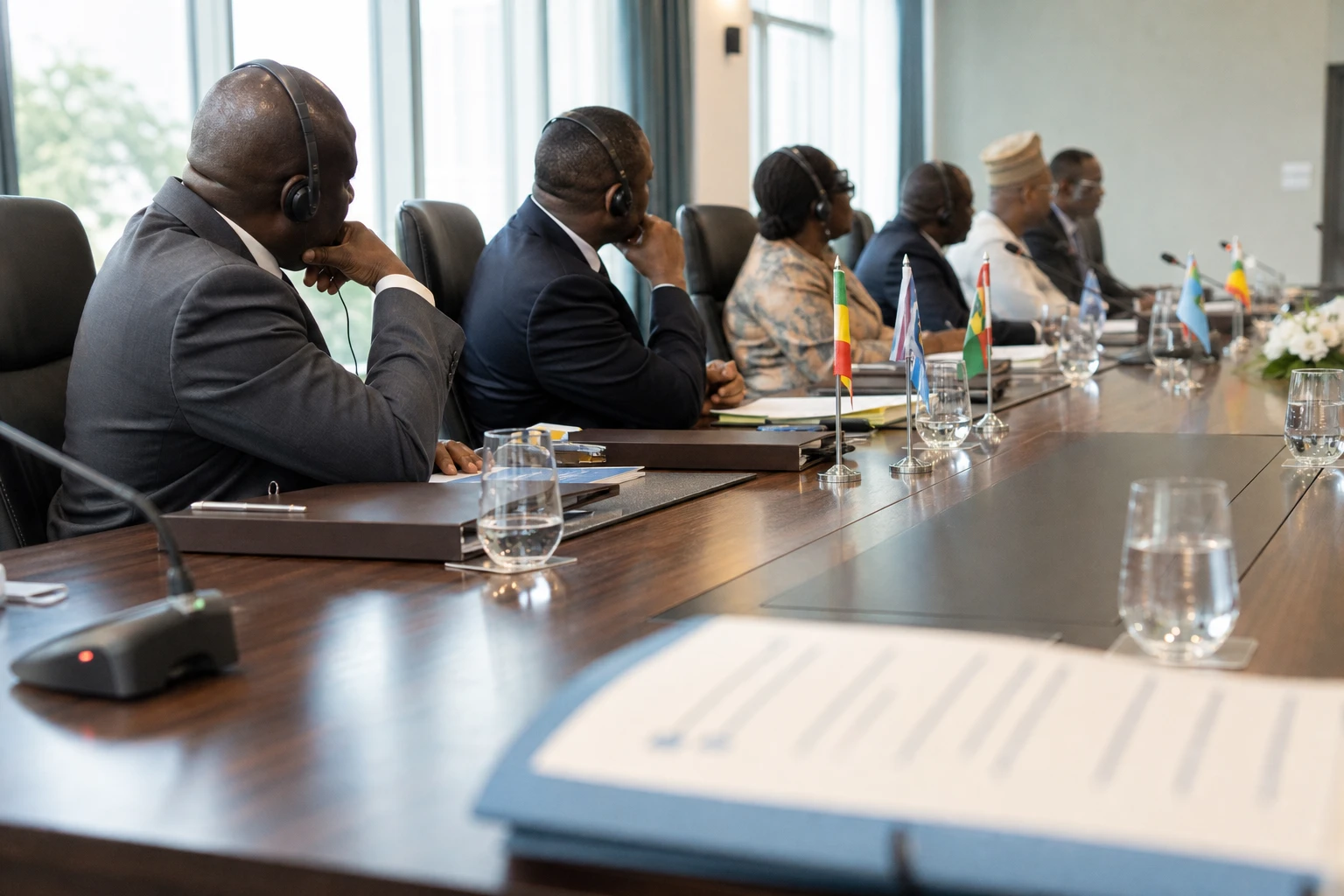
In Conakry and across the Guinean diaspora, an opposition figure’s freedom to travel has once again become a political issue. Cellou Dalein Diallo says his ordinary passport was revoked, a decision that allegedly prevented him from travelling to New York for meetings organised on the sidelines of the United Nations General Assembly.
Journey halted at departure from Abidjan
The leader of the Union of Democratic Forces of Guinea (UFDG), currently based in Côte d’Ivoire, was due to travel from Abidjan on an Ethiopian Airlines flight. According to his party’s leadership, he had completed the necessary formalities and obtained a boarding pass.
The airline then allegedly told him that his passport had been “revoked by the issuing authorities”. The news was reported on 21 September 2026 by Ma Guinée Infos, and later picked up on 22 September by Guinée Futur.
Both publications draw on statements from the UFDG. They establish that the party has denounced the decision, but do not, on their own, confirm the administrative grounds for the measure. No official explanation from the Guinean authorities had been made public in the information available as of 22 September 2026.
The UFDG condemns a decision it describes as further pressure on its president. Aged 74, Cellou Dalein Diallo remains one of Guinea’s leading opposition figures. He led the party for several years and served as prime minister under President Alpha Condé.
An opposition already largely shut out of politics
The episode comes amid a political environment transformed profoundly since the coup of 5 September 2021. On that day, the National Committee of Reconciliation and Development (CNRD), a military body formed after the overthrow of Alpha Condé, seized power in Conakry. General Mamadi Doumbouya has since directed the country’s institutional trajectory.
Guinea’s transition was initially intended to lead to a swift return to constitutional order. However, the timetable was extended. The authorities then embarked on an overhaul of the institutions, before holding a constitutional referendum and a presidential election in 2025.
Cellou Dalein Diallo was unable to take part in that presidential election. Several other leading opposition figures were also kept out of the race. The political parties led by Cellou Dalein Diallo and former president Alpha Condé were, in turn, suspended and then dissolved as part of an administrative crackdown targeting parties.
President Mamadi Doumbouya ultimately won the presidential election of 28 December 2025. The Associated Press noted at the time that leading opposition figures, including Cellou Dalein Diallo and Sidya Touré, were living in exile and unable to run.
A passport: an administrative tool with political consequences
The alleged revocation of the travel document affects more than an international trip. For a political leader living outside his country, a passport is essential for diplomatic meetings, engagement with the diaspora and maintaining a public presence.
In Cellou Dalein Diallo’s case, the planned trip to New York was to give him a platform with political partners, international organisations and representatives of the Guinean community. Preventing him from travelling reduces his scope for action abroad, at least temporarily.
The measure may also have an impact on domestic politics. The UFDG remains one of the country’s best-known parties, despite its dissolution and its president’s exile. Its leaders must now contend with a weakened organisation, a media environment under pressure and the absence of open electoral competition for several of its leading figures.
For the authorities, a passport decision may be an administrative procedure. For the opposition, it may be seen as a further restriction targeting a political adversary. The difference between these two interpretations can be clarified only by the publication of official grounds, an administrative notification or a documented response from the state.
A development closely watched by ECOWAS
The situation in Guinea goes beyond the power struggle between the government and the UFDG. Guinea is a member of the Economic Community of West African States (ECOWAS), the regional organisation responsible, among other things, for promoting cooperation and political stability in West Africa.
Since the coups in Guinea, Mali, Burkina Faso and Niger, ECOWAS has faced a major crisis of confidence. Mali, Burkina Faso and Niger’s withdrawal from the organisation, which took effect in 2025, has reduced the scope for collective pressure on the region’s military regimes.
In this context, every restriction targeting a prominent political figure can be seen as an indicator of the state of civil liberties. Regional partners will therefore have to watch the Guinean authorities’ response, the UFDG’s legal status and the conditions under which the opposition can take part in public life.
In the short term, the key issue remains the lack of official confirmation about Cellou Dalein Diallo’s passport. In the medium term, the stakes are broader: the question is whether Guinea will open up genuine space for political pluralism after the formal end of the transition, or whether the main opponents of the government will remain shut out through administrative, judicial or electoral decisions.