Algeria
 Egypt
 Libya
 Morocco
 Sudan
 Tunisia
 Benin
 Burkina Faso
 Cabo Verde
 Côte d'Ivoire
 Ghana
 Guinea-Bissau
 Liberia
 Mali
 Mauritania
 Niger
 Nigeria
 Senegal
 Sierra Leone
 The Gambia
 Togo
 Cameroon
 Central African Republic
 Chad
 DR Congo
 Equatorial Guinea
 Gabon
 Republic of the Congo
 São Tomé and Príncipe
 Burundi
 Comoros
 Djibouti
 Eritrea
 Ethiopia
 Kenya
 Madagascar
 Malawi
 Mauritius
 Mozambique
 Rwanda
 Seychelles
 Somalia
 South Sudan
 Tanzania
 Uganda
 Angola
 Botswana
 Eswatini
 Lesotho
 Namibia
 South Africa
 Zambia
 Zimbabwe
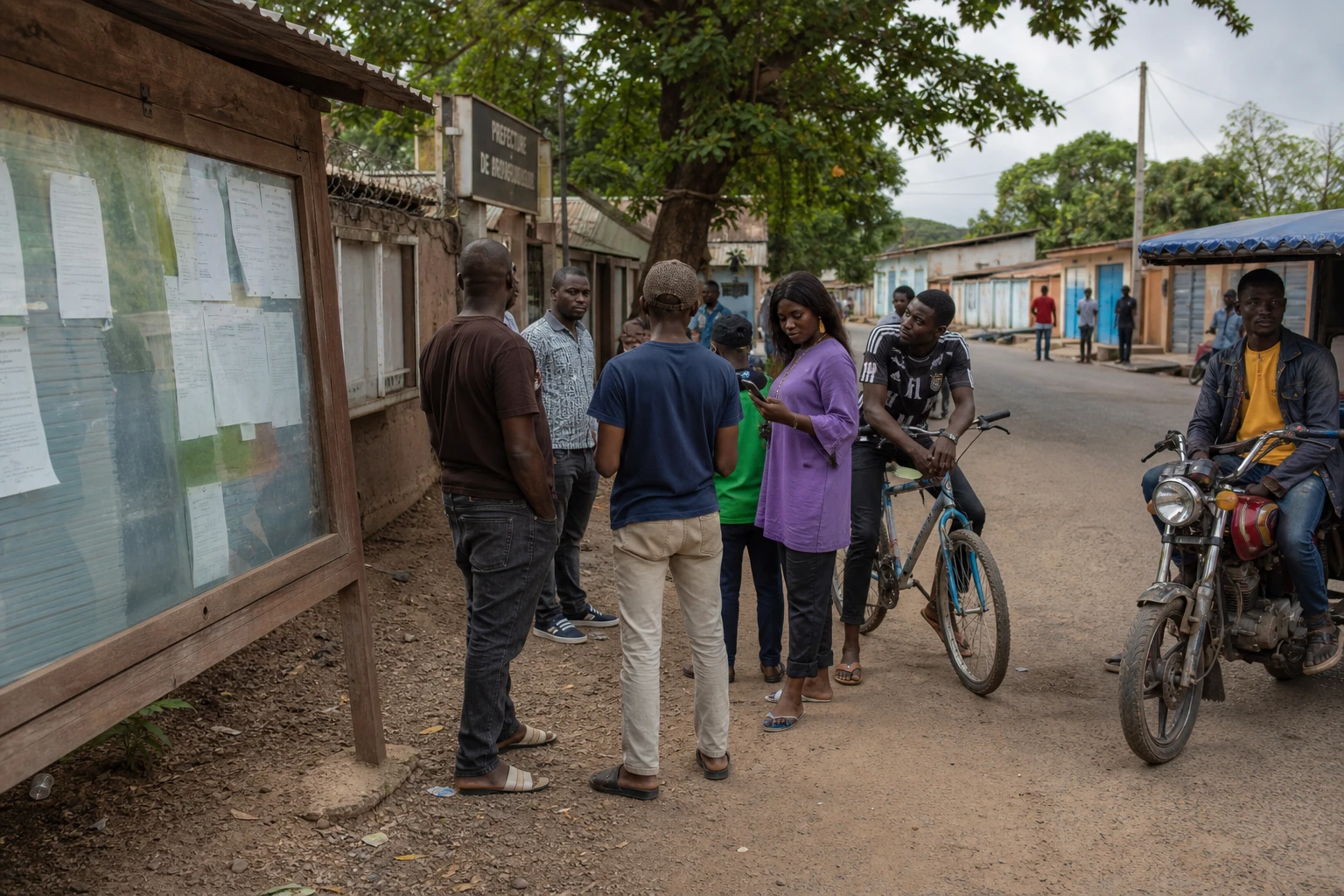
A silent forest, then six bodies
In south-western Guinea, a wooded area has suddenly reminded people that the country’s outlying regions can also become places of darkness. In Sabakhouré, in the sub-prefecture of Allassoyah, Forécariah prefecture, six men were discovered in a mass grave, blindfolded and with their hands tied. The scene was reported by young people who had gone to collect firewood, before local and judicial authorities arrived.
The case unfolded about 100 kilometres south of Conakry, in a prefecture bordering Sierra Leone and marked by intense cross-border movement. Forécariah is not merely a point on the map: it is an area of transit, informal trade, family mobility and, at times, discreet rivalries, where the state is expected to be present on the ground. In such a place, a discovery of this kind goes beyond a crime story. It touches on public safety, confidence in the investigation and the way administrative authorities maintain a presence in the area.
What is known, and what remains to be established
The first consistent reports speak of six male bodies, found on Monday 24 August 2026 in a grave in a forested area. The bodies are said to have been gagged or blindfolded, then tied up. One of the men is believed to have been about 60, while the other five were younger. So far, no official identification has been made public, and the exact circumstances of the deaths are unknown. The bodies were taken to Forécariah prefectural hospital for forensic examinations.
According to information corroborated by Guinean and international media, the public prosecutor at the Forécariah court of first instance went to the scene with judicial police officers and members of the Coyah investigation brigade. A judicial investigation has been opened. It must now answer the most pressing questions: who were the victims, when did they die, who buried them there and in what circumstances?
So far, no authority has cited an established link to a local conflict, a security operation or a settling of scores. Any hypothesis would be premature. However, the apparently organised burial, the visible bindings on the bodies and the lack of immediate identification make a swift, thorough and independent investigation essential.
A precedent in Forécariah weighs on people’s minds
The discovery revives a recent memory in the same prefecture. In October 2025, Guinean media had already reported the discovery of four bodies in a clandestine grave in Forécariah. The accounts available at the time were fragmentary and contradictory. Some mentioned three special forces soldiers and a civilian, but without full and detailed institutional confirmation. One thing is clear: discoveries of hidden graves are no longer unprecedented in this prefecture.
This precedent changes how the current case is viewed. It suggests at least two things. First, that the area is home to tensions that residents perceive even before institutions document them. Second, that the public response cannot be limited to the administrative burial of the bodies. It must also shed light on chains of command, movements of people and any potential responsibility. In a border prefecture, the slightest grey area quickly fuels fear and rumours.
A local case in a more painful national history
In Guinea, mass graves do not refer only to current events. They revive a still vivid past, particularly the violence of 28 September 2009 in Conakry. According to the United Nations commission of inquiry, at least 156 people were killed or disappeared, and at least 109 women were raped or subjected to other sexual violence. Human Rights Watch, for its part, described these crimes as very likely crimes against humanity.
This memory matters because it has established in Guinean society a demand for justice that transcends political transitions. It also serves as a reminder of a central fact: when bodies disappear or are buried outside any clear framework, trust in the state is first weakened in neighbourhoods, communes and prefectures. In Conakry and beyond, the issue is not only judicial. It is also civic. It concerns the ability of institutions to tell the truth, identify the dead and protect the living.
What to watch for now
In the coming days, forensic examinations will be crucial. They should help establish when the deaths occurred, guide identification and, if possible, determine the causes of death. This is the most sensitive stage, as it separates impressions from the criminal case file. If Guinean authorities communicate precisely, they can prevent the case from becoming a breeding ground for speculation. If they are slow to respond, social media will fill the void.
For Guinea, the stakes go beyond Forécariah. They concern how the country deals with its border areas, criminal investigations and the memory of mass violence. For ECOWAS too, the case is a reminder that a border is never merely a line on a map: it is an area of movement, vulnerability and tangible sovereignty. In Conakry, the expected response will be simple to state but demanding to deliver: identify, establish the facts, bring those responsible to justice and, above all, explain.