Algeria
 Egypt
 Libya
 Morocco
 Sudan
 Tunisia
 Benin
 Burkina Faso
 Cabo Verde
 Côte d'Ivoire
 Ghana
 Guinea-Bissau
 Liberia
 Mali
 Mauritania
 Niger
 Nigeria
 Senegal
 Sierra Leone
 The Gambia
 Togo
 Cameroon
 Central African Republic
 Chad
 DR Congo
 Equatorial Guinea
 Gabon
 Republic of the Congo
 São Tomé and Príncipe
 Burundi
 Comoros
 Djibouti
 Eritrea
 Ethiopia
 Kenya
 Madagascar
 Malawi
 Mauritius
 Mozambique
 Rwanda
 Seychelles
 Somalia
 South Sudan
 Tanzania
 Uganda
 Angola
 Botswana
 Eswatini
 Lesotho
 Namibia
 South Africa
 Zambia
 Zimbabwe
Financing roads, schools or energy infrastructure with the country’s savings: Guinea’s bond issue has just reached a milestone. But behind subscriptions far above the target, one question remains: who, beyond the banks, is helping to finance the state?
An issue that far exceeds its target
Closed on 23 October 2026, the Guinean government’s bond issue recorded allocated subscriptions of 4,579.145 billion Guinean francs (GNF), against an initial target of 2,500 billion. The coverage rate therefore reached 183.17%. Data reported from a document by the Central Bank of the Republic of Guinea (BCRG) indicate that all seven recorded bids were accepted.
The operation, launched on 25 September by the Ministry of the Economy, Finance and Budget, offered five-year securities paying 11% a year. The minimum subscription was set at GNF 5 million. The funds are intended to contribute to investments included in the budget, notably in energy, roads, education and health.
The result points to considerable capacity to raise funds on the domestic financial market. It does not, however, mean that the funds have already had an impact on the announced projects: their use and budgetary monitoring remain decisive. The dollar amount varies according to published conversions; the GNF figure allows the most direct comparison here.
Banks in the lead
Afriland First Bank Guinea tops the list with GNF 1,366.65 billion, or nearly 30% of the total allocated. It is followed by Vista Bank Guinea, Banque pour le commerce et l’industrie, Ecobank Guinea, Orabank, Skye Bank and AFG Bank Guinea. The strong presence of these institutions confirms their central role in domestic government financing.
This structure matters as much as the total amount. The results demonstrate the commitment of major institutional investors, but do not, on their own, make it possible to measure participation by households, businesses or microfinance institutions. Broadening the subscriber base therefore remains a challenge for future issues.
A bond issue is a way for the state to borrow from investors by issuing securities that provide for interest payments and repayment of principal at a specified maturity. For the Treasury, turning to the local market can diversify sources of financing. For banks, these securities offer an interest-bearing investment; for public finances, they also create obligations to be met over several years.
Rising needs and the question of cost
The 2026 issue is part of a rapid increase in the amounts being sought. In 2025, the state initially sought GNF 1,500 billion and raised about GNF 1,800 billion, according to information available on that operation. The 2026 target, set at GNF 2,500 billion, represents an increase of about two-thirds in one year. In 2015, government bond issues were on a much smaller scale, at around GNF 500 billion.
Guinea’s Ministry of the Economy has also reported growth in the banking sector between December 2021 and August 2026: its total assets are said to have risen from $4.2 billion to $14.2 billion, while funds collected from customers increased from $3.1 billion to $10.2 billion. These figures, presented by the authorities, describe a sector that is larger than before. They are not, however, enough to establish what share of banks’ resources can be mobilised sustainably for the state without reducing financing for businesses and households.
The annual rate of 11% makes the issue attractive to subscribers, but entails a cost that public finances will have to bear. The five-year maturity spreads repayment over time; it does not eliminate the interest due or the need to monitor debt. The challenge, therefore, is to clearly link borrowed funds to the projects they finance, and then report on their use.
Mobilising more savings in Conakry and the regions
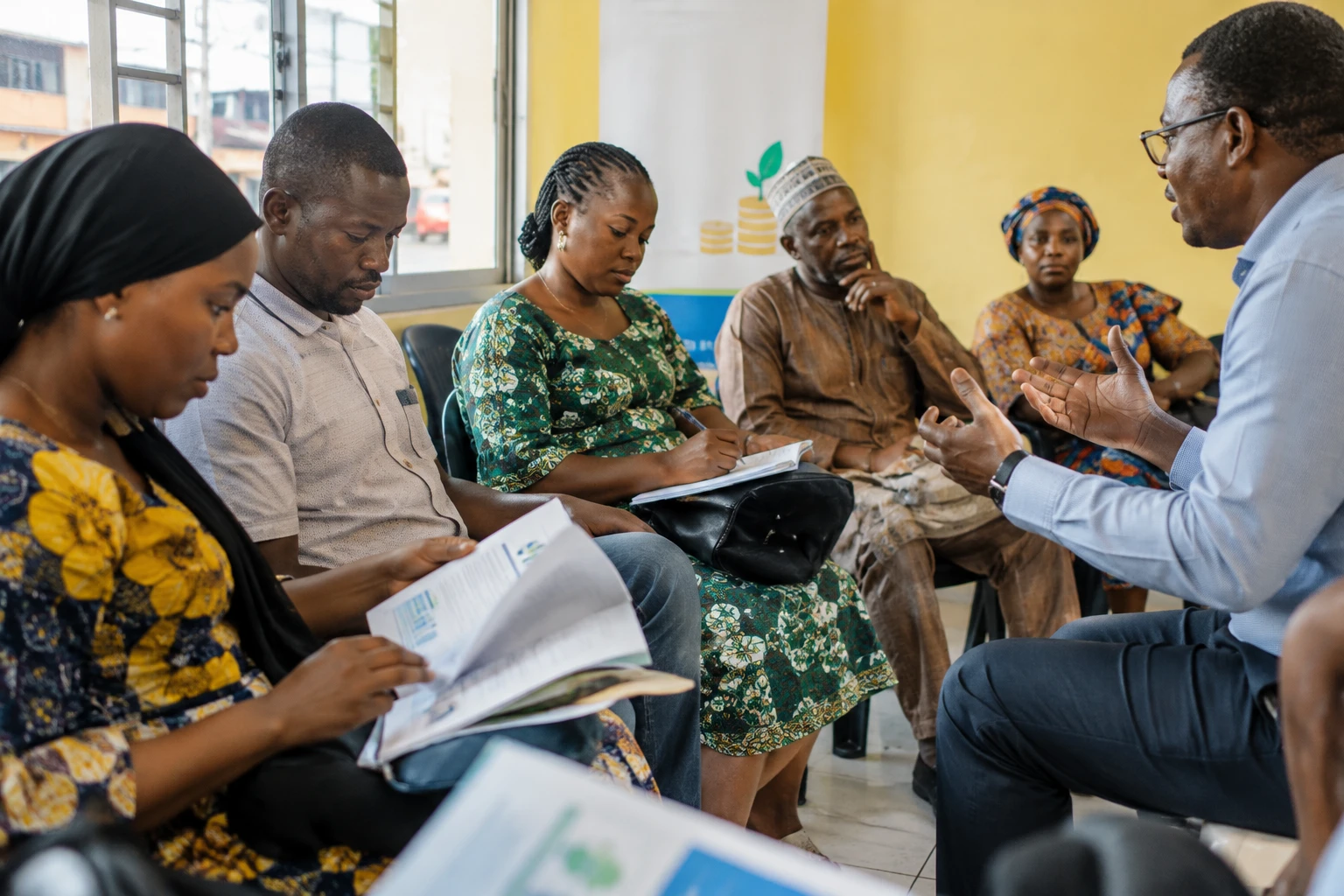
Bank participation makes it possible to raise large sums quickly. It nevertheless raises the question of access for individuals. With a minimum ticket of GNF 5 million, subscriptions may remain beyond the reach of many savers, particularly when information about the securities, their risks and repayment terms is not widely available. Urban households and businesses in the regions do not necessarily have the same access to banks or investment products.
At the launch, the authorities presented the appeal to savers as open to the public and intended to finance projects of national interest. Banking sector officials, for their part, stressed the need to explain the product better to individuals. Broadening participation therefore depends not only on the rate offered: transparency about how the funds are allocated and the distribution of the securities also matter.
A domestic financing challenge in West Africa
For Guinea, this increased reliance on the domestic market is part of a financing strategy that supports its investment ambitions, particularly those associated with the Simandou 2040 programme. It is also taking place in a regional environment where West African states are seeking to mobilise more local resources. ECOWAS, the Economic Community of West African States, is one framework for regional cooperation, although this issue remains a national operation in Guinean francs.
What happens next will depend on debt management and monitoring of the announced projects. It will be important to see whether future issues succeed in diversifying subscribers, and whether the investments financed deliver verifiable results beyond Conakry. Strong demand is a sign of financial capacity; its significance will depend on transparency, the final cost to the state and the benefits actually delivered to the population.