Algeria
 Egypt
 Libya
 Morocco
 Sudan
 Tunisia
 Benin
 Burkina Faso
 Cabo Verde
 Côte d'Ivoire
 Ghana
 Guinea-Bissau
 Liberia
 Mali
 Mauritania
 Niger
 Nigeria
 Senegal
 Sierra Leone
 The Gambia
 Togo
 Cameroon
 Central African Republic
 Chad
 DR Congo
 Equatorial Guinea
 Gabon
 Republic of the Congo
 São Tomé and Príncipe
 Burundi
 Comoros
 Djibouti
 Eritrea
 Ethiopia
 Kenya
 Madagascar
 Malawi
 Mauritius
 Mozambique
 Rwanda
 Seychelles
 Somalia
 South Sudan
 Tanzania
 Uganda
 Angola
 Botswana
 Eswatini
 Lesotho
 Namibia
 South Africa
 Zambia
 Zimbabwe
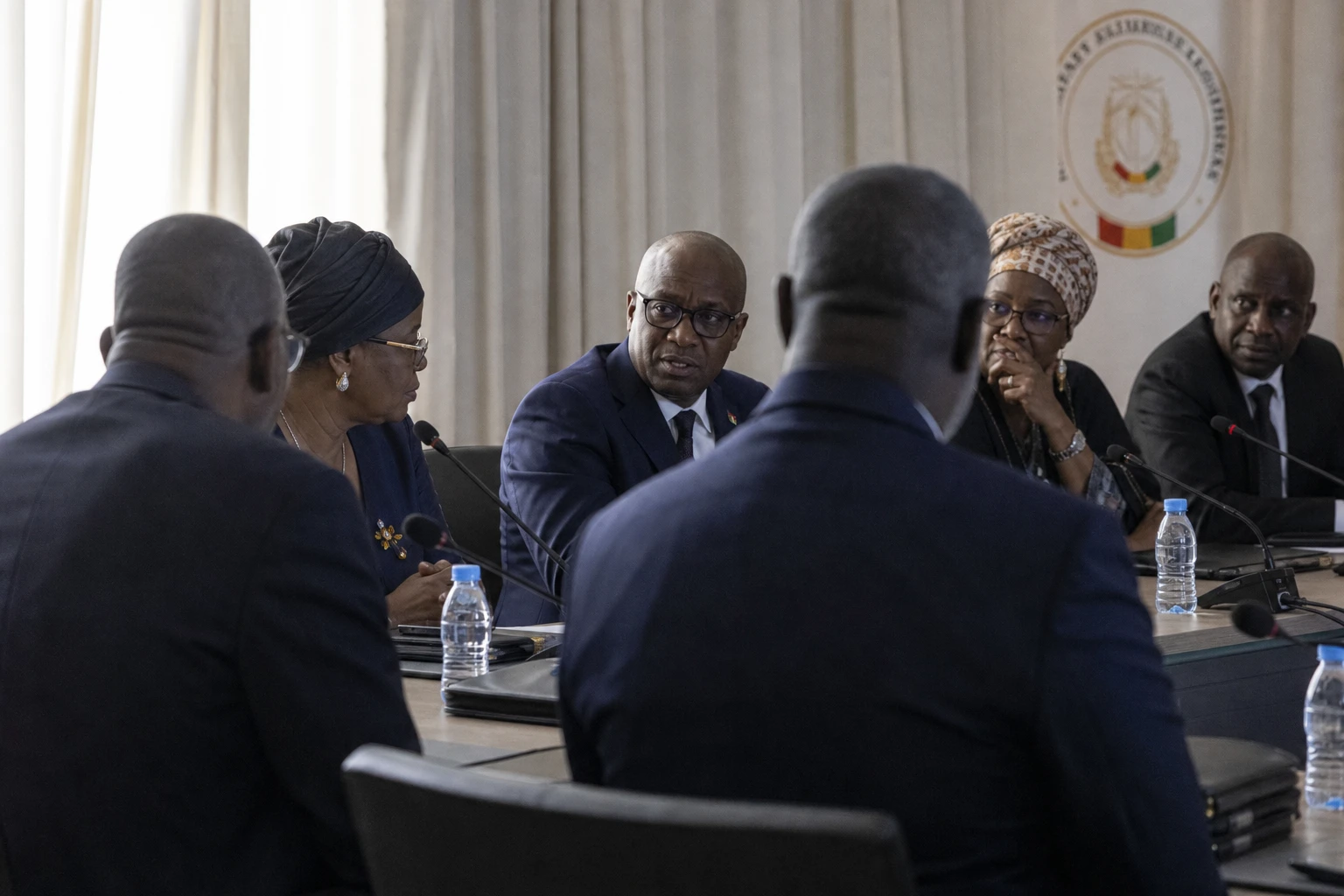
A memory Guinea wants to bring home, not merely display
In Conakry, the question is not simply that of a skull kept in a Paris museum. It concerns how a country writes its history, honours its dead and passes its landmarks on to a generation seeking firm foundations. In Guinea, the return of Bokar Biro Barry’s remains is part of this effort to reclaim control of the national memory.
The issue goes beyond symbolism. It also relates to a specific political moment: Guinea is emerging from a lengthy transition, saw the ECOWAS lift its remaining sanctions at the end of January 2026 and is pursuing its return to West African regional frameworks. In this context, culture is both a lever of sovereignty and a tool for cohesion.
Fouta-Djalon, a political and religious heritage that remains alive
Bokar Biro Barry was the last almamy of Fouta-Djalon, meaning the political and religious leader of this theocratic state founded in the 18th century in the highlands of what is now Guinea. Historians such as Boubacar Barry place his rule in the final phase of resistance to French colonial expansion, around 1896.
This history remains very present in the centre of the country, particularly in Middle Guinea, where Fouta continues to occupy an important place in social, religious and political memory. The issue is therefore not a simple museum gesture. It concerns a figure who, for many Guineans, embodies one of the earliest organised oppositions to colonial penetration of the territory that would become the Republic of Guinea.
Official request based on France’s 2023 law
Guinean authorities have formally requested the return of the skull of Bokar Biro and those of three of his relatives, according to information made public at the end of July. The procedure is based on the French law of 26 December 2023 on the restitution of human remains belonging to public collections. The text allows, by way of exception, remains to be removed from the public domain for funerary purposes when their conservation contravenes human dignity or the traditions of the group of origin.
In Guinea’s case, the process is not limited to a diplomatic request. A scientific committee is preparing it, tasked with authenticating the remains, documenting their provenance and proposing a framework for their return that complies with the legal requirements of both countries. The principle is clear: restitution must not be improvised, as it involves law, history and the sensibilities of families who preserve the memory of the past.
Bokar Biro’s skull is kept at the Musée de l’Homme in Paris, a museum whose scientific collections include human remains. But Guinea says it wants a dignified burial, in keeping with its funerary customs. In local culture, displaying human remains does not carry the same meaning as placing them in the cases of a European museum.
Between heritage restitution and political assertion
The request is part of a broader push for the return of heritage. In mid-July, Conakry had already launched a process concerning the personal effects of Samory Touré, another major figure in the resistance to the French colonial conquest. By bringing these cases together, Guinean authorities are constructing a continuous narrative of national memory, from Samory to Bokar Biro, rather than treating each restitution as an isolated case.
The choice matters politically. In a country where the institutional transition is seeking to draw to a close and the timetable for a return to constitutional order remains central to public debate, historical memory also serves as a common language. It speaks to cities and rural areas, administrative elites and Fouta families alike, and can strengthen a sense of unity at a time when political balances remain fragile.
The significance of this process is also continental. Other African countries have pursued, with varying results, the return of objects, human remains and archives taken during colonisation. The return of several skulls to Algeria in 2020 and then to Madagascar in 2024 showed that legal action was possible in France, even if it remains slow and tightly regulated. Guinea is therefore part of a broader African movement to reclaim plundered memories.
What this restitution would say about Guinea and West Africa
If the return is confirmed, the Guinean state plans to hold a state funeral. The burial place has yet to be decided between Conakry and Timbo, the former capital of the theocratic Fouta. This detail is not insignificant: it will show whether the Republic wants to place Bokar Biro within its national protocol or return him to the heart of his historical roots.
For Guinea, the stakes are tangible. A successful restitution would strengthen the credibility of national cultural institutions, from the National Museum to scientific teams, and show that a country can bring memory, law and symbolic sovereignty into dialogue without resorting to pageantry. For the people of Fouta-Djalon, above all, it would open up space for recognition. For the country as a whole, it would be a reminder that Guinean history is not limited to crises or changes of transition.
Developments in West Africa warrant close attention. ECOWAS fully reintegrated Guinea into its bodies in early 2026, and Conakry has an interest in showing that it can also make progress on cultural and commemorative issues, not only institutional ones. The return of Bokar Biro could then become more than an act of heritage restitution: a signal of political maturity, as the country seeks to consolidate its place in the region and reaffirm its own interpretation of history.