Algeria
 Egypt
 Libya
 Morocco
 Sudan
 Tunisia
 Benin
 Burkina Faso
 Cabo Verde
 Côte d'Ivoire
 Ghana
 Guinea-Bissau
 Liberia
 Mali
 Mauritania
 Niger
 Nigeria
 Senegal
 Sierra Leone
 The Gambia
 Togo
 Cameroon
 Central African Republic
 Chad
 DR Congo
 Equatorial Guinea
 Gabon
 Republic of the Congo
 São Tomé and Príncipe
 Burundi
 Comoros
 Djibouti
 Eritrea
 Ethiopia
 Kenya
 Madagascar
 Malawi
 Mauritius
 Mozambique
 Rwanda
 Seychelles
 Somalia
 South Sudan
 Tanzania
 Uganda
 Angola
 Botswana
 Eswatini
 Lesotho
 Namibia
 South Africa
 Zambia
 Zimbabwe
A colonial legacy brought into the present
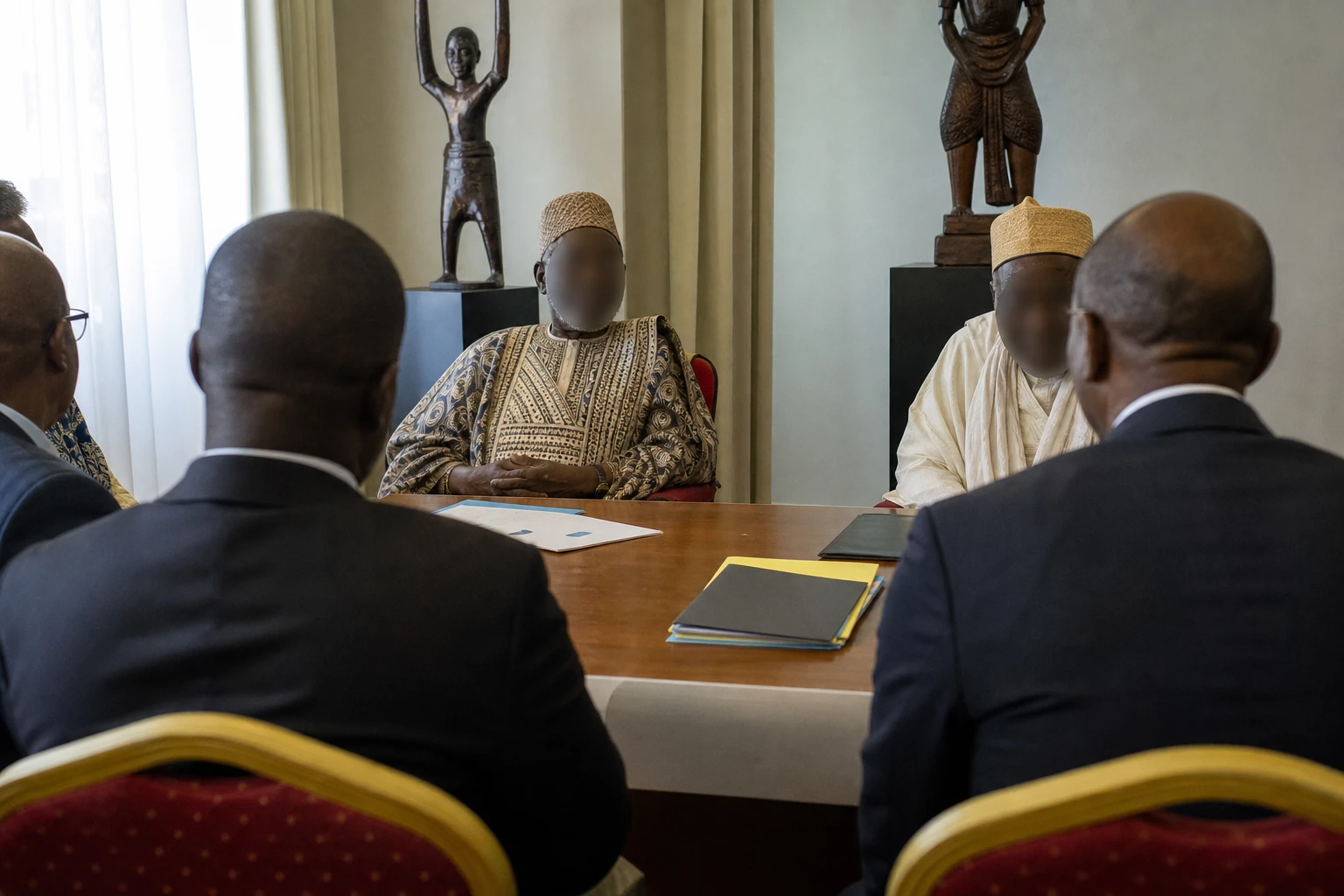
In Conakry, the issue is not simply that a skull is being kept far from home. It touches on memory, funeral rites and the place Guinea wants to give its figures of resistance. In a country still undergoing a political transition, the case links the colonial past to the contemporary debate over cultural sovereignty.
The subject extends well beyond the circle of historians. In Fouta-Djalon, the story of Almamy Bocar Biro Barry remains alive in families, local accounts and places of memory, between Timbo, Botorë and Porédaka. For many Guineans, restitution would not be a mere act of heritage preservation. It would also restore the proper order of burials, in keeping with the country’s customs.
What Conakry is seeking, and why Paris must now decide
Guinea approached France on 27 July to secure the return of the remains attributed to Almamy Bocar Biro Barry, as well as those of three relatives: his father, his brother and his war chief. Guinea’s Ministry of Culture presented the move as an official restitution request. The case concerns the collections of the Musée de l’Homme in Paris, where the remains are held.
This is not happening in a legal vacuum. Since the law of 26 December 2023, France has had a specific framework for returning human remains belonging to public collections, provided they are intended to resume a funerary function. The procedure provides for joint scientific work, followed by a restitution decree. The Malagasy precedent showed that this administrative process can take time: a request in May 2022, a decree in April 2025 and the physical handover in August 2025.
In other words, Conakry is not acting in the shadows. It is entering a space now governed by French law. But this framework does not settle everything. The remains will still need to be identified, the scope of the remains clarified, and the political and scientific timetable decided. This is often where symbolic requests become concrete cases, with deadlines and trade-offs.
Bocar Biro, the battle of Porédaka and the memory of Fouta-Djalon
Bocar Biro Barry is described as the last independent ruler of the imamate of Fouta-Djalon. Historical research places his defeat at Porédaka in November 1896, at the hands of French colonial troops and local allies. Guinea’s account of the figure has long been built around this sequence: rejection of treaties, the fall of Timbo, the battle of Porédaka and the abrupt end of an old political order.
Sources do not all give the same account of the exact circumstances of the Almamy’s death. Some historical accounts give 13 November 1896 as the date of the battle and his death. Other local traditions, recorded in Guinean research, describe a flight, a period in hiding and then an execution on 18 November. This divergence is not incidental. It is a reminder that in West Africa, colonial history is also read through oral memory, written archives and the silences left by the violence of conquest.
The sensitive issue is therefore not only scientific. It is also moral and social. In Botorë, residents and descendants have long kept alive the memory of a leader who was buried and then decapitated, before his head was taken to the metropole. Whether or not this account is fully documented, it has shaped a collective memory that gives restitution the value of reparation.
What the return of the remains would mean for Guinea
Guinean authorities say they do not want a museum exhibition after repatriation. The stated principle is a funerary one. Mohamed Amirou Conté, director-general of the National Museum of Guinea and a member of the scientific committee, has cited the country’s traditions: human remains must be buried. The debate now centres on the burial site, between Conakry and Timbo, the former religious and political capital of Fouta-Djalon.
This position sheds light on a very concrete African relationship with heritage. Here, memory is not simply an object to be preserved. It concerns the dignity of the dead, the authority of families and the way the state recognises its historical figures. In a country where institutions are seeking to rebuild themselves, repatriating a resistance figure’s ancestor is also a way of saying that national history is no longer made solely elsewhere.
The case also has a practical dimension. Returning a body or human remains requires experts, archives, co-operation between museums and administrations, and then a burial ceremony. Guinea will therefore have to reconcile religious memory, heritage expertise and political choices. At a time when electoral and institutional debates remain heated, such a case could also test the Conakry authorities’ approach.
A Guinean case, but also a pan-African one
Across the continent, the issue resonates far beyond Fouta-Djalon. The return of human remains and objects acquired during the colonial period is progressing at different speeds. Madagascar secured the return of three Sakalava skulls in 2025. Algeria has already recovered human remains. France has therefore opened a legal door, still narrow but real.
For Guinea, the stakes are regional too. The country is part of the ECOWAS region, where the movement of memories, families and languages crosses borders inherited from colonisation. The return of Bocar Biro Barry would speak not only to Guineans. It would speak to all West African societies calling for new rules on archives, public collections and human remains scattered outside the continent.
The decisive step remains: the scientific examination, France’s response and the precise form repatriation will take. If Paris opens the way, Guinea will be able to turn a request rooted in memory into a major political and cultural moment. If the process drags on, the case will join the long list of restitutions announced and debated, then slowed by procedures. Either way, Conakry will have put a clear issue on the table: resistance ancestors are not items in storage. They belong first and foremost to the history they served.