Algeria
 Egypt
 Libya
 Morocco
 Sudan
 Tunisia
 Benin
 Burkina Faso
 Cabo Verde
 Côte d'Ivoire
 Ghana
 Guinea
 Liberia
 Mali
 Mauritania
 Niger
 Nigeria
 Senegal
 Sierra Leone
 The Gambia
 Togo
 Cameroon
 Central African Republic
 Chad
 DR Congo
 Equatorial Guinea
 Gabon
 Republic of the Congo
 São Tomé and Príncipe
 Burundi
 Comoros
 Djibouti
 Eritrea
 Ethiopia
 Kenya
 Madagascar
 Malawi
 Mauritius
 Mozambique
 Rwanda
 Seychelles
 Somalia
 South Sudan
 Tanzania
 Uganda
 Angola
 Botswana
 Eswatini
 Lesotho
 Namibia
 South Africa
 Zambia
 Zimbabwe
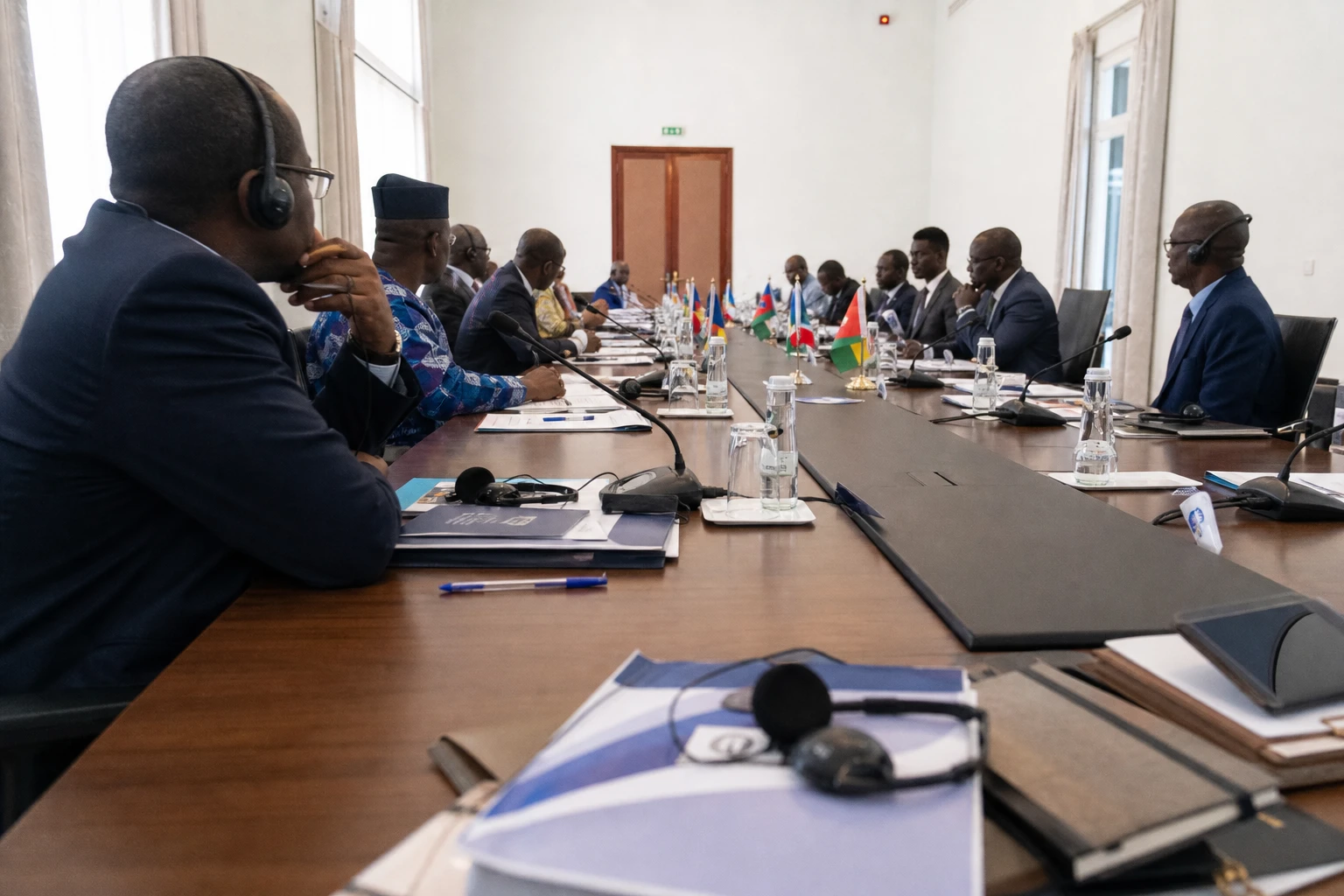
In Bissau, a vote that goes beyond the constitution
In Bissau, the constitutional referendum did more than decide the fate of a text. It also gauged the balance of power between a military transition and an opposition challenging the way the country is returning to the polls. In a country where the rules of the political game have often changed under pressure from crises, the vote’s significance goes beyond a simple institutional reform.
Guinea-Bissau is emerging from a period that began with the coup d’état of 26 November 2025, followed by the establishment of a transitional government that has promised a return to civilian rule in December 2026. In this fragile framework, the 30 August referendum was presented by the authorities as a step towards stability ahead of the general elections announced for 6 December.
The facts: ‘yes’ wins, but political opposition remains
According to the National Electoral Commission, announced in Bissau on 1 September, 70% of valid votes were cast in favour of the ‘yes’ vote on the new constitution. The CNE’s president, Carmem Isaura Tavares Baptista Lobo, also reported 383,117 votes for ‘yes’ and 160,904 for ‘no’, out of 914,428 registered voters. Turnout stood at 572,714, with 11,719 blank ballots and 16,923 invalid votes.
The approved draft challenges the current semi-parliamentary system. It significantly strengthens the presidency, giving the head of state a greater role in appointing and dismissing the prime minister and government. It also reduces the role of parliament, whose number of seats is set to fall from 102 to 65, according to information published by media outlets covering the issue.
The provisional results still need to be confirmed by the Supreme Court, but the CNE said no appeals had been filed so far. The commission also described the vote as orderly and peaceful. Observers and opposition groups, however, said turnout had been low in several areas and called for a boycott.
The African Party for the Independence of Guinea and Cape Verde, the historic independence movement, was among those opposed to the referendum. Along with other coalitions, it denounced a consultation held in an atmosphere of restrictions on civil liberties. This political opposition did not prevent the vote from taking place, but it is a reminder that national consensus remains incomplete.
Why the reform changes the balance of power
The heart of the debate is institutional. Under the old system, the president and prime minister shared executive power. Under the new one, the presidency gains the upper hand. For the transitional authorities, the aim is clear: to limit deadlock between the head of state and the prime minister’s office, a problem often cited as a chronic source of instability in Guinea-Bissau.
For supporters of the text, concentrating these powers could provide a clearer chain of command. For its critics, it instead creates a more top-down executive, and therefore one more vulnerable to personal rule. The debate touches on a familiar reality in the country: formal institutions have often coexisted with shifting power dynamics, in which parliamentary majorities and governing coalitions have rarely lasted long.
The reduction in the number of MPs from 102 to 65 will also affect representation. In a small country, it could reduce parliament’s political and administrative costs. But it could also narrow the space for pluralism, especially if opposition parties remain weakened by boycotts, distrust or internal divisions.
For the population, the stakes are less abstract than they might appear. In Bissau, the capital, political activity, the media and government departments are concentrated. In the regions, the impact is felt differently: in the state’s ability to honour its commitments, access to services, the influence of local leaders and trust in electoral institutions seen as distant from everyday life. When the constitutional framework changes, so too does the way local power is negotiated.
West African significance: a test for ECOWAS and the end of the transition
The Bissau-Guinean issue is part of a West African landscape still shaped by military transitions and tensions over security, representation and legitimacy. ECOWAS, the region’s main organisation, is closely monitoring these developments. It has previously supported Guinea-Bissau on other institutional projects, evidence that the country remains important to regional stability.
The continental significance is straightforward: if the December timetable holds, Guinea-Bissau will become another case of a return to civilian rule after a military transition. If the timetable slips, the referendum will appear to have been a tool for consolidating power rather than a bridge to credible elections. In either case, the African Union and ECOWAS will focus less on the ‘yes’ vote itself than on the authorities’ ability to organise an electoral process accepted by national stakeholders.
In the short term, the next decisive steps are therefore twofold: the Supreme Court’s final validation of the results and preparations for the 6 December elections. In between, the transitional government will have to show that it can turn a referendum victory into a stable political framework without further closing down space for public debate.