Algeria
 Egypt
 Libya
 Morocco
 Sudan
 Tunisia
 Benin
 Burkina Faso
 Cabo Verde
 Côte d'Ivoire
 Ghana
 Guinea-Bissau
 Liberia
 Mali
 Mauritania
 Niger
 Nigeria
 Senegal
 Sierra Leone
 The Gambia
 Togo
 Cameroon
 Central African Republic
 Chad
 DR Congo
 Equatorial Guinea
 Gabon
 Republic of the Congo
 São Tomé and Príncipe
 Burundi
 Comoros
 Djibouti
 Eritrea
 Ethiopia
 Kenya
 Madagascar
 Malawi
 Mauritius
 Mozambique
 Rwanda
 Seychelles
 Somalia
 South Sudan
 Tanzania
 Uganda
 Angola
 Botswana
 Eswatini
 Lesotho
 Namibia
 South Africa
 Zambia
 Zimbabwe
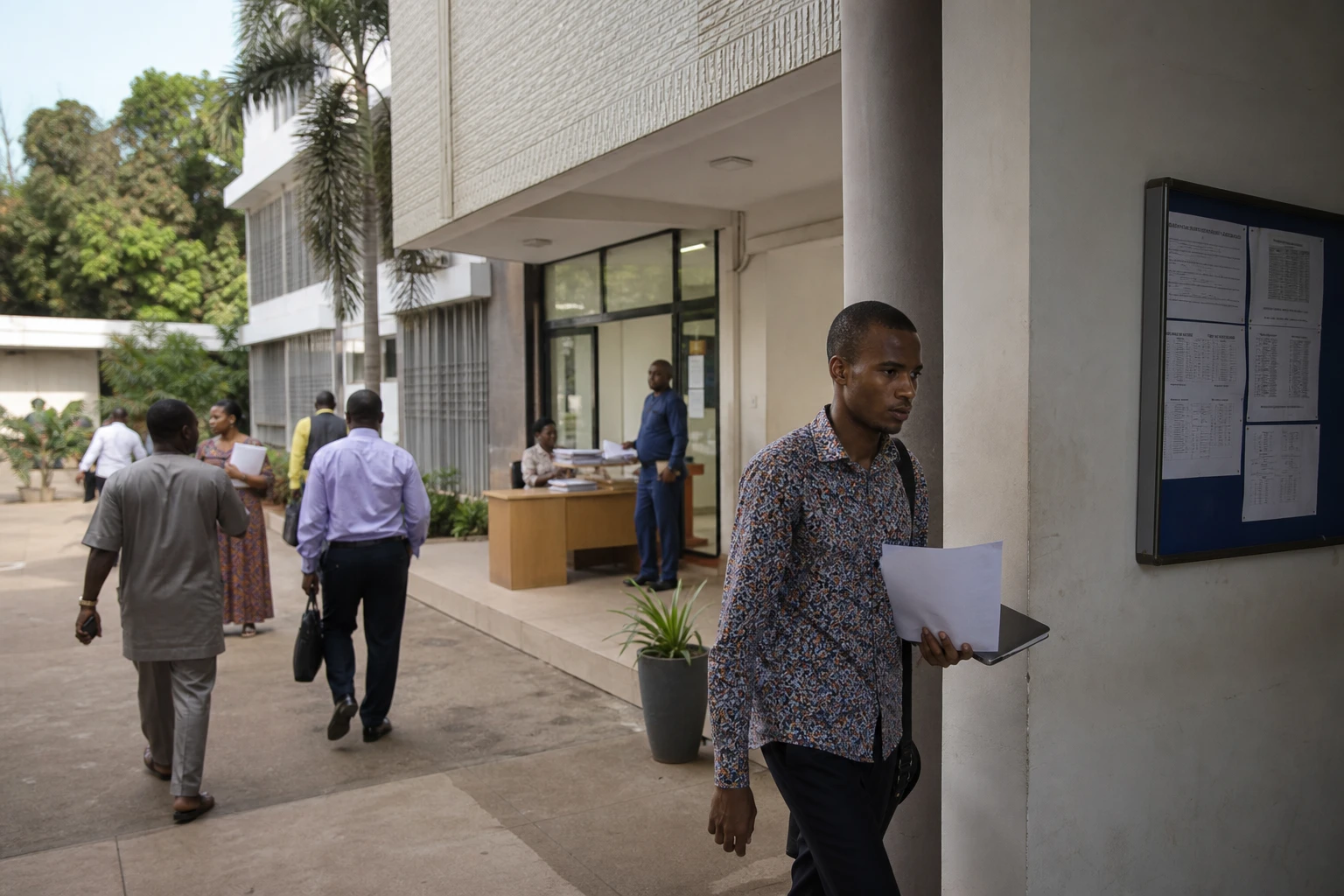
An appointment that says much about the state of education in Guinea
In Guinea, the education ministry does more than manage classrooms. It also weighs questions of national cohesion, social mobility and employment for a very young population. With an estimated 17,521,167 inhabitants in 2025, 43% of them under 15, the country faces demographic pressure that turns every new school year into a test of the state’s capacity.
In this context, entrusting the portfolio to Bintou Keïta is more than a change of face. It is the choice of a senior diplomat known both in UN corridors and in crisis zones. The former head of MONUSCO, the United Nations mission in the Democratic Republic of the Congo, took office in Conakry on 29 July 2026 as head of the ministry responsible for national education, literacy, technical education and vocational training.
Conakry seeks levers for reform that goes beyond schooling
The appointment comes as the Guinean authorities have made institutional renewal and human capital a stated priority. The Presidency presents Simandou 2040 as a long-term transformation framework, with a pillar explicitly devoted to education, culture and skills. The ministry itself says it is working on pre-primary education, basic education, general and technical secondary education, literacy and the promotion of national languages.
The choice of a figure from the UN system also fits a political approach that has been visible for several months: seeking people with experience in management, coordination and mobilising partners. In Conakry, this approach has already been applied in other strategic sectors. The Guinean authorities link it to a broader ambition to make public action more credible, particularly in the eyes of donors, families and teachers.
The facts: an internationally experienced diplomat takes over
The sequence is straightforward. By presidential decree, Bintou Keïta was brought into government during the reshuffle of 27 July 2026, then formally installed three days later. She succeeds Alpha Bacar Barry. The portfolio she takes over combines national education, literacy, technical education and vocational training. It is one of the executive’s largest departments, as it concerns children, adolescents, young people without qualifications and adults returning to learning.
Born in Guinea in 1958 and educated in France, Bintou Keïta graduated from Paris II in social economics and Paris IX in business administration. She joined the United Nations in 1989. The UN confirms that she was appointed Special Representative for the DRC and head of MONUSCO in January 2021. The organisation also notes that she recently left the institution after a 36-year career. Her biography matters because it explains why her arrival at the Education Ministry is seen as a signal of both political intent and a particular approach.
At the handover, the new minister said she wanted to build on the reforms, prioritising listening, dialogue, transparency and monitoring results. This language is not incidental. It speaks to an education administration tasked with overseeing thousands of schools, national examinations, recruitment, infrastructure and technical partners.
A system under strain, from primary school to vocational training
The system’s weaknesses are well documented. Guinea’s National Institute of Statistics says the country now has 17.5 million inhabitants and is predominantly rural, with 61.3% of the population living in rural areas. This means longer distances to schools, greater transport constraints and higher costs for families. The same source notes that a large share of the population is young and therefore directly affected by education and training.
On learning outcomes, UNESCO data show that the issue in Guinea is no longer just access, but whether students actually acquire skills. A UNESCO IICBA report on the country says that in 2023, 75.2% of girls and 79.4% of boys had completed at least four years of schooling. Another UNESCO study on Guinea reports a primary completion rate of 54.1%, with a marked gap between girls and boys. These figures point to a simple fact: incomplete schooling continues to weigh on the entire education system.
The ministry, for its part, has already launched practical initiatives, including connecting 2,200 public schools and rolling out digital monitoring tools. The department’s official website also lists projects related to smart schools and the Learning Passport. These initiatives point towards modernisation, but they will have to be grounded in reality: the availability of electricity and internet access, maintenance, teacher training and equity between Conakry and the rest of the country.
What this profile could change, and what it cannot solve alone
Bintou Keïta’s main potential asset is her capacity for coordination. Her UN career has accustomed her to navigating between states, agencies, donors and civil society. For Guinean education, this could facilitate dialogue with technical and financial partners, while also bringing greater pressure for measurable results. In a sector often criticised for being too centralised, this approach could help link planning, implementation and oversight more effectively.
But the scale of the challenges goes beyond leadership alone. Stable budgets, trained teachers, well-maintained infrastructure and genuine links with the labour market will be needed. Technical education and vocational training, in particular, remain crucial in an economy where most young people cannot afford to wait several more years before entering the workforce. Without this, reform risks remaining prominent in speeches but slow to reach classrooms.
Implications for Guinea, and West Africa
At regional level, the issue speaks to a question shared by several ECOWAS countries: how to educate people quickly, better and on a broader scale as populations grow and economies demand a wider range of skills? Guinea is not alone in seeking this balance, but it is doing so at a time of high expectations, as Conakry speaks of sovereignty, transformation and excellence.
The next phase will therefore depend less on the element of surprise than on the speed of implementation. Ahead of the next school year and the continuation of projects on digitisation, connectivity and technical education reform, the new minister will be expected to deliver tangible signs of progress: a timetable, funding, governance and results. In a country where schools carry many of the promises of development, Bintou Keïta’s appointment above all ushers in a period of very concrete choices.