Algeria
 Egypt
 Libya
 Morocco
 Sudan
 Tunisia
 Benin
 Burkina Faso
 Cabo Verde
 Côte d'Ivoire
 Ghana
 Guinea-Bissau
 Liberia
 Mali
 Mauritania
 Niger
 Nigeria
 Senegal
 Sierra Leone
 The Gambia
 Togo
 Cameroon
 Central African Republic
 Chad
 DR Congo
 Equatorial Guinea
 Gabon
 Republic of the Congo
 São Tomé and Príncipe
 Burundi
 Comoros
 Djibouti
 Eritrea
 Ethiopia
 Kenya
 Madagascar
 Malawi
 Mauritius
 Mozambique
 Rwanda
 Seychelles
 Somalia
 South Sudan
 Tanzania
 Uganda
 Angola
 Botswana
 Eswatini
 Lesotho
 Namibia
 South Africa
 Zambia
 Zimbabwe
Can a presidential pardon free someone without immediately restoring their liberty? In Guinea, Aliou Bah’s case raises that question: after several months in detention, the president of the Liberal Democratic Movement (MoDeL) must, according to the authorities, attend a civic supervision course before his effective release.
Release subject to a compulsory programme
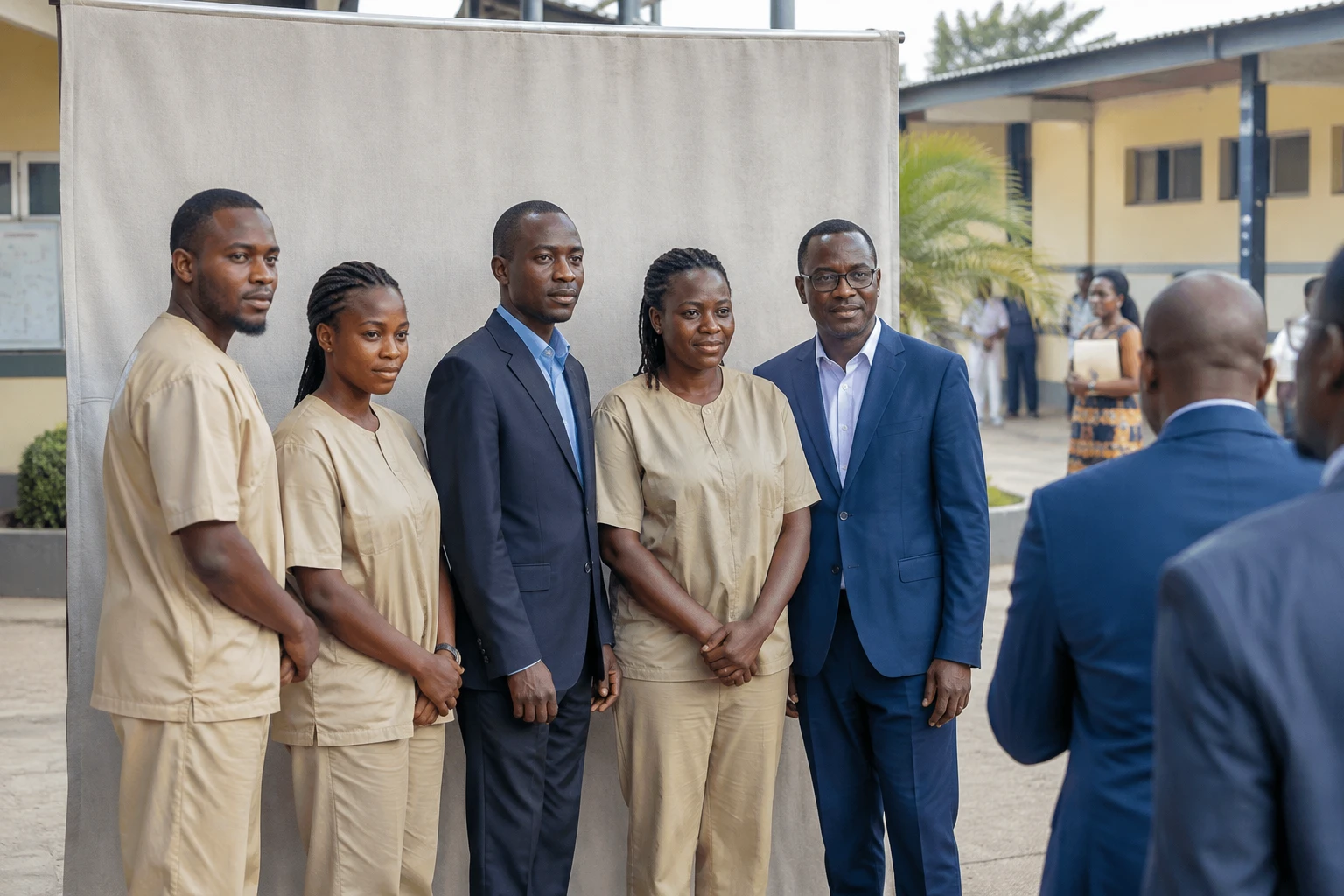
Guinea’s Ministry of Justice released images of Aliou Bah at the National Gendarmerie School in Sonfonia, in the suburbs of Conakry. Minister Ibrahima Sory II Tounkara visited to check the reception and supervision arrangements for those pardoned, according to the official statement reported by several Guinean media outlets.
Aliou Bah appears wearing sand-coloured clothing. His party, MoDeL, had expressed concern about his fate after he was transferred from Coyah prison on the night of 6 to 7 October. At the time, according to the information available, the authorities had not publicly specified where he was.
The decree of 2 October granted a full remission of sentence to 217 convicted people, including Aliou Bah. However, the measure is subject to a civic supervision and reintegration preparation course. The decree sets its duration at 45 days. The programme must therefore take place before the beneficiaries’ effective release. These details were reported by Guinée114 and corroborated by Africa Guinée.
A second wave of pardons covers 312 detainees. Information published by Guinean media places the announcement of this decision on 14 October, not 13 October. It also indicates that those concerned must complete a reintegration course, whose arrangements and duration differ from those announced for the 217 beneficiaries of 2 October. The two decrees and their conditions should therefore not be confused. Guinée Matin reports a 30-day course for the second wave.
Conviction linked to his public statements
Aliou Bah was sentenced in January 2025 to two years in prison for “insulting and defaming” President Mamadi Doumbouya, according to the ruling reported by Guinean and international media. The Conakry Court of Appeal upheld the sentence in May 2025. The court rulings are documented by Mediaguinée and Guinéenews.
His two-year prison term had therefore not yet expired when the pardon was announced. In practice, the measure turns the remission of his sentence into a release subject to an additional step. The authorities present this as a tool for promoting accountability and social reintegration. MoDeL, for its part, believes a political leader should not be treated like an ordinary criminal and is seeking, according to the information available, an exemption for its president.
A presidential pardon is the prerogative of the head of state. But the conditions imposed on its beneficiaries matter as much as the announcement of clemency: they determine when a person actually leaves detention and under what supervision. The published information does not establish whether Aliou Bah has asked to be exempted from the course, whether such an exemption is provided for, or which authority would decide on a request. These questions therefore remain open.
A political and institutional issue
The case goes beyond the individual. Aliou Bah leads an opposition party, and his conviction concerns remarks directed at the head of state. This places his continued detention, and then the conditions of his release, at the intersection of criminal justice and political pluralism. The authorities defend a reintegration programme; MoDeL disputes whether the scheme is appropriate for its leader. These positions should be distinguished from the facts established by the decrees and court rulings.
The national context is also regional. Guinea is a member of the Economic Community of West African States (ECOWAS), the organisation that brings together West African countries and monitors institutional developments in its member states. In 2026, ECOWAS deployed a technical mission to observe Guinea’s legislative and local elections on 31 May, presenting the vote as a step in the transition process. The ECOWAS statement recalls the importance of strengthening institutions and restoring constitutional order.
In this context, the way the authorities implement pardons will be watched beyond Conakry. For detainees and their families, the difference is immediate: a remission of sentence does not necessarily mean release on the day the decree is issued. For political parties, the treatment of a prominent opposition figure raises questions about the space available for dissent. For institutions, the challenge is to make the rules, course durations and avenues of appeal clear.
The next developments to watch are therefore concrete: publication of the course arrangements, Aliou Bah’s effective release date and MoDeL’s official position on a possible exemption for him. Until these details are established, it is appropriate to speak of a pardon accompanied by a programme, not an immediate and unconditional release.