Algeria
 Egypt
 Libya
 Morocco
 Sudan
 Tunisia
 Benin
 Burkina Faso
 Cabo Verde
 Côte d'Ivoire
 Ghana
 Guinea-Bissau
 Liberia
 Mali
 Mauritania
 Niger
 Nigeria
 Senegal
 Sierra Leone
 The Gambia
 Togo
 Cameroon
 Central African Republic
 Chad
 DR Congo
 Equatorial Guinea
 Gabon
 Republic of the Congo
 São Tomé and Príncipe
 Burundi
 Comoros
 Djibouti
 Eritrea
 Ethiopia
 Kenya
 Madagascar
 Malawi
 Mauritius
 Mozambique
 Rwanda
 Seychelles
 Somalia
 South Sudan
 Tanzania
 Uganda
 Angola
 Botswana
 Eswatini
 Lesotho
 Namibia
 South Africa
 Zambia
 Zimbabwe
In Conakry, the political battle is also being fought in the language of loyalty
In Guinea, a statement by the army is never a mere formality. It says something about the real balance of power, especially when the opposition denounces an authoritarian drift and the military command responds by displaying its discipline. In Conakry, this episode is a reminder that Guinea’s transition remains as much a matter of institutions as of power struggles.
The country is still living in the aftermath of the 5 September 2021 coup, which brought General Mamadi Doumbouya to power. Since then, the transition has taken several turns: a draft new Constitution was submitted in June 2025, a constitutional referendum was held on 21 September 2025, and the electoral process was relaunched, with parliamentary and local elections announced for 31 May 2026 under the technical observation of ECOWAS, the Economic Community of West African States.
Forces vives challenge the government’s course
In this climate, the Forces vives de Guinée collective, which brings together opposition parties and civil society organisations, has reiterated its rejection of the government in power. Its leaders accuse the authorities of governing through repression and closing down political space. This coalition is no stranger to clashes with the transitional authorities: it has already opposed several stages of the process, particularly when people in the streets, parties and associations felt they were being excluded from major decisions.
Their criticism is political, but it also touches on domestic security. In Guinea, periods of transition are often marked by close monitoring of parties, demonstrations and the media. The government, for its part, presents institutional reform as a necessary phase of stabilisation before a full return to constitutional order. This divergence in interpretation remains at the heart of the crisis of trust between the streets, the parties and the state.
The army opts for order and continuity
As criticism mounted, the chief of the general staff of the armed forces, General Ibrahima Sory Bangoura, spoke out to reaffirm the loyalty of the defence and security forces to the head of state. His message is clear: the army says it supports the continuation of the institutional process and is calling on the population to remain calm, away from rumours and “manipulation”. This public statement is no minor matter. In a country where the military has long wielded influence in the political arena, it is intended both to reassure and to deter.
General Bangoura did not speak only of loyalty. In March 2026, he had already adopted an assertive tone on the borders, stating that no part of Guinean territory would be ceded. A few days later, the general staff announced a gradual reduction in the military presence following a tripartite summit in Conakry with Liberia and Sierra Leone. This succession of episodes shows an army deeply involved in managing the national agenda, whether on external security or internal stability.
What this means for Guineans
For the government, the challenge is simple: to prevent political dissent from widening into a civilian-military front. In Guinea, the army’s words still carry considerable weight in perceptions of stability. An expressed show of support for the presidency may reassure part of the state apparatus, but it resolves neither the question of trust, nor that of pluralism, nor that of civil liberties.
For opponents and the Forces vives, the opposite risk is that the transition will close in around an executive core backed by the armed forces and endorsed by institutions born of the same process. Their struggle is therefore about the credibility of elections, fair access to public space and reopening the political arena. In a country where party suspensions and restrictions on demonstrations have already weighed on debate, the question is not simply whether people can vote, but whether they can genuinely challenge those in power.
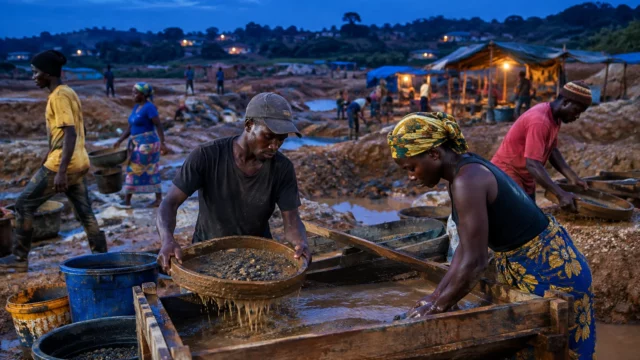
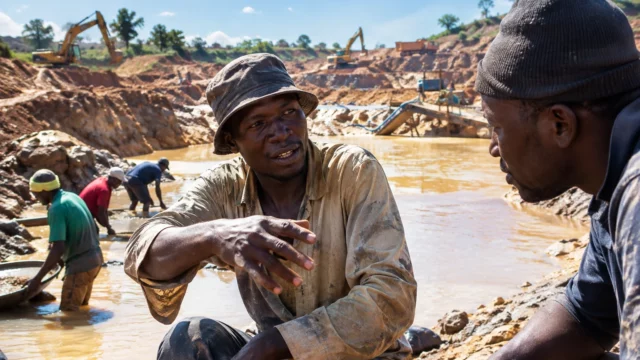
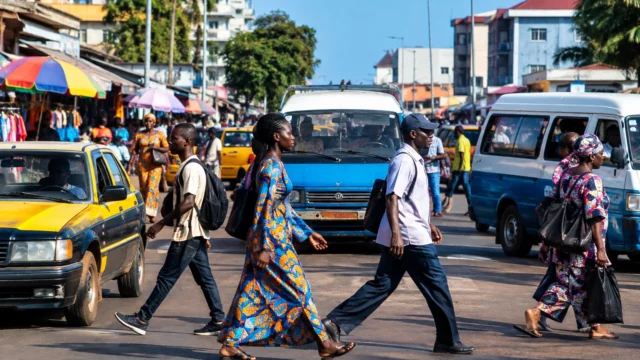
For the population, finally, what matters most is the effect of this episode on everyday life. In Conakry as in the mining regions, expectations are the same: jobs, roads, public services, affordable prices and a predictable administration. The government’s rhetoric of stability will be worth only as much as the results it delivers. Guinea remains a resource-rich country, with an economy closely watched for its bauxite, minerals and major infrastructure projects. But national wealth is legitimate only when institutions can arbitrate without resorting to force.
A Guinean episode with implications beyond Conakry
The significance of this episode extends beyond Guinea. In West Africa, ECOWAS is closely monitoring military transitions, electoral timetables and efforts to resolve crises. Its technical observation of Guinea’s 31 May 2026 elections shows that the Guinean issue is regional as well as national. What is happening in Conakry also speaks to Bamako, Ouagadougou, Niamey and even Abuja: the role of the military in government, the pace of the return to constitutional order and the ability of institutions to survive the transition.
The next phase to watch is therefore political before it is military: how the electoral process is conducted, how much space is granted to parties and whether the authorities can maintain a credible framework. In this equation, every army statement, every opposition mobilisation and every move by the presidential palace will be read as an indicator. In Guinea, the transition is not read only in the texts. It is also read in the way the armed forces, parties and citizens accept — or reject — the new grammar of power.