Algeria
 Egypt
 Libya
 Morocco
 Sudan
 Tunisia
 Benin
 Burkina Faso
 Cabo Verde
 Côte d'Ivoire
 Ghana
 Guinea-Bissau
 Liberia
 Mali
 Mauritania
 Niger
 Nigeria
 Senegal
 Sierra Leone
 The Gambia
 Togo
 Cameroon
 Central African Republic
 Chad
 DR Congo
 Equatorial Guinea
 Gabon
 Republic of the Congo
 São Tomé and Príncipe
 Burundi
 Comoros
 Djibouti
 Eritrea
 Ethiopia
 Kenya
 Madagascar
 Malawi
 Mauritius
 Mozambique
 Rwanda
 Seychelles
 Somalia
 South Sudan
 Tanzania
 Uganda
 Angola
 Botswana
 Eswatini
 Lesotho
 Namibia
 South Africa
 Zambia
 Zimbabwe
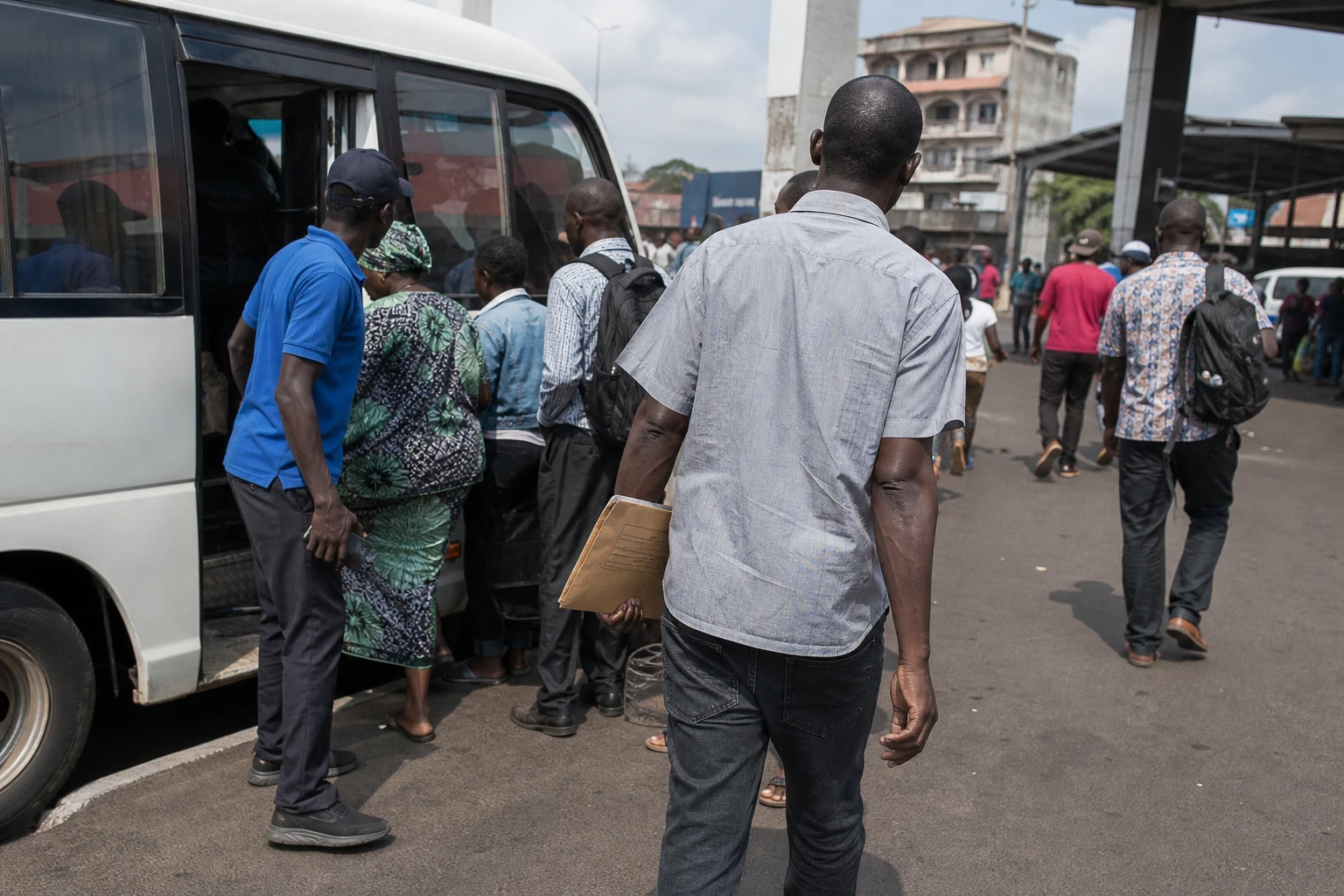
In Conakry, Aliou Bah’s release comes at the intersection of two developments: the Guinean authorities’ desire to mark the national holiday with an act of clemency, and legal pressure from the West African community court. The president of the Liberal Democratic Movement, detained since December 2024, is among the 217 prisoners pardoned on 2 October 2026.
The decision ends a detention that had taken on national and regional significance. However, it does not, on its own, resolve questions about freedom of expression, judicial independence and Guinea’s compliance with its commitments within the Economic Community of West African States (ECOWAS).
Pardon announced for Independence Day
The presidential decree was announced on national television on Friday 2 October, the day Guinea celebrated its independence. According to several Guinean media outlets, the decree grants a full remission of sentence to 217 detainees convicted of various offences. Aliou Bah is among those benefiting.
The measure also provides for a 45-day reintegration programme for those concerned. This provision distinguishes a presidential pardon from a simple release from prison. It entails administrative and social support, the implementation of which will need to be monitored across the country’s different regions.
The decision has been confirmed by several independent sources, including a Guinean media outlet that consulted the decree and a regional report on the release. These publications agree on the number of 217 detainees and Aliou Bah’s inclusion on the list.
A legal case that went regional
Aliou Bah was sentenced on 7 January 2025 to two years in prison for “insult and defamation” against Mamadi Doumbouya. The conviction was subsequently upheld on appeal in Conakry in May 2025, according to available reports on the case.
The president of MoDeL, a party that describes itself as a liberal opposition force, had been in prison since the end of December 2024. Without a pardon, his sentence would normally have ended in December 2026. The presidential measure therefore secures his release before the originally scheduled date.
The case had, however, moved beyond the Guinean courts. On 25 June 2026, the ECOWAS Court of Justice declared that it had jurisdiction to consider Aliou Bah’s petition. In its ruling, the regional court ordered his “immediate and unconditional” release and found that some of his fundamental rights had been violated, including freedom of expression and freedom of movement, according to the report on the regional court’s decision.
On 25 September 2026, the court’s registry wrote again to Guinea’s Supreme Court, seeking information on the measures taken to implement the ruling. The letter, made public on 2 October, recalled that the regional court was awaiting follow-up on the implementation of its decision. The reminder came a few days before the presidential pardon was announced, as reported by the Guinean embassy in Senegal.
Decision does not end debate on freedoms
In the immediate term, the pardon allows Aliou Bah to regain his freedom. It also brings relief to his family and supporters, who had denounced his sentence as disproportionate and called for his release.
Its legal significance is more limited. A pardon waives or reduces the enforcement of a sentence. It does not necessarily overturn the judgment or constitute an admission of a miscarriage of justice. The question of whether the proceedings complied with regional standards therefore remains separate from the presidential decision.
The timing also gives the case a political dimension. The pardon comes after the ECOWAS Court of Justice called for an immediate and unconditional release. It allows the Guinean authorities to end the detention, but it is not yet clear how Conakry intends to respond formally to the regional ruling.
For political actors, the signal is therefore mixed. The authorities can present the move as a gesture of reconciliation. The opposition and human rights organisations, for their part, can point out that Aliou Bah’s freedom came after a conviction and lengthy detention, and in the context of a binding decision by the community court.
Guinea and its regional commitments
Since the overthrow of Alpha Condé in September 2021, Guinea has been led by Mamadi Doumbouya, who came to power at the head of a military transition. The authorities have promised a return to constitutional order, while political parties and civil society organisations are demanding guarantees for civil liberties and political participation.
In this context, the Aliou Bah case is part of a series of tensions between Conakry and regional actors. ECOWAS, an organisation that coordinates political and economic cooperation among 15 West African countries, has a court tasked, among other things, with addressing human rights violations committed in its member states.
Guinea faces a dual challenge. The first concerns the internal management of the transition and the space allowed to parties, the media and critical voices. The second concerns the credibility of regional decisions. If ECOWAS Court of Justice rulings are not clearly implemented, the question of their effectiveness will arise beyond Guinea’s case alone.
Aliou Bah’s release is therefore an important development, but not a conclusion. The next points to watch are Guinea’s official response to the 25 June ruling, the practical reintegration arrangements for the 217 beneficiaries and the place afforded to political actors in the country’s institutional path.