Algeria
 Egypt
 Libya
 Morocco
 Sudan
 Tunisia
 Benin
 Burkina Faso
 Cabo Verde
 Côte d'Ivoire
 Ghana
 Guinea-Bissau
 Liberia
 Mali
 Mauritania
 Niger
 Nigeria
 Senegal
 Sierra Leone
 The Gambia
 Togo
 Cameroon
 Central African Republic
 Chad
 DR Congo
 Equatorial Guinea
 Gabon
 Republic of the Congo
 São Tomé and Príncipe
 Burundi
 Comoros
 Djibouti
 Eritrea
 Ethiopia
 Kenya
 Madagascar
 Malawi
 Mauritius
 Mozambique
 Rwanda
 Seychelles
 Somalia
 South Sudan
 Tanzania
 Uganda
 Angola
 Botswana
 Eswatini
 Lesotho
 Namibia
 South Africa
 Zambia
 Zimbabwe
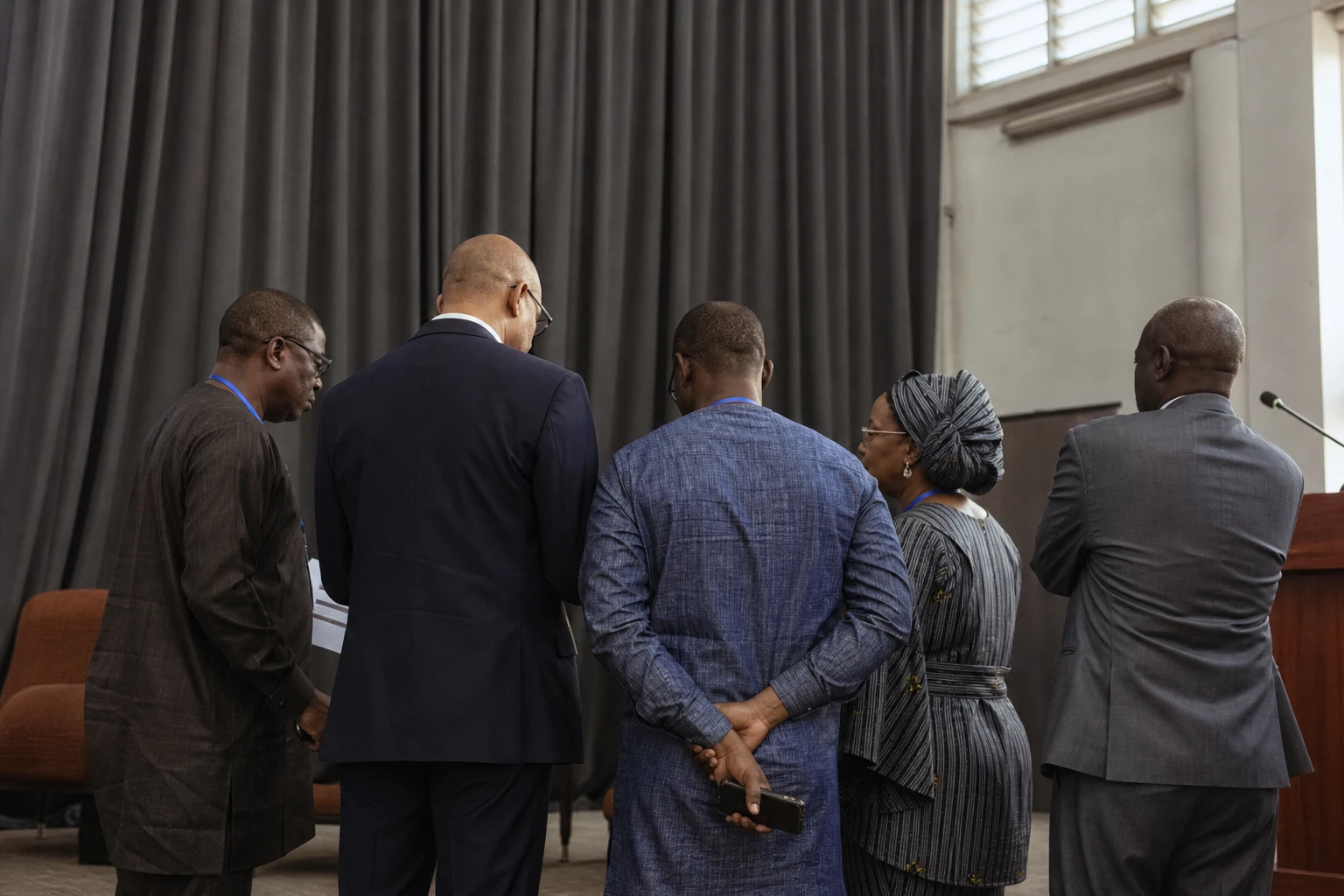
In Conakry, Aliou Bah’s release comes as Guinea’s authorities seek to project an image of reconciliation. President Mamadi Doumbouya granted full remissions of sentence to 217 convicts on Friday 2 October 2026, the national day. Among them was the leader of the Liberal Democratic Movement (MoDeL), who has become one of the transition’s leading critical voices.
Pardon announced on national day
The presidential measure applies to people convicted by several Guinean courts. Mamadou Aliou Bah’s name appears on the list made public after the decrees were read out. Guinean media, including AfricaGuinée and Guinée114, report the same figure of 217 beneficiaries.
The presidential pardon grants a full remission of the custodial sentence. It therefore allows Aliou Bah to leave prison, barring any administrative formality or separate measure that has not yet been made public. However, the decision does not annul the judgment or amount to judicial rehabilitation.
The move comes on the 68th anniversary of Guinea’s independence. It takes place at a particular political moment. Since the September 2021 coup, the transitional authorities have promised institutional reform. At the same time, relations with political parties, the media and civil society organisations remain marked by considerable tension.
A legal case turned political
Aliou Bah was arrested in December 2024. On 7 January 2025, the Kaloum Court of First Instance sentenced him to two years in prison for “insulting and defaming” the head of state, according to details cited in the court ruling and by several human rights organisations.
The conviction was subsequently upheld on appeal in Conakry at the end of May 2025. The case rested on statements made by the political leader about the governance of the transition and the country’s security situation. Aliou Bah and his supporters disputed the interpretation given to those remarks.
The proceedings quickly went beyond an individual criminal case. MoDeL made its president’s detention a central focus of its campaign. Its leaders denounced an infringement of freedom of expression and political pluralism. The authorities, for their part, maintained that the prosecution was a matter for the courts.
The Court of Justice of the Economic Community of West African States (ECOWAS), the regional organisation comprising 15 West African countries, handed down a ruling in the case on 25 June 2026. The community court found Aliou Bah’s detention to be arbitrary and ruled that his fundamental rights had been violated. The decision is published in the official case records of the ECOWAS Court of Justice.
This regional ruling confronted Conakry with a political and legal obligation that was difficult to ignore. The presidential pardon now addresses, at least in part, the question of his deprivation of liberty. It does not, however, resolve questions about Aliou Bah’s political rights or the conditions for his return to public life.
Questions after prison
An opposition figure’s release does not automatically mean that all avenues for political activity have been restored. Does Aliou Bah retain all his civic rights? Will he be able to lead his party freely, attend political meetings and stand in any future election? These issues depend on the precise terms of the pardon decree and on any court rulings that remain in force.
The distinction matters. A pardon removes or reduces the enforcement of a sentence, but does not necessarily erase the legal effects of a conviction. MoDeL will therefore need to examine the measure’s practical consequences with its lawyers and the relevant authorities.
For Guinea’s authorities, the timing gives the decision particular significance. The pardon follows a period marked by restrictions on demonstrations, tensions with the media and the departure of several political figures. It can be presented as a gesture of reconciliation. It may also be seen as a belated response to an adverse regional court ruling.
For Aliou Bah’s supporters, the issue goes beyond his release from prison. They are seeking guarantees of his safety, freedom of speech and ability to carry out his political responsibilities. In the capital and across the regions, these questions have broader implications for trust in the institutions of the transition.
A signal closely watched in West Africa
Guinea is not alone in this situation. In recent years, ECOWAS has faced a growing number of military-led transitions, restrictions on civil liberties and difficulties in enforcing its decisions. The Aliou Bah case is a reminder that the regional organisation remains a recourse for citizens, even when its decisions run up against domestic political realities.
The significance of the pardon will therefore depend on how it is implemented. The authorities will need to clarify the beneficiary’s legal and political status. MoDeL, for its part, will need to reorganise its activities after months of campaigning around its detained leader.
The next indicator will be the space actually afforded to parties and critical voices in Guinea’s institutional trajectory. Aliou Bah’s release is an important event. On its own, however, it will not be enough to measure the political system’s openness. Subsequent decisions on civil liberties, pluralism and the electoral timetable will show the real significance of this presidential gesture.