Algeria
 Egypt
 Libya
 Morocco
 Sudan
 Tunisia
 Benin
 Burkina Faso
 Cabo Verde
 Ghana
 Guinea
 Guinea-Bissau
 Liberia
 Mali
 Mauritania
 Niger
 Nigeria
 Senegal
 Sierra Leone
 The Gambia
 Togo
 Cameroon
 Central African Republic
 Chad
 DR Congo
 Equatorial Guinea
 Gabon
 Republic of the Congo
 São Tomé and Príncipe
 Burundi
 Comoros
 Djibouti
 Eritrea
 Ethiopia
 Kenya
 Madagascar
 Malawi
 Mauritius
 Mozambique
 Rwanda
 Seychelles
 Somalia
 South Sudan
 Tanzania
 Uganda
 Angola
 Botswana
 Eswatini
 Lesotho
 Namibia
 South Africa
 Zambia
 Zimbabwe
When an old quarter becomes a driver of the future
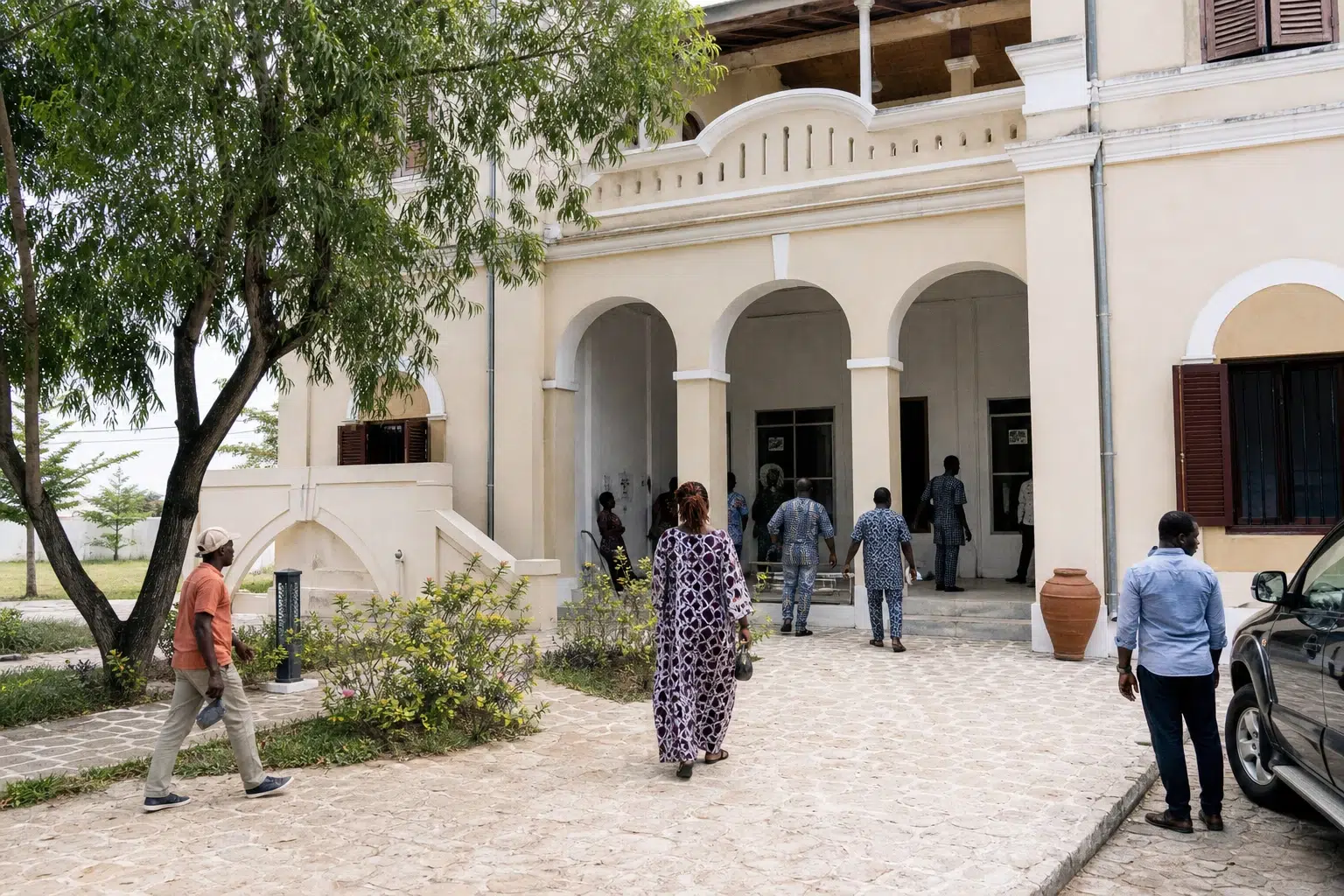
In Grand-Bassam, heritage is not merely a frozen memory. It is becoming an economic, cultural and political tool. In this seaside town in Sud-Comoé, old façades, museums and creative spaces tell the story of a Côte d’Ivoire seeking to put its history to work in the present.
The issue goes beyond the simple charm of a seaside town. It concerns how the Ivorian state, whose political capital is Yamoussoukro, organises the promotion of its sites, local identities and cultural industries. In a country where Abidjan concentrates economic activity, Grand-Bassam wants to establish itself as a complementary hub, combining heritage, tourism and creativity. The historic site of Grand-Bassam has been listed as a UNESCO World Heritage Site since 2012, for its colonial urban planning from the late 19th and early 20th centuries, as well as the presence of the N’zima village and preserved architectural features.
A city of memory, but also of movement
Grand-Bassam lies in the south-east of the country, in the Sud-Comoé region, about 40 to 43 kilometres from Abidjan, according to the official and institutional sources consulted. This proximity explains the city’s distinctive place in the Ivorian imagination: it is close enough to attract weekend visitors, but sufficiently shaped by history to offer more than just a seaside setting.
The UNESCO listing recalls that Grand-Bassam was Côte d’Ivoire’s first capital during the colonial era. The site retains administrative buildings, houses with galleries, verandas and gardens that bear witness to this period. But the current challenge is no longer simply preservation. It is about maintaining a balance between heritage protection, urban activity and tourism development. In 2025, UNESCO continues to report efforts to conserve, restore and monitor the urban fabric, while calling for stronger site management and greater consideration of the N’zima village and culture.
This context matters at regional level. In the ECOWAS area, where coastal cities play an increasingly important role in mobility, services and the creative economy, the heritage challenge is not a secondary one. It raises a simple question: how can an old site be kept alive without turning it into an open-air museum devoid of residents and everyday uses? Grand-Bassam is testing precisely that fine line.
What the new cultural venues are changing
The city is not moving forward on the strength of its old buildings alone. It is developing its facilities. In May 2025, Ivorian authorities inaugurated the Maison de l’Art in Grand-Bassam. The venue was presented as a space dedicated to contemporary African art and the promotion of Ivorian cultural heritage. It occupies the former Hôtel des Postes et Douane, renovated through a public-private partnership. It includes two permanent exhibition rooms, a temporary exhibition room, an artists’ residency, a café-restaurant and meeting spaces.
This opening is more than a symbolic gesture. It says something about Côte d’Ivoire’s cultural strategy. For several years, the government has presented culture as a sector for sustainable development, international reach and job creation. In Grand-Bassam, this approach is taking shape in a city that must attract visitors, but also generate activity for craftspeople, guides, restaurateurs, cultural operators and young creators. Cultural tourism here is no empty slogan: it can sustain a local chain of activity spanning transport and maquis, museums and workshops.
The National Costume Museum already occupies a central place in this set-up. It preserves Ivorian costumes, ornaments, models of traditional dwellings, masks, and ethnological and colonial photographs. In Grand-Bassam, the aim is therefore not just to exhibit the colonial past. It is also to showcase forms of dress, craftsmanship and Ivorian self-representation. This dimension is essential in a country shaped by great cultural diversity.
Another project shows that the ambition goes further. In 2022, the Ivorian state had already laid the foundation stone for a museum of contemporary Ivorian art in Grand-Bassam. In 2025, the Maison de l’Art brought this direction to fruition. This confirms a clear trend: the city is no longer conceived solely as a site for preservation, but as a space for creation, exhibition and transmission.
Between protected heritage and the everyday economy
For residents, the effects are measured not only by the quality of museum displays. They can also be seen in visitor numbers, informal trading income, restaurant activity, demand for transport and the visibility afforded to craftspeople. Beaches, markets, workshops and historic sites form part of the same ecosystem. If the site’s preservation advances, it can support a local economy less dependent on Abidjan. If the approach remains too top-down, it risks producing heritage that is beautiful but little shared.
Grand-Bassam is also a place where the tension between conservation and development is carefully managed. UNESCO closely monitors construction work, urban planning rules, the clean-up of water bodies and protection of the historic landscape. The message is clear: the city must evolve without losing what gives it outstanding universal value. This is a tangible challenge for Côte d’Ivoire, where pressure on land, urban growth and tourism expectations can quickly undermine heritage sites.
Significance for Côte d’Ivoire and Africa
Grand-Bassam now stands among the African cities seeking to turn colonial memory into a carefully managed resource without erasing the local histories around it. This is important. The continent is not short of historic sites. What is often lacking are sustainable policies capable of protecting them, telling their stories and making them drivers of activity. Côte d’Ivoire is trying a formula here that brings together world heritage, contemporary art, museums and cultural tourism.
The significance is also sub-regional. In a West African space undergoing economic shifts, increased mobility and competition between destinations, the value of a city such as Grand-Bassam is not limited to its coastline. It lies in its ability to welcome visitors from across the sub-region, offer a distinctive cultural experience and strengthen the image of a country that is also investing in its creative industries. The next test will be one of endurance: the site’s actual preservation, the museum’s programme, tourist flows and local benefits will show whether this ambition can last.