
 Algeria
 Egypt
 Libya
 Morocco
 Sudan
 Tunisia
 Benin
 Burkina Faso
 Cabo Verde
 Côte d'Ivoire
 Ghana
 Guinea
 Guinea-Bissau
 Liberia
 Mali
 Mauritania
 Niger
 Nigeria
 Senegal
 Sierra Leone
 The Gambia
 Togo
 Cameroon
 Central African Republic
 Chad
 DR Congo
 Equatorial Guinea
 Gabon
 Republic of the Congo
 São Tomé and Príncipe
 Burundi
 Comoros
 Djibouti
 Eritrea
 Ethiopia
 Kenya
 Madagascar
 Malawi
 Mauritius
 Mozambique
 Rwanda
 Seychelles
 Somalia
 South Sudan
 Tanzania
 Uganda
 Angola
 Botswana
 Eswatini
 Lesotho
 Namibia
 Zambia
 Zimbabwe
When departure becomes a political signal
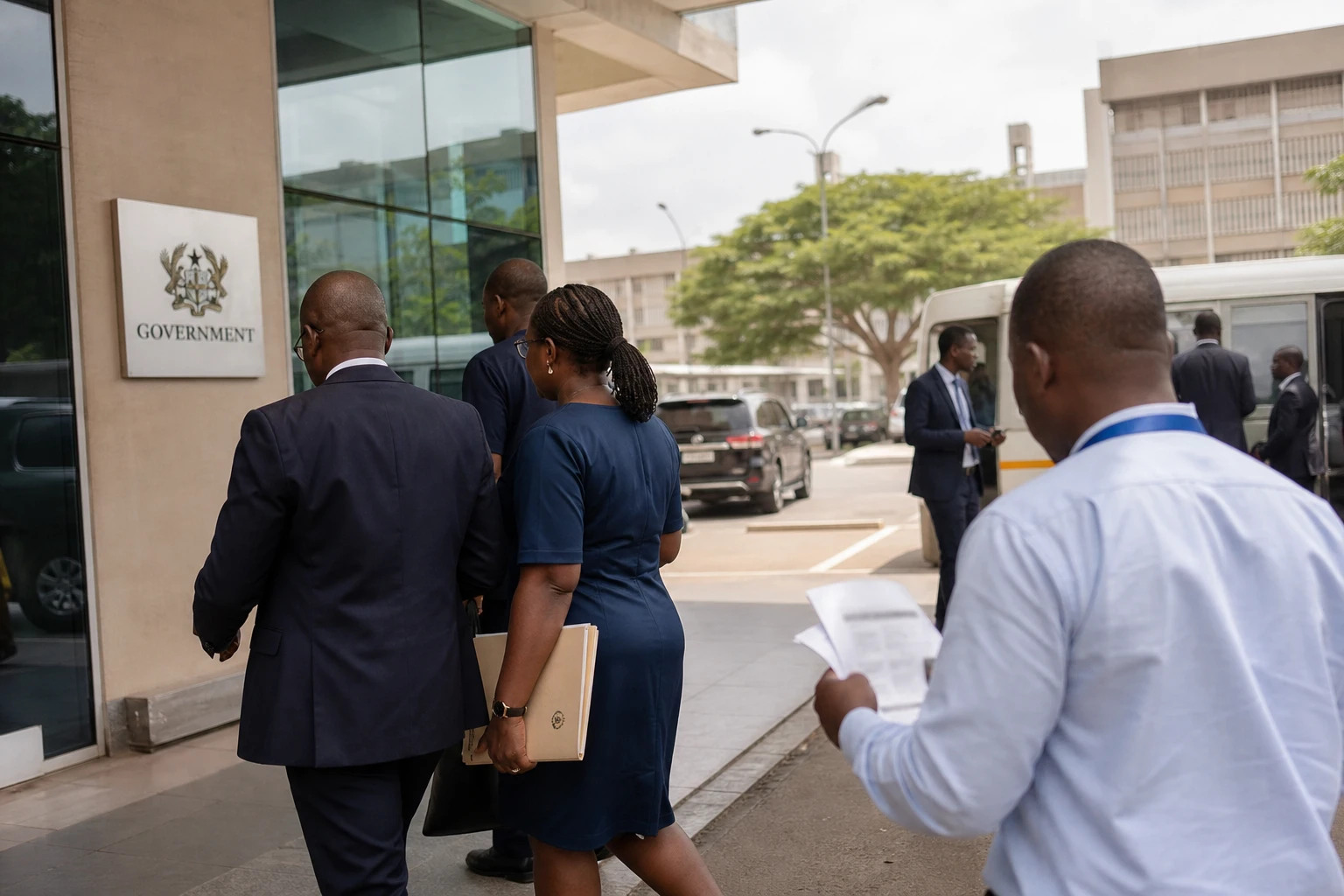
In Accra, the return of hundreds of Ghanaians from South Africa is about more than the logistics of a special flight. It says something broader: how vulnerable African migrant workers are when social tensions rise, and how difficult it is for states to protect their citizens far from home. In this case, Ghana has chosen to act quickly and publicly defend its citizens.
This movement also takes place within a clear regional framework. South Africa is an economic hub of the Southern African Development Community (SADC), while Ghana, in West Africa, is a member of ECOWAS, the Economic Community of West African States. But the question here is continental: how can African freedom of movement be upheld without exposing migrants to violence, suspicion and knock-on effects?
What the repatriation operation tells us
According to the Ghanaian authorities, an initial evacuation began at the end of May 2026, after incidents targeting Ghanaian nationals in South Africa. Ghana’s Ministry of Foreign Affairs confirmed that it received a first group on 27 May 2026, followed by the arrival of a second group in early June. The operation involved Ghana’s diplomatic mission in Pretoria, as well as several public services in Accra.
On 7 June 2026, South African President Cyril Ramaphosa acknowledged rising tensions around migration and pledged that the state would act against violence and intimidation targeting foreigners. At the same time, South African services stepped up checks and departure procedures for people deemed to be in the country illegally. Pretoria maintains that these operations are a matter of immigration law, not a policy of rejecting foreigners.
It was against this backdrop that Ghana announced a final phase of repatriation for a further 1,000 nationals, on special flights scheduled for Sunday and Monday. The figure is in addition to nearly 930 Ghanaians already evacuated, according to information released by Accra and subsequently reported by African and international media. At this stage, the Ghanaian government presents the operation as a consular protection response, not a diplomatic rupture.
Why Accra chose the diplomatic route
Ghanaian President John Mahama has called on the African Union to address xenophobic attacks in South Africa. This is no trivial gesture. It brings the issue to the continental arena, where freedom of movement, migrant protection and the credibility of institutional pan-Africanism are debated. Meanwhile, the African Commission on Human and Peoples’ Rights condemned attacks and acts of vigilantism targeting nationals of other African countries in South Africa in late April 2026.
This episode is a reminder that mobility in Africa remains both a resource and a source of friction. Thousands of people leave their countries to work in construction, trade, services or mining. They support entire families through remittances. But when the labour market contracts, unemployment rises or local groups exploit social anger, foreigners become convenient scapegoats. This is the dynamic that South African authorities say they want to break, at least in their public messaging.
Ghana also has a domestic interest in showing that it protects its citizens. In Accra, the handling of a consular crisis is seen as a test of the state’s competence. It matters to families, migrant workers’ unions and public opinion, which is sensitive to questions of national dignity. It is also a reminder that the Ghanaian diaspora is not merely a source of remittances: it is an issue of foreign policy, reputation and public responsibility.
What Africa should watch now
The significance of this case goes beyond Ghana and South Africa. Several African states have already organised the return of their nationals amid anti-migrant tensions, including Nigeria and Malawi. This pattern shows that the issue is not an isolated incident but a recurring vulnerability in intra-African migration. SADC, ECOWAS and the African Union therefore have a role to play, not in further politicising the crisis, but in establishing common mechanisms for prevention, protection and consular dialogue.
In the short term, three things will need watching. First, the actual number of people still ready to return and Ghana’s capacity to receive them without social disruption. Second, whether dialogue between Accra and Pretoria continues, since a crisis over the protection of nationals can quickly become a broader bilateral crisis. Finally, whether the African Union gives the issue of xenophobic violence against Africans in South Africa a place on its agenda. Part of the credibility of the pan-African project is at stake: protecting the movement of Africans without turning a blind eye to the violence that threatens it.



