Algeria
 Egypt
 Libya
 Morocco
 Sudan
 Tunisia
 Benin
 Burkina Faso
 Cabo Verde
 Côte d'Ivoire
 Guinea
 Guinea-Bissau
 Liberia
 Mali
 Mauritania
 Niger
 Nigeria
 Senegal
 Sierra Leone
 The Gambia
 Togo
 Cameroon
 Central African Republic
 Chad
 DR Congo
 Equatorial Guinea
 Gabon
 Republic of the Congo
 São Tomé and Príncipe
 Burundi
 Comoros
 Djibouti
 Eritrea
 Ethiopia
 Kenya
 Madagascar
 Malawi
 Mauritius
 Mozambique
 Rwanda
 Seychelles
 Somalia
 South Sudan
 Tanzania
 Uganda
 Angola
 Botswana
 Eswatini
 Lesotho
 Namibia
 South Africa
 Zambia
 Zimbabwe
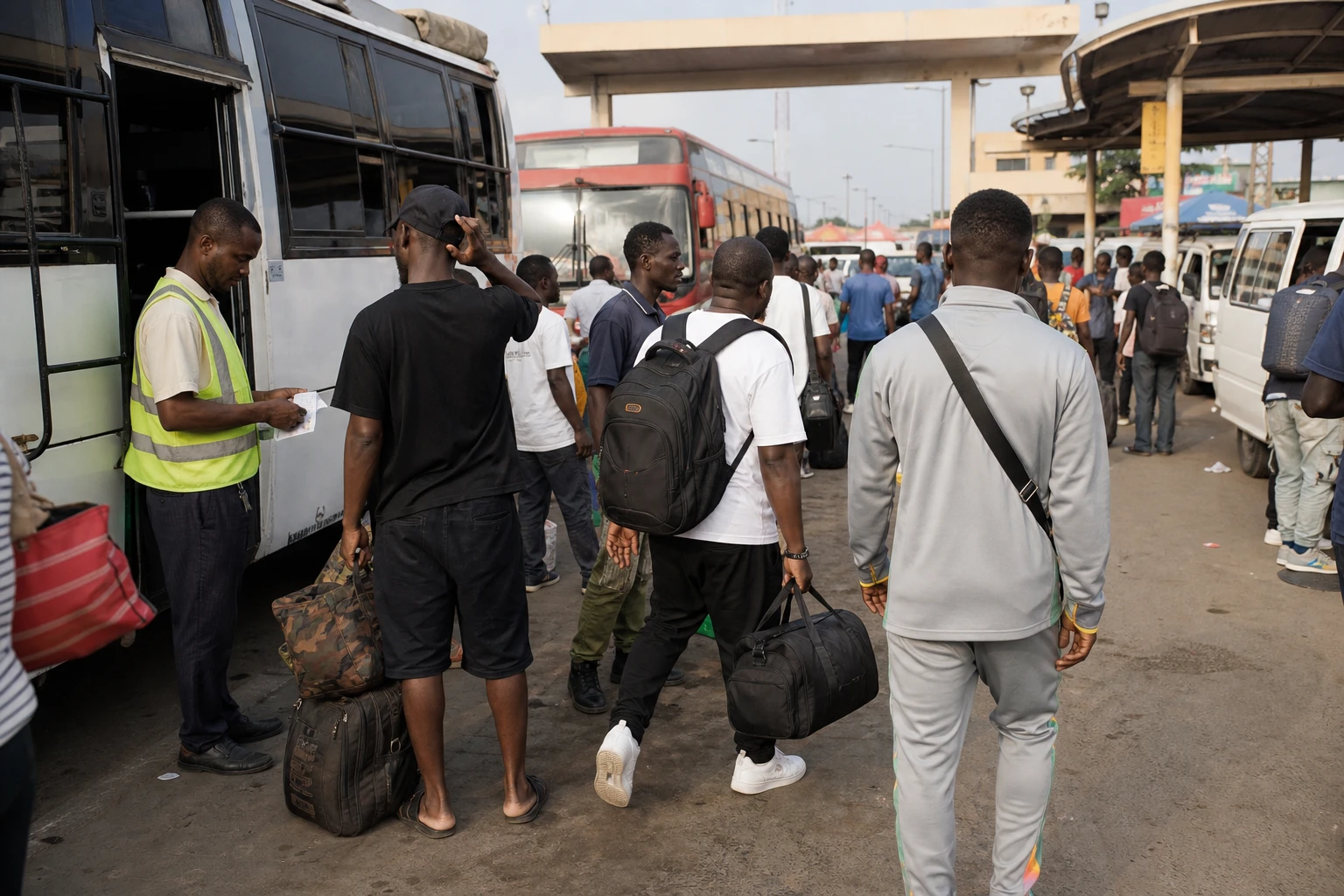
In Accra, the question is no longer simply who will lead the Black Stars, but how to prevent another coaching transition from further weakening an already faltering international campaign. Ghana must now quickly rebuild its working framework after the abrupt end of Carlos Queiroz’s second spell in charge of the national team.
Two matches, no points and an immediate split
The Ghana Football Association announced that it had ended its collaboration with the Portuguese coach by mutual agreement. The decision came just days after Ghana’s first two matches in the qualifiers for the 2027 Africa Cup of Nations.
On 24 September 2026, the Black Stars lost 2-0 to Côte d’Ivoire in Bouaké. Five days later, they were beaten 4-2 by Gambia at Accra Sports Stadium, despite leading 2-0 at half-time. The Confederation of African Football confirmed the schedule and Ghana’s difficult record in Group C. The African qualifying schedule placed the two matches at the heart of Ghana’s campaign opener.
The defeat to Gambia was a heavy blow. Ghana made an ideal start with two goals, before conceding twice before the break. The second half then swung in the Scorpions’ favour. After the match, Queiroz accepted responsibility for the poor performance and apologised to Ghanaian supporters. The Ghana Football Association published his post-match statements.
His departure therefore comes after just two competitive matches in this new role. The Group C standings leave Ghana in a difficult position, with Gambia and Côte d’Ivoire already better placed, while Somalia are also in the group. No successor has yet been announced.
A continuity choice that did not survive the results
Queiroz’s appointment was based on a desire for continuity. The Ghana Football Association reappointed him on 2 September 2026, after his first term, linked to the World Cup, had expired. The agreement was intended to open a new phase focused on qualifying for the 2027 Africa Cup of Nations. The official announcement of his reappointment highlighted his international experience and knowledge of the squad.
The decision made sporting sense. Queiroz already knows the Black Stars’ environment. He has also managed several national teams, including Portugal, Iran, Egypt, Colombia, South Africa and Qatar. He also worked as an assistant to Sir Alex Ferguson at Manchester United.
But experience was not enough to absorb the immediate pressure. With a national team, preparation time is limited. Coaches often have just a few days to establish their principles, choose a team and correct mistakes. Two consecutive defeats can therefore quickly shift the balance of power between the federation, the coaching staff, the players and public opinion.
The problem, however, goes beyond the head coach alone. Ghana regularly has to manage players from different leagues, varying levels of fitness and changes to the squad. Queiroz himself had stressed the need to build a team around a stable core, while strengthening coaching, infrastructure, logistics and medical support.
The next coach must stabilise more than the dugout
The GFA must now choose between an interim solution and a longer-term project. The immediate priority is clear: prepare for the next international window and the two matches against Somalia expected in mid-November. These games could already have a bearing on Ghana’s qualification chances.
For the leadership, the choice will also be an institutional one. Another foreign appointment would bring outside experience, but could reignite the debate over continuity in projects. A Ghanaian or West African coach with a better knowledge of the local talent pool might save time getting to grips with the environment, but would not necessarily guarantee an immediate improvement in results.
The consequences will not be the same for all involved. Established players in major European leagues can more easily weather a period of coaching instability. Players based in Ghana, meanwhile, depend more heavily on the exposure the national team offers and on the quality of coordination between clubs and the national side.
Accra supporters want quick results, but rebuilding must also reach the regions and youth development. A competitive national team is not built only during international breaks. It depends on refreshing generations, scouting talent and creating a lasting playing identity.
A Ghanaian issue, a signal for ECOWAS
Ghana’s case comes amid fierce competition in West Africa. ECOWAS, the economic community comprising several countries in the region, is also a crowded footballing arena, where Côte d’Ivoire, Nigeria, Senegal, Mali, Guinea and Ghana regularly seek to establish themselves.
Geographical proximity does not lessen the pressure. It heightens it. Regional matches are followed by audiences who know the players, styles and rivalries. A defeat to Côte d’Ivoire or Gambia is therefore not seen as a mere scoreline. It immediately prompts questions about preparation, player selection and sporting direction.
Ghana still has room to manoeuvre. The qualifying campaign remains open, but there is no longer time to waste. The next coaching staff will have to clarify its priorities, secure a competitive squad and restore confidence before the November fixtures.
In the longer term, this split is a reminder of a reality in top-level African football: a coach’s reputation cannot replace institutional stability or collective preparation. For the Black Stars, the challenge now is to turn a results crisis into a decision that strengthens the structure, without once again sacrificing continuity in the national project.