Algeria
 Egypt
 Libya
 Morocco
 Sudan
 Tunisia
 Benin
 Burkina Faso
 Cabo Verde
 Côte d'Ivoire
 Guinea
 Guinea-Bissau
 Liberia
 Mali
 Mauritania
 Niger
 Nigeria
 Senegal
 Sierra Leone
 The Gambia
 Togo
 Cameroon
 Central African Republic
 Chad
 DR Congo
 Equatorial Guinea
 Gabon
 Republic of the Congo
 São Tomé and Príncipe
 Burundi
 Comoros
 Djibouti
 Eritrea
 Ethiopia
 Kenya
 Madagascar
 Malawi
 Mauritius
 Mozambique
 Rwanda
 Seychelles
 Somalia
 South Sudan
 Tanzania
 Uganda
 Angola
 Botswana
 Eswatini
 Lesotho
 Namibia
 South Africa
 Zambia
 Zimbabwe
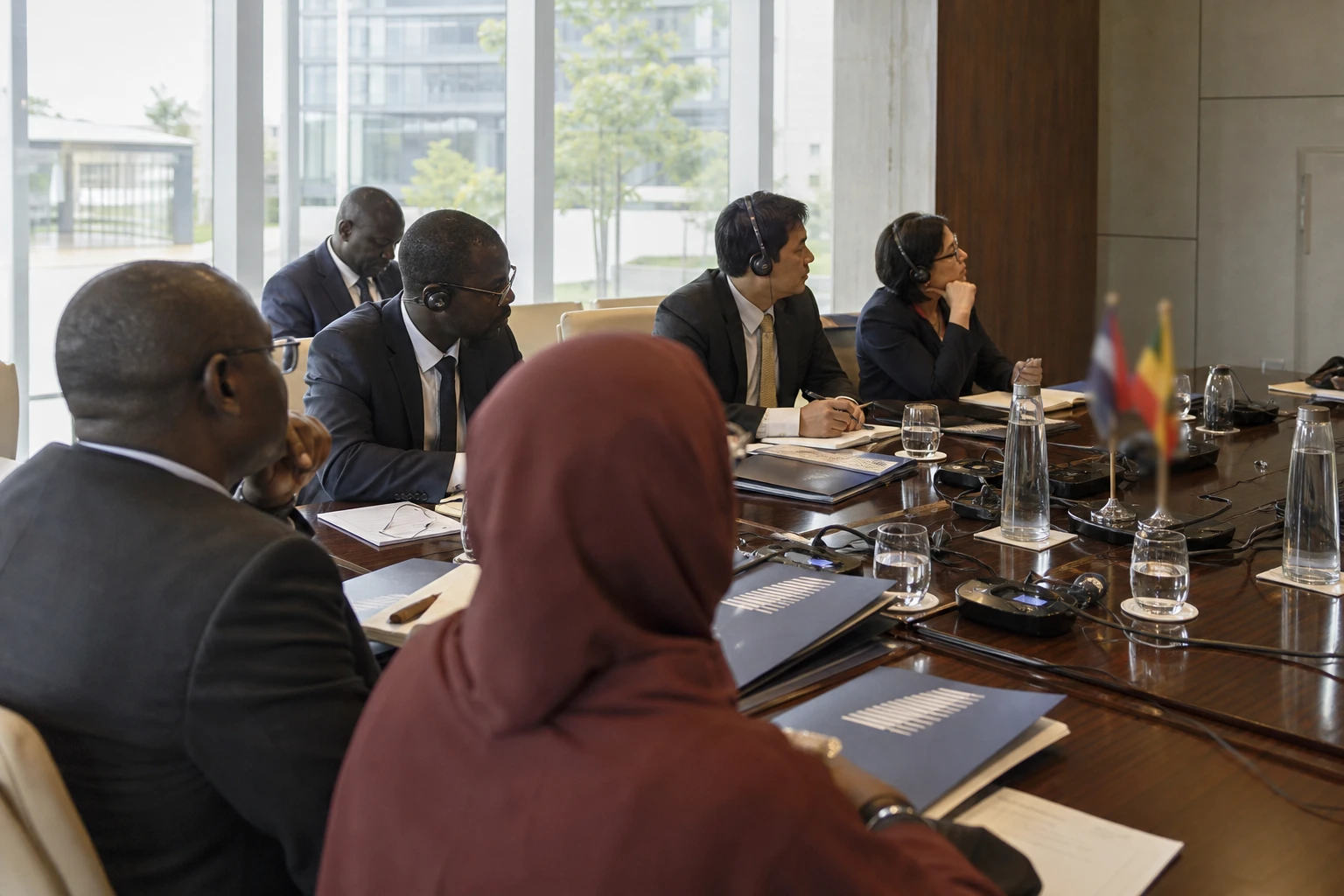
The announced opening of a Philippine embassy in Accra marks a change in approach to a relationship long conducted at a distance. The two countries now want to turn longstanding diplomatic contacts into concrete opportunities for their businesses, workers and investors.
Accra and Manila seek to move from intentions to trade
The Philippine government plans to open its first embassy in Ghana before the end of 2026. The announcement was confirmed on 30 September 2026 by the Ghanaian Ministry of Foreign Affairs.
The decision was discussed in New York, on the sidelines of the 81st United Nations General Assembly, during a meeting between Samuel Okudzeto Ablakwa, Ghana’s foreign minister, and Ma. Theresa P. Lazaro, the Philippines’ foreign secretary.
The plan had already been announced in June 2026 by the Philippine presidency. President Ferdinand Marcos Jr. then named Ghana among the countries set to host a new Philippine diplomatic mission. This confirmation by both sides lends additional weight to the announced timetable.
For Manila, the embassy is also intended to strengthen services for Philippine nationals and facilitate political, economic and cultural relations. For Ghana, it will provide a permanent counterpart in the capital, rather than a relationship relying mainly on consular mechanisms and occasional contacts.
Longstanding ties, but trade remains limited
Ghana and the Philippines have maintained diplomatic relations for several decades. Yet trade between them remains modest given the size of their economies and their positions in their respective regions.
Data from the Observatory of Economic Complexity show bilateral trade of about $11.75m in 2024. Another compilation based on international trade statistics puts Philippine exports to Ghana at $8.4m and imports from Ghana at $2.7m in the same year. The differences are due in part to accounting methods, recording dates and indirect flows.
Goods traded include Ghanaian cocoa paste and small iron containers. This pattern reflects a relationship still concentrated on a few commodities, even though both markets have a much broader range of industrial and agricultural capabilities.
Ghana is a major trading power in West Africa. Its exports are based mainly on gold, oil and cocoa, although the country is seeking to increase local processing and diversify production. The Philippines, meanwhile, has a manufacturing and services base geared towards Asia, with expertise in electronics, food processing, shipbuilding and outsourced services.
The rapprochement is therefore not based on theoretical complementarity. It will need to identify sectors in which businesses can genuinely sell, invest or produce together.
Chamber of commerce and business forums in the pipeline
The two governments plan to hold economic forums in Ghana and the Philippines. They will also consider establishing a bilateral chamber of commerce to connect businesses, share market information and reduce administrative barriers.
This infrastructure could address a practical problem. Small and medium-sized enterprises rarely have the resources to explore a distant market, understand its customs rules or find a reliable partner. A chamber of commerce does not guarantee contracts. It can, however, make initial contacts less costly and easier to navigate.
Agriculture is among the areas identified by both sides. Ghana can seek markets for its processed agricultural products, particularly cocoa. The Philippines can contribute experience in food processing, island logistics and some agricultural technologies suited to climate constraints.
Energy is another possible area. Ghana is seeking to secure its supply and attract investment in infrastructure. Philippine companies could be interested in projects involving services, construction and equipment, provided financial and regulatory conditions are sufficiently clear.
Skills exchanges and agreements on labour mobility have also been raised. This issue will need careful handling. It concerns the protection of workers, recognition of qualifications, recruitment conditions and the fight against abusive practices.
Ghana seeks to broaden its foothold in Asia
The embassy’s opening is part of Ghana’s effort to diversify its partnerships beyond its traditional counterparts. Accra is seeking to attract more capital, expand its export markets and strengthen its position in global value chains.
This strategy also fits within the framework of the African Continental Free Trade Area, which aims to increase trade between African countries and facilitate the establishment of industrial activities on the continent. A Philippine company based in Ghana could therefore view the country as a gateway to several West African markets, subject to rules of origin and access conditions.
The regional dimension is important. Ghana belongs to the Economic Community of West African States, or ECOWAS, which is seeking to strengthen its members’ economic integration despite political tensions and the announced or actual departures of some countries from the organisation. A diplomatic presence in Accra would therefore allow the Philippines to better understand a regional area extending beyond the Ghanaian market alone.
For Ghanaian businesses, the expected benefits will not be limited to exports to the Philippines. The mission could help them find technologies, financial partners and new trade routes in South-East Asia.
The next test will be results
Establishing an embassy is a political signal. It will not, on its own, be enough to boost trade. Results will depend on the timetable for appointing staff, the ability of administrations to handle economic matters and the mobilisation of businesses.
The next indicators will be concrete: business forums taking place, sectoral agreements being signed, trade flows changing and a chamber of commerce possibly being launched. It will also be important to see whether cooperation extends to investment, training and professional mobility.
If these steps are taken, the opening of the Philippine mission in Accra could become more than a diplomatic gesture. It would provide a lasting basis for a partnership between West Africa and South-East Asia, two regions each seeking to strengthen their economic autonomy and direct connections.