Algeria
 Egypt
 Libya
 Morocco
 Sudan
 Tunisia
 Benin
 Burkina Faso
 Cabo Verde
 Côte d'Ivoire
 Guinea
 Guinea-Bissau
 Liberia
 Mali
 Mauritania
 Niger
 Nigeria
 Senegal
 Sierra Leone
 The Gambia
 Togo
 Cameroon
 Central African Republic
 Chad
 DR Congo
 Equatorial Guinea
 Gabon
 Republic of the Congo
 São Tomé and Príncipe
 Burundi
 Comoros
 Djibouti
 Eritrea
 Ethiopia
 Kenya
 Madagascar
 Malawi
 Mauritius
 Mozambique
 Rwanda
 Seychelles
 Somalia
 South Sudan
 Tanzania
 Uganda
 Angola
 Botswana
 Eswatini
 Lesotho
 Namibia
 South Africa
 Zambia
 Zimbabwe
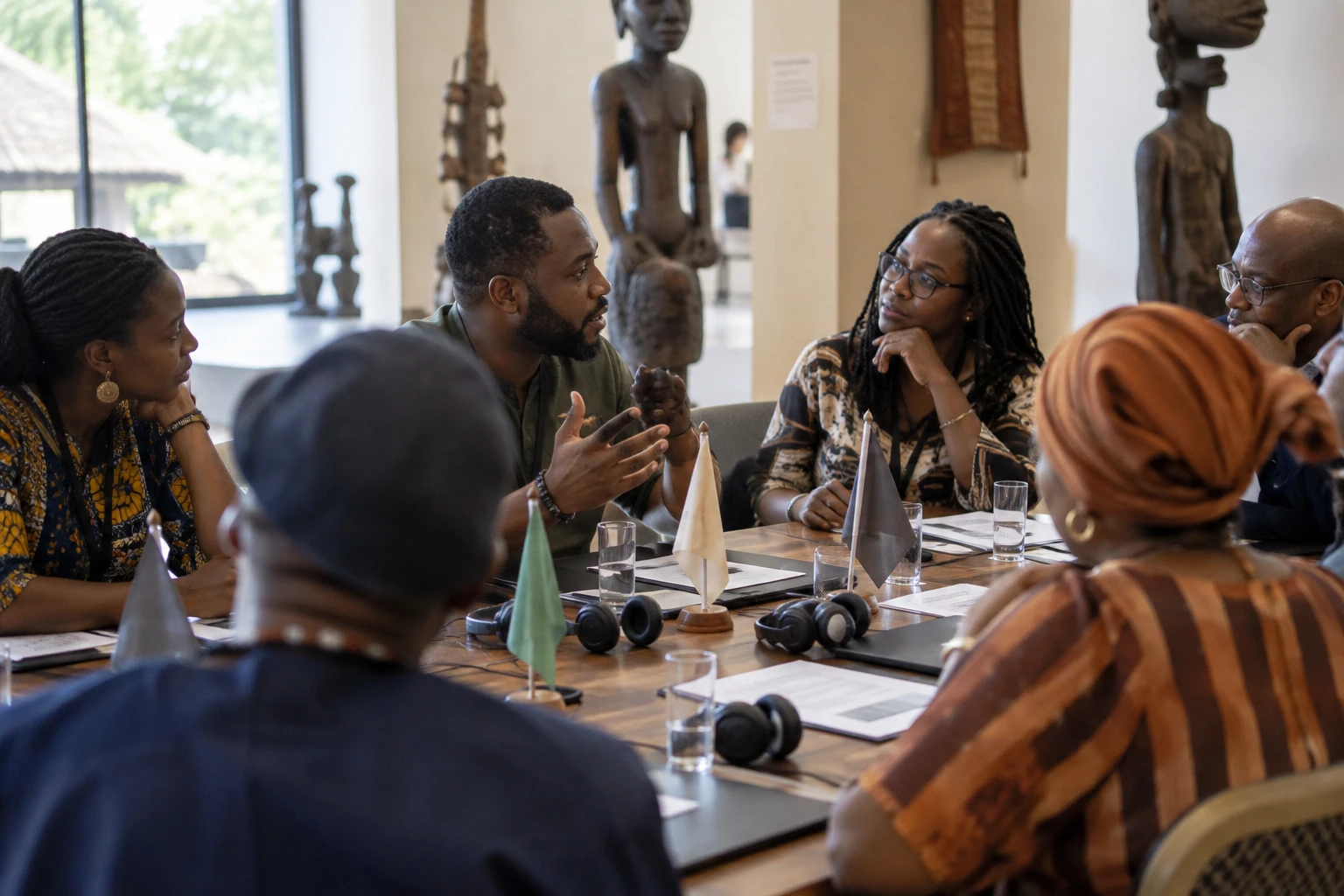
For descendants of communities separated by the transatlantic slave trade, finding family traces can be difficult: archives are incomplete, names have sometimes disappeared and traditions have been disrupted. In Ghana, a ceremony held in Nuhalenya offers another path to this memory: gathering, cultural practices and shared storytelling.
A tribute rooted in the community
The gathering took place at the Nkyinkyim Museum in Nuhalenya, near Ada, in the Greater Accra Region. For three days, African-American visitors and other members of the African diaspora took part in rites and commemorations. Local residents and participants from Suriname, the United Kingdom, the United States and Nigeria were also present, according to a report carried by Nigeria’s TVC News.
Libations, symbolic offerings, songs, drumming and dances marked the ceremony. These gestures do not claim to reconstruct erased individual histories. Rather, they provide a collective framework for remembering people whose lives were fractured by slavery and forced displacement.
The museum is led by Ghanaian artist Kwame Akoto-Bamfo. The founder describes the gathering as an initiative conceived and organised by African and diasporic actors themselves. The site combines sculptures, storytelling and performances to convey African histories and encourage dialogue with visitors.
Memory beyond the journey
For people from the diaspora, travelling to Ghana can combine a search for origins, a quest for belonging and the discovery of traditions. But it does not automatically provide a genealogical answer. Instead, the ceremony offers a space to explore ties with the continent and share experiences that official archives do not always tell.
Subrina Starke, co-founder of Diasporan WelHouse, also speaks of the need to document the history of communities in Suriname and other diasporic groups. This approach is a reminder that the African diaspora is not uniform: its languages, trajectories and memories vary across regions and generations.
The museum thus aims to make memory a living practice, rather than simply a presentation of the past. Rites and exchanges can help pass on cultural reference points. They cannot, however, replace historical research or access to archives, both essential to establishing people’s histories and responsibilities accurately.
A cultural venue facing local challenges
The project is also part of life in the Ada region. In August 2025, the Ada West District Assembly and traditional leaders met the museum’s management to discuss its educational role and cooperation with the community. The account of the meeting describes the ancestor-veneration ceremony as an annual international gathering.
The same account notes material difficulties: an unreliable electricity supply, access roads in need of improvement and inadequate visitor facilities during major gatherings. These needs are a reminder that a major cultural event also depends on local infrastructure. Its benefits may reach visitors and organisers, but also residents, district services and businesses connected with hosting visitors.
Cooperation between the museum, local authorities and traditional leaders will therefore be crucial. It can support heritage education and the passing of knowledge to young people, while ensuring that neighbouring communities take part in decisions and benefit from activities held on their land.
From commemoration to the reparations debate
The ceremony takes place as Ghana advocates reparative justice, meaning the search for responses to historical wrongs and their lasting consequences. In 2025, the African Union put justice for Africans and people of African descent at the heart of its annual theme. The Ghanaian government also organised a summit devoted to reparations, healing and ties with the diaspora.
These institutional discussions do not, on their own, settle what reparations might look like, who would benefit or how they would work. For Efua Irene Agyeman Hin, also a co-founder of Diasporan WelHouse, acknowledging suffering and preserving memories matter too. This perspective highlights a cultural and social dimension of the debate without conflating it with legal or political negotiations.
At regional level, Ghana, a member of ECOWAS — the Economic Community of West African States —, has a prominent place in pan-African discussions on history, the diaspora and reparations. But these issues extend beyond West Africa: they also concern Caribbean societies, the Americas and African communities established elsewhere.
The Nuhalenya ceremony gives tangible form to this circulation of memories. Its impact will also depend on what follows: shared research, passing knowledge on to young people, lasting partnerships and improvements to local visitor facilities. Remembrance can open a dialogue; decisions on justice and reparations still have to be shaped by the communities concerned and institutions.
The Nkyinkyim Museum in Nuhalenya presents its work as a project combining art, history and intangible cultural heritage. The Ada West District authorities have also described the institution as a place for learning and heritage preservation.