Algeria
 Egypt
 Libya
 Morocco
 Sudan
 Tunisia
 Benin
 Burkina Faso
 Cabo Verde
 Côte d'Ivoire
 Guinea
 Guinea-Bissau
 Liberia
 Mali
 Mauritania
 Niger
 Nigeria
 Senegal
 Sierra Leone
 The Gambia
 Togo
 Cameroon
 Central African Republic
 Chad
 DR Congo
 Equatorial Guinea
 Gabon
 Republic of the Congo
 São Tomé and Príncipe
 Burundi
 Comoros
 Djibouti
 Eritrea
 Ethiopia
 Kenya
 Madagascar
 Malawi
 Mauritius
 Mozambique
 Rwanda
 Seychelles
 Somalia
 South Sudan
 Tanzania
 Uganda
 Angola
 Botswana
 Eswatini
 Lesotho
 Namibia
 South Africa
 Zambia
 Zimbabwe
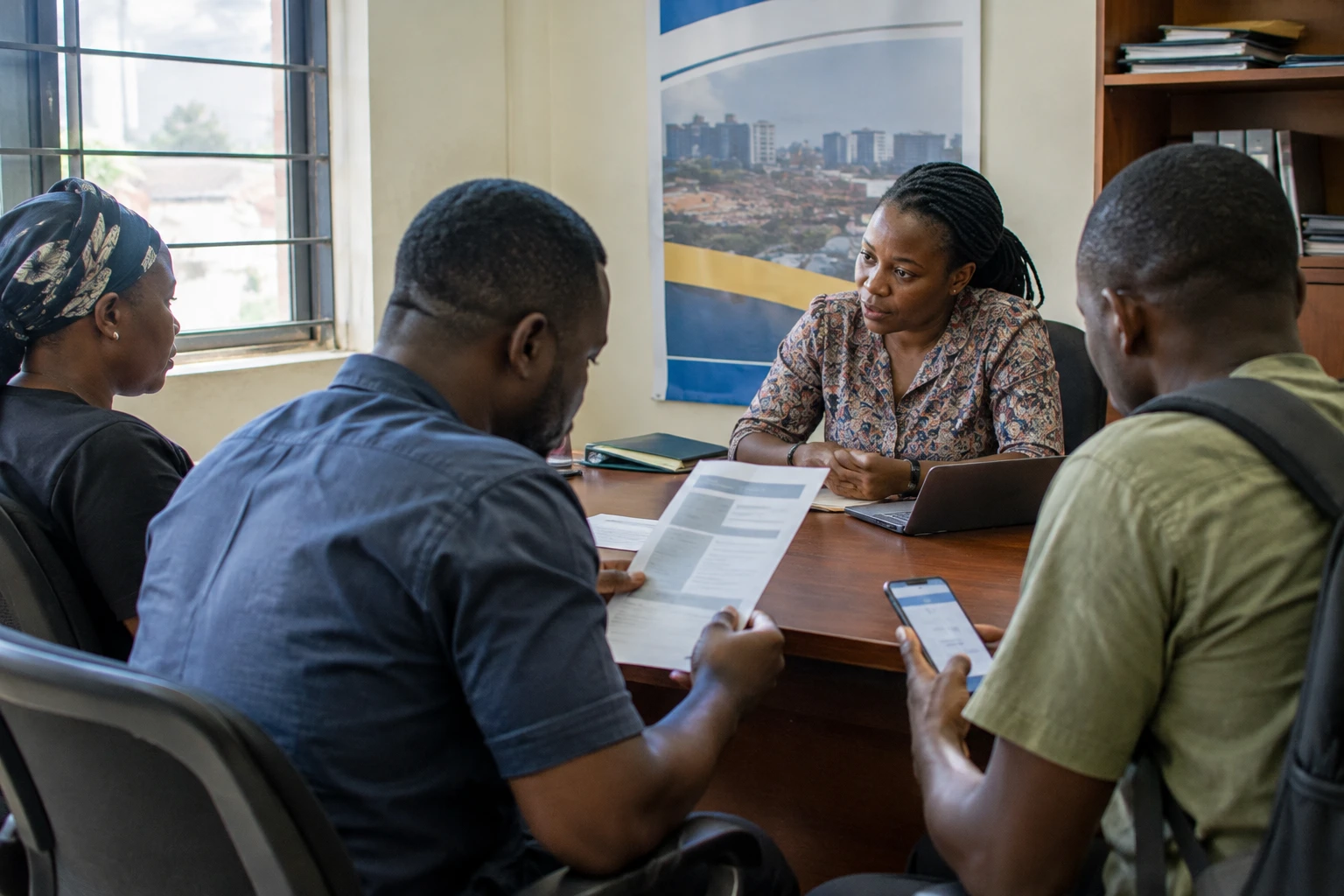
Can a presidential pledge disrupt recruitment channels operating through job offers, intermediaries and transnational networks? For Ghana, the announcement made in Moscow opens a new diplomatic chapter. On its own, it is not enough to establish that these networks have disappeared.
An assurance made at the highest level
On 30 October 2026 in Moscow, Ghanaian President John Dramani Mahama discussed the presence of Ghanaians in the war between Russia and Ukraine with his Russian counterpart, Vladimir Putin. The meeting took place on the sidelines of the third Russia-Africa summit, held in the Russian capital on 28 and 29 October.
Ghana’s Ministry of Foreign Affairs said Putin had pledged no longer to allow Ghanaians to take part in the conflict, whether recruited irregularly or joining voluntarily. As reported by the Ghanaian authorities, this formulation goes beyond a promise merely to combat misleading job offers: it targets any participation by Ghanaian nationals in the war.
Minister Samuel Okudzeto Ablakwa presented this assurance as one of the outcomes of the bilateral talks. The Ghana News Agency confirmed the summit dates and Mahama’s return to Accra on 31 October. However, the publicly available information does not yet set out how Moscow will implement this pledge or what monitoring mechanisms will be put in place.
Recruitment is hard to measure
Accra’s concern comes amid a series of warnings about African nationals recruited to fight in Ukraine alongside Russian forces. Some are said to have been lured by offers of jobs, security work or training. Circumstances vary from case to case: it is therefore important to distinguish between engagements presented as voluntary and allegations of deception or illegal recruitment, which must be established individually.
In July 2026, the Ghanaian government announced investigations into networks suspected of recruiting citizens through fraudulent promises of work abroad. In February, the foreign minister said 272 Ghanaians had reportedly been drawn into the conflict since 2022, citing information provided by Ukrainian officials. These figures are attributed estimates, not a comprehensive independent count.
The available data also show the human cost. In February, Ablakwa reported that at least 55 of these Ghanaians had been killed and two were prisoners of war. In August, Ghanaian media outlet Citi Newsroom reported that the minister had cited 62 deaths and 15 people still missing. These figures change and are based on administrative information or information provided by foreign authorities; they should not be confused with independent verification of each case.
Across Africa, estimates differ depending on the period and methods of collection. In November 2025, Ukraine’s foreign minister put the number of nationals from African countries fighting alongside Russia at more than 1,400. This was a Ukrainian estimate, reported by Reuters, not a continental tally shared by all the governments concerned.
Between co-operation and public accountability
The issue tests a relationship that both governments are also seeking to broaden. At their meeting, Ghanaian and Russian officials discussed co-operation in several areas, including energy, agriculture, education and defence. This diplomatic closeness lends weight to Moscow’s pledge, but also makes it necessary to draw a clear distinction between bilateral co-operation and the protection of Ghanaian citizens.
Responsibility does not rest with the Russian authorities alone. The investigations announced in Ghana will need to shed light, in particular, on the role of any recruiters, intermediaries and misleading job offers. They will also need to help applicants verify contracts and departure conditions before travelling. In its investigation into alleged recruitment, the Ghanaian government referred to networks operating from the country; criminal liability, however, must be established through the relevant legal proceedings.
The debate is not limited to diplomacy. A promise of work abroad can represent an important opportunity for an applicant and their family. The consequences of military service are, however, radically different: departure for a war zone, difficulty communicating with loved ones, injury, disappearance or death. In Accra and other parts of the country, public information and access to recruitment channels whose legality can be verified are therefore practical concerns.
According to the national press, Ghana has also noted that Ghanaian students are continuing their studies in Russia. This underscores the need to distinguish academic exchanges from military recruitment channels, without suggesting that student mobility is in itself a risk. Co-operation agreements will need to be assessed against specific guarantees, particularly regarding the information given to applicants and consular assistance in the event of difficulties.
A test for regional relations
In West Africa, the issue also concerns networks that cross borders. Ghana is a member of ECOWAS, the Economic Community of West African States, which facilitates co-operation between its member states. National investigations could be more effective if countries shared information on recruiters, employment agencies and related travel, in accordance with their laws.
The pledge’s wider impact will now depend on action. The Ghanaian government will need to set out the steps taken against suspected networks and how families will be helped to find their relatives. Moscow, for its part, will need to show how the announced commitment is reflected in the rules applied to its forces and recruitment channels. Finally, co-operation between African governments will be key to identifying networks that switch countries or methods.
For now, the announcement is a diplomatic commitment reported by Accra, not proof that recruitment has actually stopped. Progress will be measured by verifiable results: investigations, the return of nationals, clarification of the cases of people reported missing and no new documented cases. That is the measure by which Ghanaians will be able to judge the scope of the pledge made in Moscow.