Algeria
 Egypt
 Libya
 Morocco
 Sudan
 Tunisia
 Benin
 Burkina Faso
 Cabo Verde
 Côte d'Ivoire
 Guinea
 Guinea-Bissau
 Liberia
 Mali
 Mauritania
 Niger
 Nigeria
 Senegal
 Sierra Leone
 The Gambia
 Togo
 Cameroon
 Central African Republic
 Chad
 DR Congo
 Equatorial Guinea
 Gabon
 Republic of the Congo
 São Tomé and Príncipe
 Burundi
 Comoros
 Djibouti
 Eritrea
 Ethiopia
 Kenya
 Madagascar
 Malawi
 Mauritius
 Mozambique
 Rwanda
 Seychelles
 Somalia
 South Sudan
 Tanzania
 Uganda
 Angola
 Botswana
 Eswatini
 Lesotho
 Namibia
 South Africa
 Zambia
 Zimbabwe
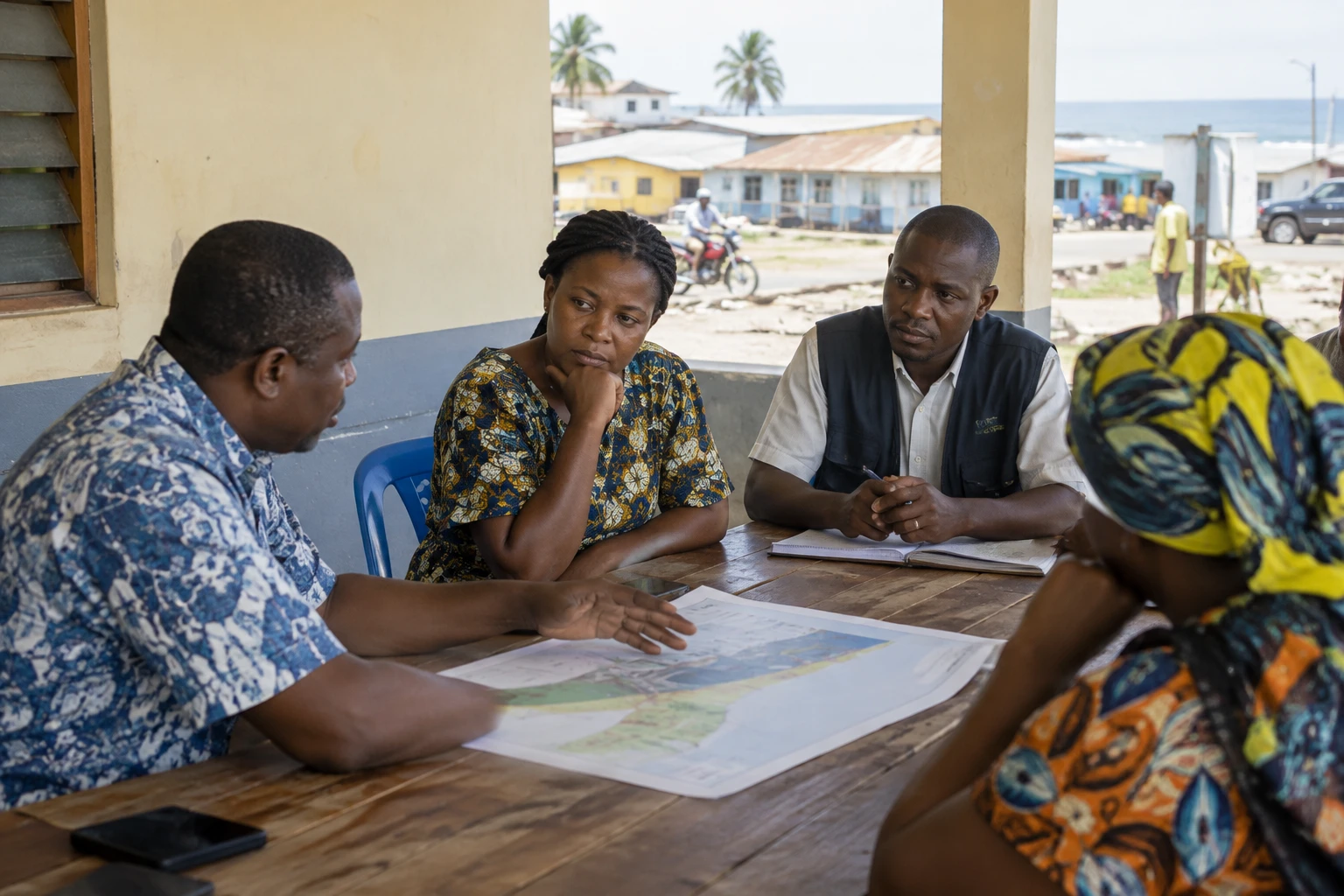
In Keta, the promise of a port is measured not only by the ships it could accommodate. It also depends on the roads linking it to markets, the ability to finance the work and how the coastline—already exposed to erosion and flooding—will be protected.
The project is entering a new stage, but not yet the construction phase for a commercial port. On Saturday 7 November 2026, in Anloga, Ghanaian President John Dramani Mahama announced that seven companies had been shortlisted from 47 applicants. They are to help finalise the plans and prepare the financing, the Ghanaian government’s Information Services Department said. The Ghana News Agency confirmed the announcement and reported local traditional leaders’ calls for clearer timelines.
A new port facing established hubs
Keta is in the Volta Region, in eastern Ghana and near the border with Togo. The country already has two major commercial ports, at Tema, near Accra, and Takoradi, in the west. Keta would add an access point to the eastern seaboard, but it is close to the port of Lomé in Togo.
The competition is already evident in container volumes. The port of Lomé reportedly handled about 2.4 million twenty-foot equivalent units (TEUs) in 2025, a measure of container capacity. Tema handled about 2.29 million, according to a ranking published in 2026 by African Exponent. These figures are not enough to compare port profitability or turnaround times. Above all, they are a reminder that Keta will have to attract operators in a region where competing infrastructure already captures traffic.
The project is part of trade within ECOWAS, the Economic Community of West African States, which brings together coastal and landlocked countries. The Ghana Ports and Harbours Authority (GPHA) is looking to serve Burkina Faso, Mali and Niger, among others. But these countries already have land corridors and trading relationships with several ports in the Gulf of Guinea, including Lomé and Tema. Keta’s proximity does not therefore guarantee that transport operators will choose it.
An investment still taking shape
The seven companies selected are still at the prequalification stage. Their identities, the division of responsibilities and financial commitments have not been specified in the official announcement. The process must now establish who will finance, build or operate the various components. The announced step therefore does not mean that funds have been secured or that a construction timetable has been set.
The benchmark figure remains a 2021 estimate. At the time, Ghana’s Ministry of Transport and the GPHA put the cost of the first phase, known as the “port core”, at about $600 million. It was to cover essential infrastructure, including access routes and basic facilities. This figure will need to be updated: five years have passed, and plans and construction costs may change. The feasibility study presented by the GPHA in 2021 described a port for containers, bulk cargo and oil and gas activities, with a shipyard also envisaged.
Land access will matter just as much as the quays. In its draft environmental assessment report, the GPHA presents Keta as potentially complementary to Tema and Lomé, partly because its hinterland is still underdeveloped. The document stresses the importance of road links and activities capable of generating cargo. Without reliable roads, efficient customs services and predictable access to markets, goods may continue to use established corridors.
The expected benefits would not be shared equally. Port companies could win contracts, while regional businesses may hope for new opportunities. For residents of Keta and nearby communities, the impact will depend instead on the jobs actually created, training offered, access to land and the space left for existing activities, particularly fishing.
Coastal development and risks for communities
The port is also a development project in a fragile area. Keta lies on a low-lying coastline marked by erosion and flood risks. The environmental assessment published by the GPHA describes these risks and the potential effects of rising sea levels. The Ports Authority says it began an environmental and social assessment in 2023, with discussions with regional stakeholders planned.
This aspect directly affects coastal communities. Construction could alter how the shore is used and the movement of sediment, while fishers, traders and households already depend on this space. Impact assessments, local consultations and preventive measures must therefore accompany technical and financial decisions, rather than be treated as a formality after they have been made.
What to watch
For Ghana, the challenge is not simply to add a port to its network. It is to determine whether Keta can complement Tema and Takoradi without spreading investment too thinly or putting coastal communities at risk. Across West Africa, the project highlights competition between ports, as well as landlocked countries’ dependence on road and customs corridors crossing several borders.
The next milestones will be concrete: publication of final plans, clarification of financing, a construction timetable and the results of the environmental and social assessment. In its feasibility study, the GPHA identifies road links and the creation of cargo flows as conditions for viability. Until these points are clarified, Keta remains an ambition under preparation, not a new maritime gateway already in operation.