Algeria
 Egypt
 Libya
 Morocco
 Sudan
 Tunisia
 Benin
 Burkina Faso
 Cabo Verde
 Côte d'Ivoire
 Guinea
 Guinea-Bissau
 Liberia
 Mali
 Mauritania
 Niger
 Nigeria
 Senegal
 Sierra Leone
 The Gambia
 Togo
 Cameroon
 Central African Republic
 Chad
 DR Congo
 Equatorial Guinea
 Gabon
 Republic of the Congo
 São Tomé and Príncipe
 Burundi
 Comoros
 Djibouti
 Eritrea
 Ethiopia
 Kenya
 Madagascar
 Malawi
 Mauritius
 Mozambique
 Rwanda
 Seychelles
 Somalia
 South Sudan
 Tanzania
 Uganda
 Angola
 Botswana
 Eswatini
 Lesotho
 Namibia
 South Africa
 Zambia
 Zimbabwe
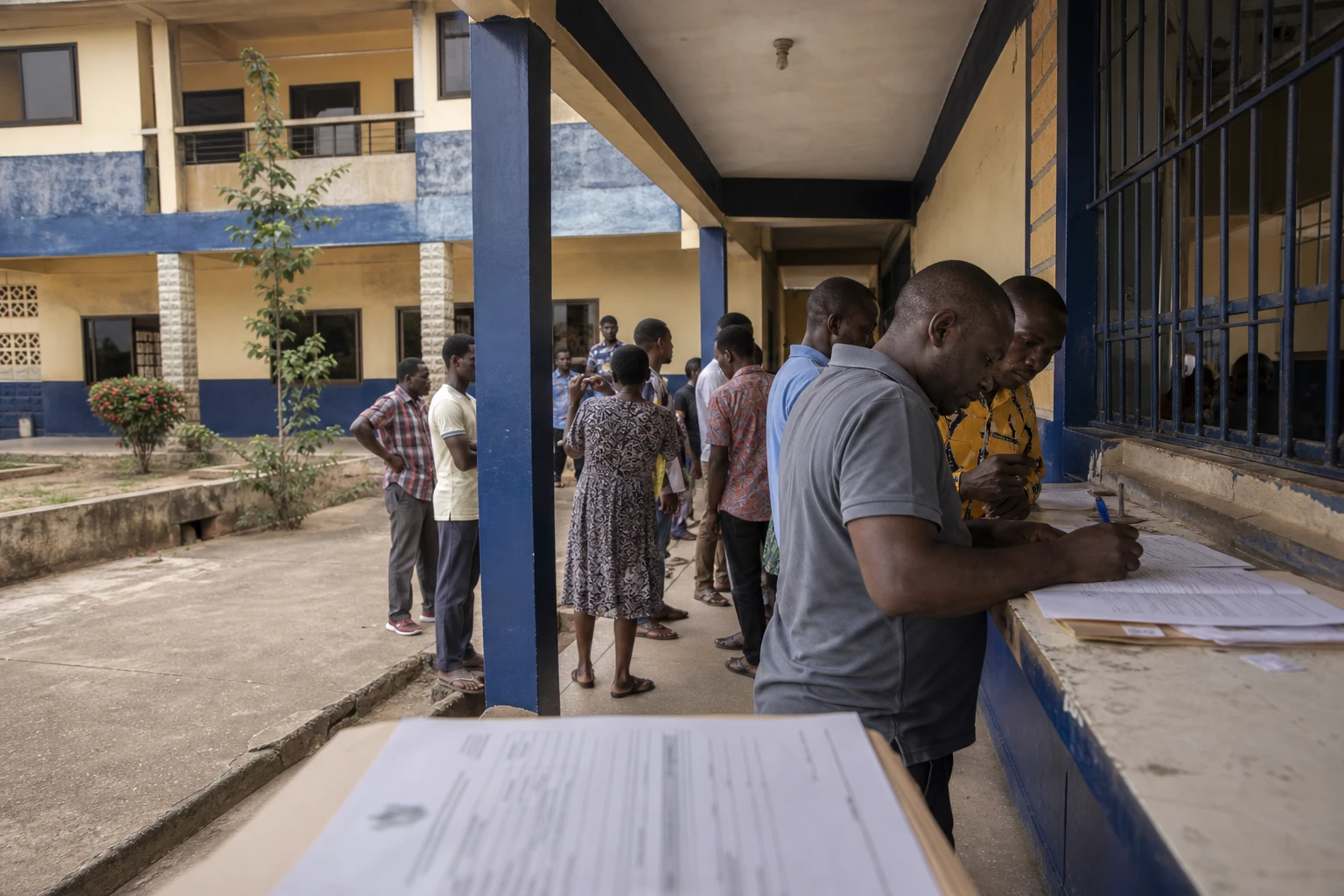
At Jomoro, the south-west’s most anticipated project remains stalled over land
In south-western Ghana, the promise is immense. An oil and petrochemical complex is expected to transform the country’s industrial scale, support employment and strengthen fuel supplies. But on the ground, the first obstacle is neither technical nor financial. It is land. Until the land has been acquired and compensation paid, the start of work on the Jomoro project remains on hold.
This sequence says much about the state of major projects in West Africa. Announcements come quickly, but expropriations, compensation and local support take time. At Jomoro, in Ghana’s Western Region, the project also sits at the intersection of national expectations and the concerns of nearby residents, particularly over land use and the coastal environment.
A strategic project for Ghana and the region
Ghanaian authorities have presented the Jomoro Petroleum Hub as one of the continent’s largest oil infrastructure projects. It is to be built at Jomoro, in the Western Region, on the Atlantic coast. The idea is straightforward: to turn Ghana into a hub for refining, storage, petrochemicals and distribution to West African markets.
In June 2024, Ghana signed a $12 billion agreement with the TCP-UIC consortium to launch the programme’s first phase. The overall scheme is valued at $60 billion and envisages three stages of development. The first phase includes a refinery with capacity of 300,000 barrels a day, a petrochemical plant, storage capacity and port infrastructure.
The choice of Jomoro is no accident. The site has deeper waters than Tema, where the existing oil infrastructure is located. PHDC documentation cites depths of up to 22 to 27 metres off Jomoro, compared with more limited draughts along the Tema corridor. This is expected to allow large vessels to dock, reducing some logistical constraints on both imports and exports.
The facts: money is not the only obstacle
On 17 July 2026, the Petroleum Hub Development Corporation said the first phase had yet to begin, despite the signing of the initial contracts. According to the corporation, work can start once the compensation process for the landowners concerned has been completed. Compensation, then, remains central to the actual timetable, well beyond the initial announcements.
The project has moved forward on one sensitive point. Its footprint has been reduced from 20,000 acres to 12,300 acres, or about 5,000 hectares. PHDC confirmed the reduction in March 2026, and it was reiterated during discussions with local authorities and Jomoro communities in April 2026.
The change responds to objections from residents who feared extensive land losses and lasting environmental impacts. Compensation, announced as a prerequisite for taking possession, remains a necessary step. Local authorities and land services, for their part, have said they intend to ensure compensation is “fair” and delivered more quickly.
The technical ambitions have not changed. The first phase is still due to include a refinery with capacity of 300,000 barrels a day, petrochemical capacity of 90,000 barrels a day, about 3 million cubic metres of storage and a maritime terminal. The announced construction period for this first stage remains five years.
Why the impasse matters to Ghanaians
The delay at Jomoro is not just holding up a construction project. It affects Ghana’s energy strategy. The country is consuming more fuel but remains heavily dependent on imports. Figures published in 2026 by the Chamber of Oil Marketing Companies in Ghana put consumption at 7.45 billion litres in 2025, up on 2024. Other estimates cited in the local press put total demand at 8.7 billion litres, including 7.45 billion litres of actual consumption.
This increase helps explain the hub’s appeal. For Ghanaian households, it has implications for the cost of transport and electricity. For businesses, it highlights the cost of imports and vulnerability to international fluctuations. For the state, it raises a question of economic sovereignty: how can more value be added in the country rather than buying a significant share of refined products from abroad?
The issue also extends beyond Ghana’s coastline. ECOWAS, which brings together West Africa, remains heavily dependent on imported petroleum products despite its reserves and ports. An operational hub at Jomoro could therefore reshape regional flows, particularly to neighbouring landlocked or undersupplied markets. But it could also intensify competition among ports and logistics hubs already established in the Gulf of Guinea.
What West Africa will be watching in the coming months
What happens next will depend on three fronts. First, the completion of land compensation. Then, the ability of PHDC and the Ghanaian government to maintain the confidence of Jomoro communities. Finally, proof that investors can still turn multi-billion-dollar announcements into a real construction project. Without that, the Petroleum Hub risks becoming another symbol in a region rich in projects but often held back by land issues, governance and financing.
For Accra, the stakes are political as well as economic. The government wants to show that a major industrial project can be built on Ghanaian soil and serve a regional ambition. For Jomoro residents, the expectations are more tangible: compensation, jobs, land security and protection of the coastline. It is precisely here that the project’s credibility is being tested today.