Algeria
 Egypt
 Libya
 Morocco
 Sudan
 Tunisia
 Benin
 Burkina Faso
 Cabo Verde
 Côte d'Ivoire
 Guinea
 Guinea-Bissau
 Liberia
 Mali
 Mauritania
 Niger
 Nigeria
 Senegal
 Sierra Leone
 The Gambia
 Togo
 Cameroon
 Central African Republic
 Chad
 DR Congo
 Equatorial Guinea
 Gabon
 Republic of the Congo
 São Tomé and Príncipe
 Burundi
 Comoros
 Djibouti
 Eritrea
 Ethiopia
 Kenya
 Madagascar
 Malawi
 Mauritius
 Mozambique
 Rwanda
 Seychelles
 Somalia
 South Sudan
 Tanzania
 Uganda
 Angola
 Botswana
 Eswatini
 Lesotho
 Namibia
 South Africa
 Zambia
 Zimbabwe
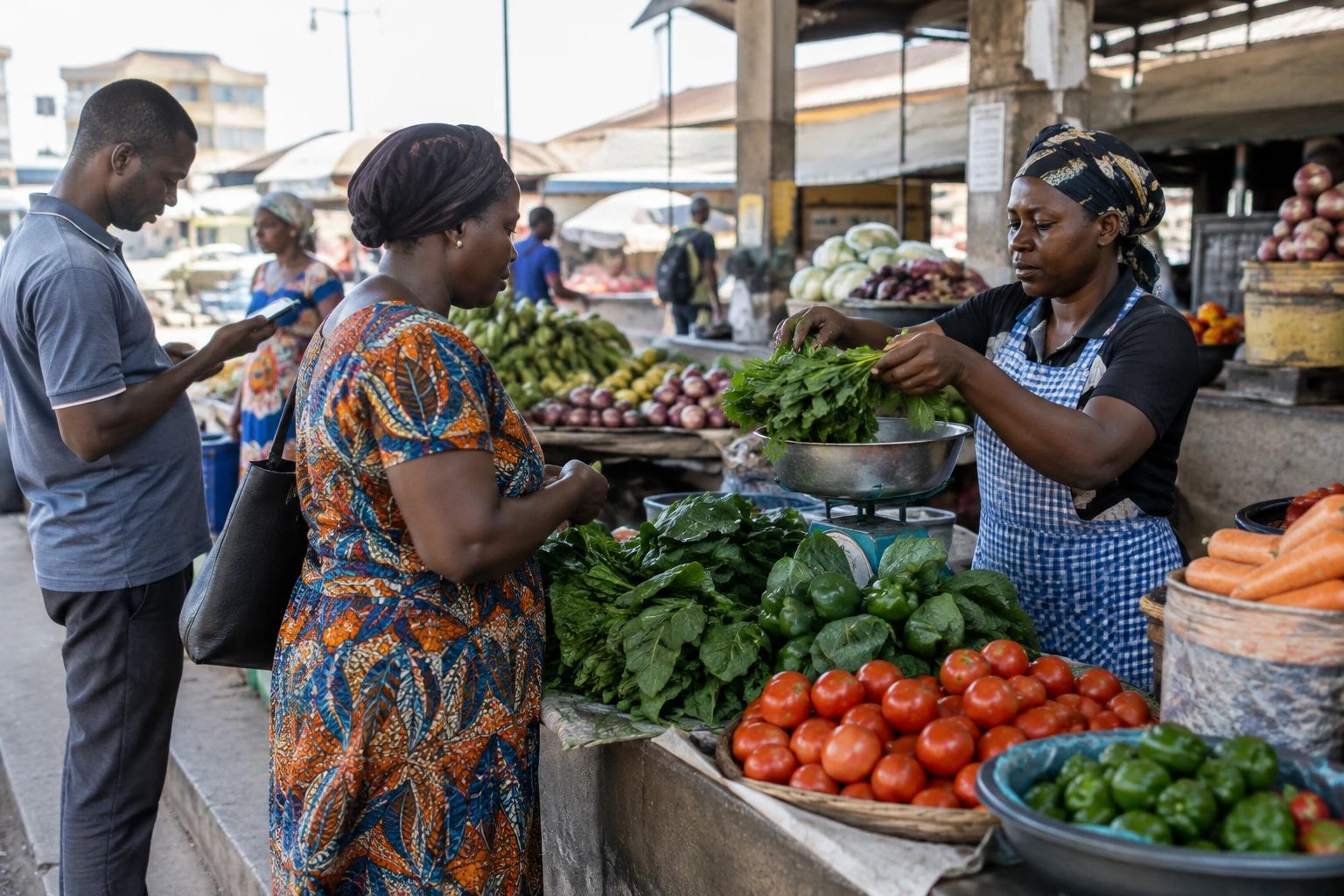
Annual inflation of 5.2% may seem moderate after the sharp price rises of recent years. But for Ghanaian households, the figure does not mean that prices are falling: it measures how quickly they are rising, while everyday expenses continue to increase.
In September 2026, annual price growth picked up slightly in Ghana. The data point to sharply contrasting trends: food inflation accelerated, while non-food inflation slowed. Services, meanwhile, remained more expensive than goods.
A modest rise, but uneven pressures
The Ghana Statistical Service (GSS), the national statistics agency, announced on 7 October that annual inflation stood at 5.2% in September, compared with 5% in August. Over the month, the price index rose by 1.1%. The annual figure nevertheless remains below the 9.4% recorded in September 2025. The GSS and several Ghanaian media outlets published consistent data.
The annual measure compares prices with those in the same month a year earlier. It therefore describes not a general fall in prices, but a slowdown in their increase compared with that period. For families, the already high cost of the shopping basket does not disappear when the inflation rate falls.
Food inflation rose from 3% in August to 4% in September. By contrast, non-food inflation fell from 6.8% to 6.2%. Services recorded annual price growth of 8.3%, compared with 4.2% for goods. Housing, water, electricity, gas and other fuels rose by 10.3%. Restaurants and hotels reached 9.2%, while transport stood at 5.7%.
This breakdown matters as much as the headline rate. Housing and services regularly weigh on household budgets, while the acceleration in food prices directly affects everyday purchases. The impact varies according to income, place of residence and the share of each household’s spending devoted to these items.
Central bank holds steady as prices pick up
The Bank of Ghana held its policy rate at 14% following its meeting on 23 and 24 September. The rate serves as a benchmark for financing conditions across the economy. The decision, confirmed by the central bank and reported by the Ghana News Agency, reflects a balancing act: containing the risk of a fresh acceleration without excessively restraining activity.
The move comes as inflation edges up after a period of disinflation — a slowdown in the rate of price increases. The central bank describes pressures as still contained, but highlights uncertainties from abroad, particularly global energy and food prices. More expensive imported goods can feed through into local costs, while monetary policy decisions take time to have an effect.
For businesses, more stable prices make it easier to plan purchases and investment. But a high policy rate can keep borrowing costs restrictive for companies and households alike. In Accra, where many formal businesses are concentrated, this constraint is reflected in financing decisions. Vendors and producers in other regions, as well as workers in the informal economy, are more likely to feel day-to-day changes in the cost of inputs and food.
Strong growth offers no guarantee of purchasing power
Economic activity provides another point of reference. Ghana’s real GDP grew by 6% in the second quarter of 2026, compared with 6.6% in the same period a year earlier, according to the GSS. The Ghana News Agency reported that services and industry supported growth, while agriculture expanded more slowly.
Growth and inflation tell different stories. GDP measures changes in output, not how its benefits are distributed across sectors, regions and groups of workers. Strong growth can therefore coexist with households under pressure, particularly when housing, energy or food absorb a large share of their income.
The next question is whether September’s increase marks a one-month adjustment or a lasting trend. The GSS’s next releases will clarify how food and services prices are evolving. These figures will inform the Bank of Ghana’s future decisions on the policy rate. In a West African economy integrated into regional and international trade, import costs and monetary conditions will also remain important to watch.