Algeria
 Egypt
 Libya
 Morocco
 Sudan
 Tunisia
 Benin
 Burkina Faso
 Cabo Verde
 Côte d'Ivoire
 Guinea
 Guinea-Bissau
 Liberia
 Mali
 Mauritania
 Niger
 Nigeria
 Senegal
 Sierra Leone
 The Gambia
 Togo
 Cameroon
 Central African Republic
 Chad
 DR Congo
 Equatorial Guinea
 Gabon
 Republic of the Congo
 São Tomé and Príncipe
 Burundi
 Comoros
 Djibouti
 Eritrea
 Ethiopia
 Kenya
 Madagascar
 Malawi
 Mauritius
 Mozambique
 Rwanda
 Seychelles
 Somalia
 South Sudan
 Tanzania
 Uganda
 Angola
 Botswana
 Eswatini
 Lesotho
 Namibia
 South Africa
 Zambia
 Zimbabwe
Prices are easing, changing daily life but not yet the economic landscape
In Accra, falling inflation is more than just another figure in a table. For Ghanaian households, it means something very tangible: the cost of the shopping basket is finally rising less quickly, after two years of pressure on the cost of living. Ghana has long paid dearly for a combination of a volatile currency, heavy debt and unstable food prices. The easing seen in July 2026 is therefore a useful milestone, but not the end of the road.
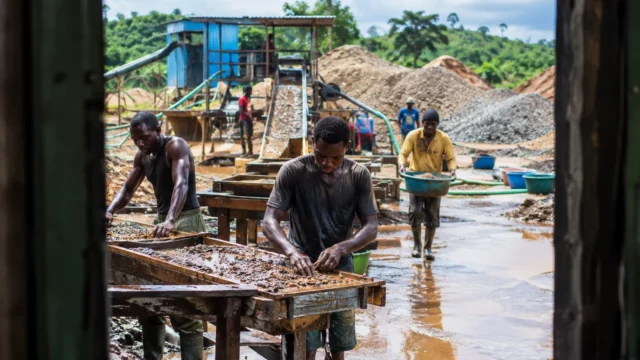
The country remains at the heart of West Africa, within the ECOWAS region, where economies remain sensitive to changes in food, energy and freight prices. Across the region, price stability matters as much to families as it does to small traders, transport operators and informal-economy workers, who are highly exposed to shocks. As a major producer of gold, cocoa and oil, Ghana is therefore looking at inflation with a dual aim: protecting purchasing power and consolidating its macroeconomic recovery.
What the figures published in Accra show
The National Statistics Service said year-on-year inflation fell to 4.6% in July 2026, from 5.3% in June. This was the first monthly decline since March. The same movement had been seen a year earlier, when inflation was still 12.1% in July 2025, illustrating the scale of the slowdown over 12 months.
Government statistician Alhassan Iddrisu attributed the easing primarily to slower food price rises. The authorities also say that price pressures now come mainly from domestic factors: transport, energy and other locally produced goods and services. In detail, this means households are dealing not only with higher import prices, but also with domestic costs that remain heavy across the distribution chain.
The comparison with June helps clarify the trend. In June 2026, price rises had accelerated to 5.3%, driven in particular by non-food items. July’s new decline therefore shows a retreat, although the situation remains fragile. It depends on the stability of staple foods, fuel, domestic logistics and the exchange rate, all of which are crucial for a country that still imports a significant share of what it consumes.
A real recovery, but one built on a still-sensitive base
Ghana is gradually emerging from its worst economic crisis in several decades. The government has embarked on fiscal adjustment, tax reform and efforts to stabilise the currency. The Bank of Ghana is also keeping inflation within its target band of 8% ± 2 percentage points, providing a policy benchmark for markets and businesses alike. But caution remains warranted: a few months of low inflation are not enough to erase accumulated imbalances.
The public programme remains focused on rebuilding financial buffers. The Ministry of Finance confirmed in early 2026 a strategy to strengthen external reserves and secure the economy, with a target of covering 15 months of imports by 2028. At the same time, the authorities highlighted the gradual normalisation of several indicators, including inflation, which, according to their official statement, fell from 23.8% in 2024 to 5.4%, and then to 3.8% in January 2026.
This improvement is changing the picture in cities and rural areas alike. In Accra, Kumasi and Takoradi, transport and service costs weigh on wage-earners’ budgets. In farming areas, lower food prices may ease the burden on buyers, but they do not automatically resolve problems with production, storage and distribution. The inflation figure is therefore a national average. It still conceals major differences between those who gain and those who lose from economic conditions.
What this means for ECOWAS and West Africa
Ghana’s experience is of interest across West Africa because it shows that rapid disinflation is possible when fiscal policy, monetary policy and commodity prices move in the same direction. Ghana has not overcome all its vulnerabilities, but it is already sending a useful signal to other regional economies facing the same shocks: food dependence, energy bills, currency volatility and pressure on real wages.
The significance is also continental. At a time when the African Development Bank and the World Bank report easing inflation in several African countries, Ghana’s trajectory is a reminder that stabilisation is only durable if growth follows. The coming months will therefore be decisive, as the recovery is translated into actual prices for basic goods, the performance of the cedi, the cost of credit and the country’s ability to turn its mining and agricultural revenues into sustainable jobs.
For now, the decline to 4.6% remains an encouraging signal for Ghanaians and regional partners. It shows that the crisis is no longer in the same phase as in 2024. It does not yet show that the recovery is definitively secured.