Algeria
 Egypt
 Libya
 Morocco
 Sudan
 Tunisia
 Benin
 Burkina Faso
 Cabo Verde
 Côte d'Ivoire
 Guinea
 Guinea-Bissau
 Liberia
 Mali
 Mauritania
 Niger
 Nigeria
 Senegal
 Sierra Leone
 The Gambia
 Togo
 Cameroon
 Central African Republic
 Chad
 DR Congo
 Equatorial Guinea
 Gabon
 Republic of the Congo
 São Tomé and Príncipe
 Burundi
 Comoros
 Djibouti
 Eritrea
 Ethiopia
 Kenya
 Madagascar
 Malawi
 Mauritius
 Mozambique
 Rwanda
 Seychelles
 Somalia
 South Sudan
 Tanzania
 Uganda
 Angola
 Botswana
 Eswatini
 Lesotho
 Namibia
 South Africa
 Zambia
 Zimbabwe
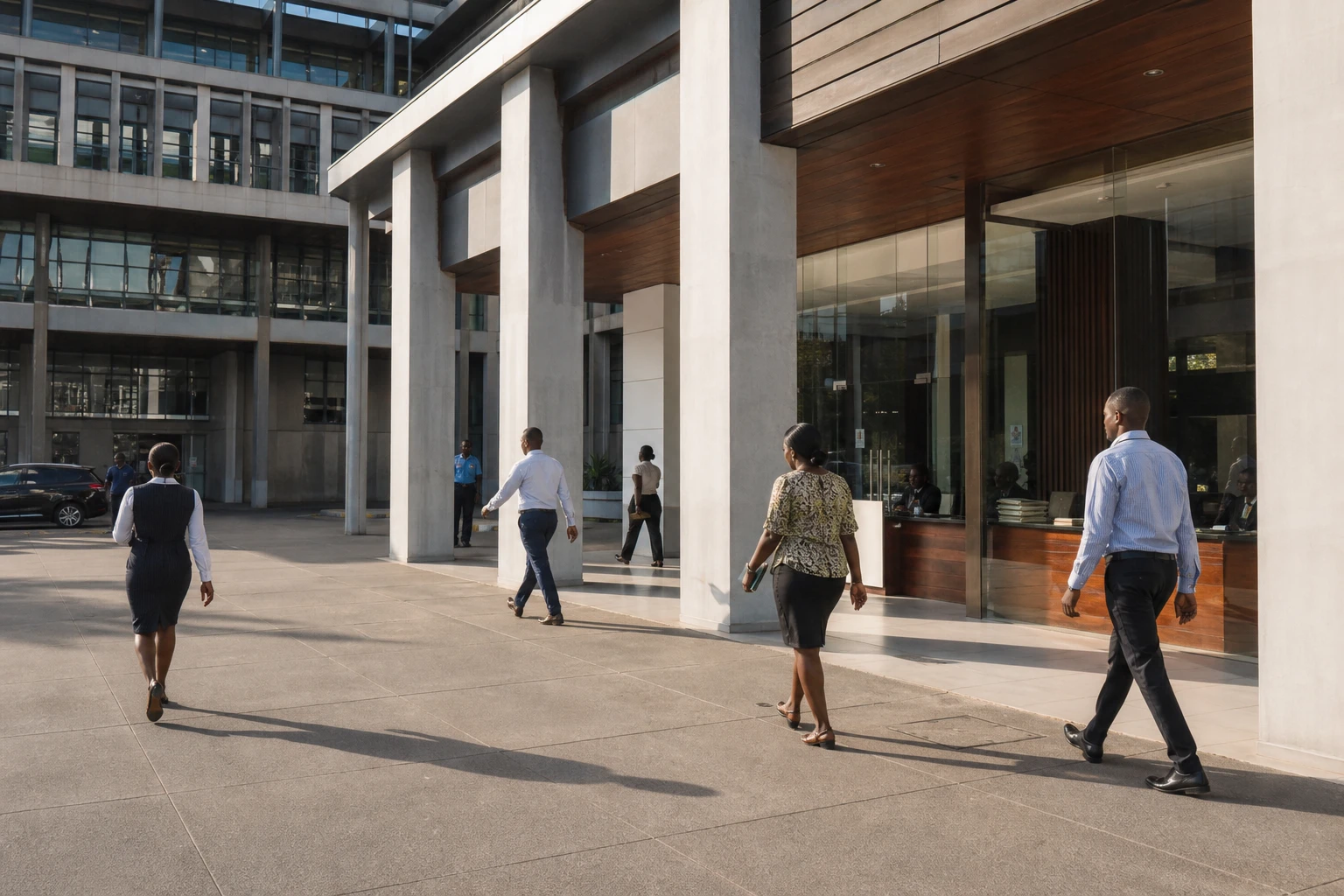
In Ghana, the slowdown in inflation seen over several months has paused. In Accra, annual price growth rose to 5 % in August 2026, but the Bank of Ghana still considers it too early to change its main monetary policy instrument.
Monetary pause despite price rebound
The Monetary Policy Committee of the Bank of Ghana kept the policy rate at 14 % after its meeting on 23 and 24 September 2026. The committee sets the direction of interest rates in the country. The decision was unanimous, according to the Bank of Ghana’s official statement.
The decision comes after a slight rise in inflation. According to the Ghana Statistical Service, the national statistics agency, headline inflation rose from 4.6 % in July to 5 % in August. It nevertheless remains well below the 11.5 % recorded in August 2025.
This trend requires a nuanced reading. On a month-on-month basis, average prices fell by 1 % between July and August. The annual increase therefore mainly reflects comparison with prices a year earlier. It does not mean that all products rose at the same pace over the past month.
The detailed data confirm this distinction. Food inflation edged down from 3.1 % to 3 %. By contrast, non-food inflation rose from 6.3 % to 6.8 %. Services remain particularly exposed, with annual growth of 8.6 %, compared with 3.8 % for goods.
The Ghana Statistical Service also says that 71 % of inflation comes from non-food products and services. Housing, water, electricity, gas and other fuels make the largest contribution. Transport and education also weigh on household budgets.
Pressure concentrated on everyday spending
For Ghanaian households, the national average masks significant differences. The Central Region recorded inflation of 11.1 % in August, while the Bono East Region posted a negative rate of 3.3 %. Greater Accra stood at 5 %, compared with 8.7 % in the Ashanti Region.
These regional differences reflect the structure of local economies, transport costs and access to markets. In the capital, pressure is concentrated in particular on housing, services and travel. In other regions, delivery costs and product availability can significantly alter the consumption basket.
The Bank of Ghana nevertheless considers that pressures remain contained. It points to improved credit conditions, business sentiment and consumer confidence. This assessment is based on an economy that continues to grow despite an uncertain external environment.
The central bank is, however, monitoring several risks. Crude oil prices could push up transport and production costs. Adjustments to public utility tariffs could also feed through to household bills. Finally, ongoing disruptions to global supply chains could increase business costs.
Economy supported by services and industry
Ghana’s economy continues to grow at a solid pace. Real gross domestic product increased by 6 % in the second quarter of 2026, according to data from the Ghana Statistical Service. Growth was driven mainly by services and industry.
This result gives the Bank of Ghana room to exercise caution. A rapid cut in the policy rate could further support investment and credit. However, it could risk fuelling expectations of rising prices or undermining the stability of the cedi if external pressures intensified.
Conversely, higher rates would weigh on borrowers. Small businesses, households and informal-economy operators are the first to be exposed to more expensive credit. Keeping the rate at 14 % therefore seeks to strike a balance between supporting activity and consolidating disinflation.
The banking sector, for its part, is showing signs of resilience. The Bank of Ghana reports that institutions are solvent, profitable and liquid, with asset quality improving. The average lending rate is said to have fallen to 15.9 %, from 24.2 % a year earlier. This decline could make it easier for businesses to obtain financing, although access to credit remains uneven depending on the size and location of borrowers.
The cedi and reserves under close watch
Monetary stability also depends on external conditions. As at 22 September 2026, Ghana’s gross international reserves stood at about 12 billion dollars, equivalent to 4.5 months of import cover, according to information presented by the central bank.
This level provides a buffer against shocks to imports and financial markets. It does not, however, fully shield Ghana from a sustained rise in oil prices, a strengthening dollar or a deterioration in international financing conditions.
The cedi remained relatively stable over the period under review. This stability helps limit the cost of imported goods. It also supports the disinflation trend, since a sharp depreciation of the currency quickly makes fuel, equipment and some foodstuffs more expensive.
A signal watched across West Africa
Ghana’s decision comes amid a regional landscape of differing monetary policies. Within the Economic Community of West African States (ECOWAS), central banks must contend with widely varying levels of inflation, growth and external vulnerability.
Ghana is pursuing its own stabilisation path after the severe economic pressures of recent years. The fall in inflation compared with 2025 improves the outlook. However, the rise in services and housing-related costs shows that a return to stability cannot be measured solely by the national index.
The next step will be to determine whether August’s increase proves temporary. The Bank of Ghana will need to monitor oil prices, public utility tariffs, the cedi’s performance and credit trends. For businesses and households alike, the question will be whether 6 % growth can be sustained without reigniting price pressures.