Algeria
 Egypt
 Libya
 Morocco
 Sudan
 Tunisia
 Benin
 Burkina Faso
 Cabo Verde
 Côte d'Ivoire
 Guinea
 Guinea-Bissau
 Liberia
 Mali
 Mauritania
 Niger
 Nigeria
 Senegal
 Sierra Leone
 The Gambia
 Togo
 Cameroon
 Central African Republic
 Chad
 DR Congo
 Equatorial Guinea
 Gabon
 Republic of the Congo
 São Tomé and Príncipe
 Burundi
 Comoros
 Djibouti
 Eritrea
 Ethiopia
 Kenya
 Madagascar
 Malawi
 Mauritius
 Mozambique
 Rwanda
 Seychelles
 Somalia
 South Sudan
 Tanzania
 Uganda
 Angola
 Botswana
 Eswatini
 Lesotho
 Namibia
 South Africa
 Zambia
 Zimbabwe
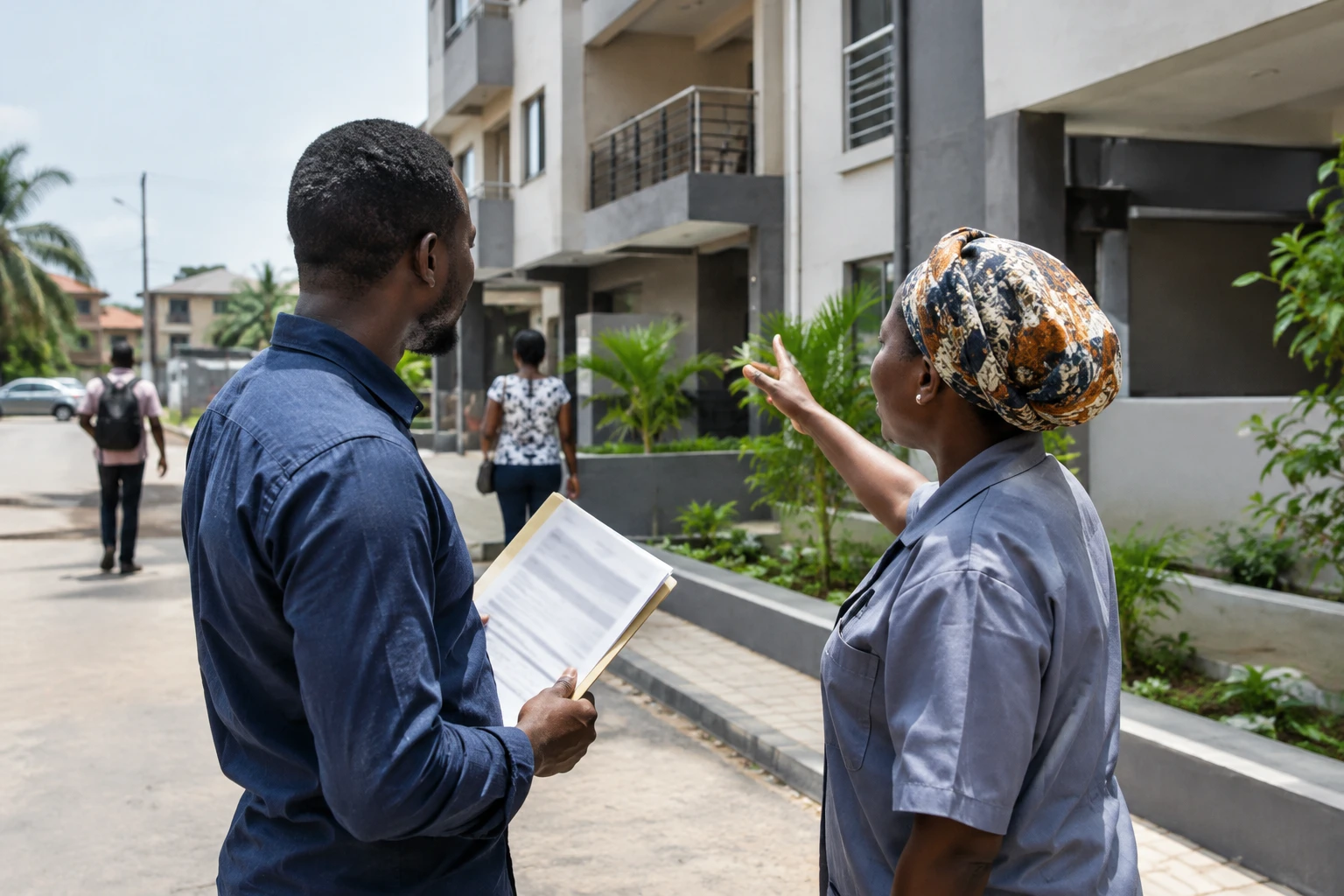
In Accra, the cost of housing is measured in more than the purchase price. Many households must first raise a substantial rent advance or secure a mortgage, which can be difficult to obtain. Ghana wants to tackle both obstacles with a revolving public fund and a monthly rent payment scheme.
Funding announced, but still to be included in the budget
On 7 October 2026, at the opening of a national conference on housing finance in Accra, President John Dramani Mahama announced a state contribution of 1 billion Ghanaian cedis to the National Housing Fund. The government plans to include it in the 2027 budget. The stated aim is to build a revolving fund of 3 billion cedis: money lent or invested could return to the scheme to finance other projects. The announcement was reported by Ghana’s public information service and the national daily Graphic. The report on the housing conference says the finance minister has been instructed to provide for this allocation.
The announcement does not mean the funds are already available: they still have to be included in the budget and the scheme has yet to be implemented. Financing arrangements, eligibility criteria and the types of housing covered will also need to be specified. The announced amount is therefore a political commitment to be delivered, not a programme already operating on a large scale.
A shortfall with several dimensions
Ghana’s housing profile, published in 2024 by the ministry responsible for the sector with support from United Nations agencies, estimates the deficit at about 1.8 million units. This figure measures the gap between need and supply; it does not mean that all 1.8 million families are homeless. The report also highlights overcrowded or substandard housing. The presentation of the national housing profile by UN-Habitat notes that the document is intended to guide planning and investment.
The challenge is particularly visible in urban areas, where household growth and the concentration of jobs drive demand. Accra and Greater Accra attract people and businesses, but the difficulties are not confined to the capital. The costs of land, materials and utility connections weigh on construction. For low-income households and those with irregular earnings, there is also a financial hurdle: securing a long-term mortgage remains difficult when incomes do not meet banks’ requirements.
The National Housing Fund aims to address this constraint by supporting affordable construction and access to mortgage finance. But a fund, even one backed by public capital, is not enough to make housing affordable. The interest rates offered, eligibility conditions, location of projects and cost controls will determine who can actually benefit. A supply of new homes concentrated in the most expensive areas would do little to meet the needs of low-income households and workers living far from employment centres.
Rent, another front in housing policy
Mahama also presented “Easy Rent”, a proposed scheme under the National Housing Fund. The fund would advance rent to the landlord, and the tenant would then repay the amount in monthly instalments. The scheme is aimed at workers who can afford regular rent payments but struggle to raise a large sum upfront. The government describes the measure as one option in a policy that goes beyond home ownership. Ghana’s Information Services Department reports that the president also mentioned rent-to-own schemes and support for completing unfinished houses.
The idea addresses a practical problem, but the proposal will need to be distinguished from existing schemes. Ghana already has the National Rental Assistance Scheme, which advances some rent payments for eligible applicants, who repay the amount in monthly instalments. The ministry responsible for housing describes the scheme as assistance targeted at low- and middle-income households. The ministry’s description of the rental assistance programme says access is subject to criteria. Easy Rent will therefore need to clarify how it relates to this scheme, who will benefit and how it will be funded.
For tenants, monthly payments can reduce the amount they need to find all at once. They do not automatically lower the total cost of housing and create a repayment obligation. The terms will need to protect households from excessive debt and ensure applications are handled transparently. For landlords, guaranteed payment could make renting easier; for the state, it requires rigorous management of risks and arrears.
Implementation will determine the regional impact
The initiative comes in a country where housing policies have already combined public programmes, private finance and rental assistance. In January 2026, Mahama announced a separate allocation of 500 million cedis for a housing project for teachers, with plans to increase it to 1 billion in 2027. The Ghana News Agency reported the announcement. The agency’s report describes a partnership with the teachers’ association and a bank. It will be important to clarify whether the various funds complement one another or are separate budget lines, to avoid counting the same commitments more than once.
Across West Africa, the issue extends beyond Ghana. Growing urban needs, limited mortgage finance and the difficulty of raising rent advances affect several countries in the region. ECOWAS, the Economic Community of West African States, provides a framework for regional co-operation, but housing policies remain primarily national. Ghana’s experience will therefore be watched for practical results: homes actually built, affordable prices and households able to obtain financing.
The next step will be the 2027 budget. It will need to confirm the announced billion and set out the fund’s rules, partners and beneficiaries. For Ghanaians, the test will not simply be the amount allocated: it will be whether people in Accra and other regions can find decent housing without spending an unsustainable share of their income on rent or a mortgage.