Algeria
 Egypt
 Libya
 Morocco
 Sudan
 Tunisia
 Benin
 Burkina Faso
 Cabo Verde
 Côte d'Ivoire
 Ghana
 Guinea
 Guinea-Bissau
 Liberia
 Mali
 Mauritania
 Niger
 Nigeria
 Senegal
 Sierra Leone
 The Gambia
 Togo
 Cameroon
 Central African Republic
 Chad
 DR Congo
 Equatorial Guinea
 Republic of the Congo
 São Tomé and Príncipe
 Burundi
 Comoros
 Djibouti
 Eritrea
 Ethiopia
 Kenya
 Madagascar
 Malawi
 Mauritius
 Mozambique
 Rwanda
 Seychelles
 Somalia
 South Sudan
 Tanzania
 Uganda
 Angola
 Botswana
 Eswatini
 Lesotho
 Namibia
 South Africa
 Zambia
 Zimbabwe
Two capitals, one shared instinct: broaden African alliances
When two countries share neither a border nor a currency, their rapprochement often says more than a simple diplomatic gesture. Between Accra and Libreville, the message is clear: in an unstable global economy, African states are seeking African partners to safeguard their room for manoeuvre, markets and decision-making capacity. The AfCFTA, the African Continental Free Trade Area, provides precisely this continental framework, which aims to facilitate intra-African trade and increase the movement of goods, services and investment within the continent.
This rapprochement is also taking place in a sensitive regional area. The Gulf of Guinea remains one of the continent’s most closely monitored maritime fronts, owing to piracy, trafficking and other illicit activities at sea. In April 2025, the African Union again called for a coordinated maritime response in this zone linking West and Central Africa.
Against this backdrop, Ghana and Gabon have chosen to open several areas of work at once: diplomacy, training, mining, agriculture, climate, maritime security, transport, health, education and tourism. The initiative is no mere formality. It shows two economies with different profiles seeking to turn a still modest bilateral relationship into useful, measurable cooperation.
Memorandums to establish a working method
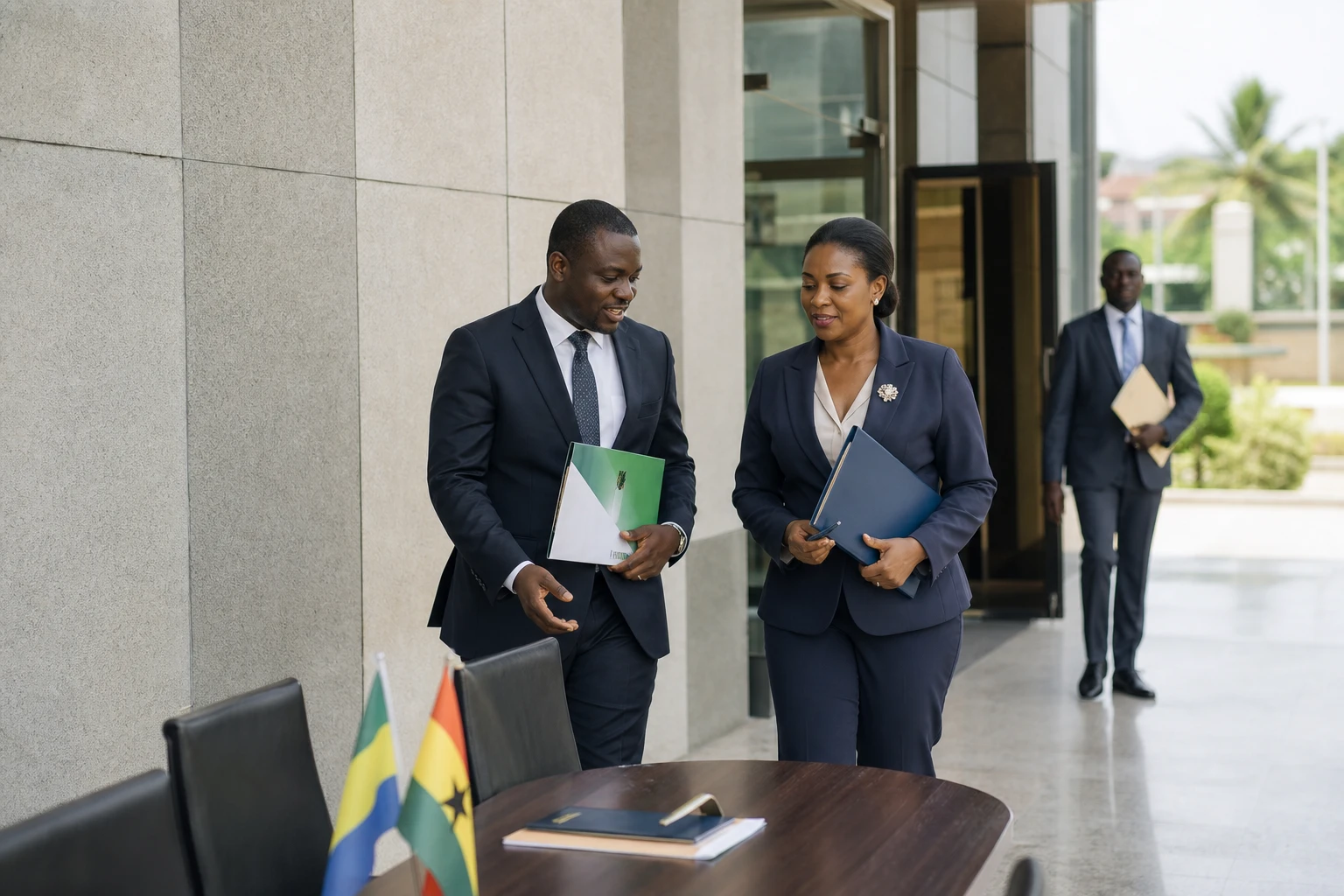
The diplomatic component is at the heart of this sequence. Two memorandums of understanding were signed in Accra: one on political consultations between the two governments, the other on cooperation in diplomatic training between the relevant institutes in both countries. This type of agreement does not resolve everything, but it establishes a method. It makes it possible to align positions, prepare visits, reduce misunderstandings and professionalise exchanges between administrations.
The three-day official visit by Gabonese President Brice Clotaire Oligui Nguema also served to establish a broader political framework. According to the joint communiqué, 12 areas of cooperation were identified with his Ghanaian counterpart, John Dramani Mahama. The list is deliberately broad, linking areas of immediate sovereignty with medium-term growth levers.
In mining, the two countries want to work on responsible exploitation, adding value to gold and manganese, oil exploration and the energy transition. The challenge is straightforward: Ghana is seeking to better regulate its gold sector, while Gabon wants to move away from prolonged dependence on oil. In recent months, Libreville has in fact sent a series of signals in favour of diversification, notably through mining and port partnerships focused on local processing.
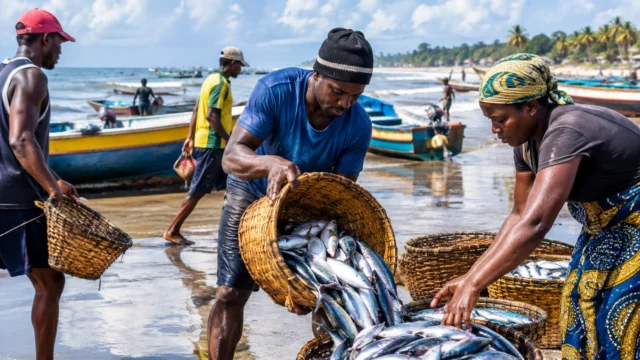
In agriculture, the ambition covers cash crops, seeds, agro-food processing, aquaculture and the fight against illegal fishing. This matters to both countries. In Ghana, agriculture remains a pillar of employment and rural incomes. In Gabon, food sovereignty has again become a stated public policy priority, with a determination to strengthen storage, transport and processing infrastructure.
Climate, maritime security and trade: the issues that will give the partnership weight
The climate component could become one of the most strategic. Gabon has rare environmental assets, thanks to the forest cover across its territory and its role in debates on carbon credits. Ghana, for its part, is seeking to strengthen its climate resilience programmes. By bringing these two strengths together, the two governments hope to create joint projects linking conservation, financing and economic benefits.
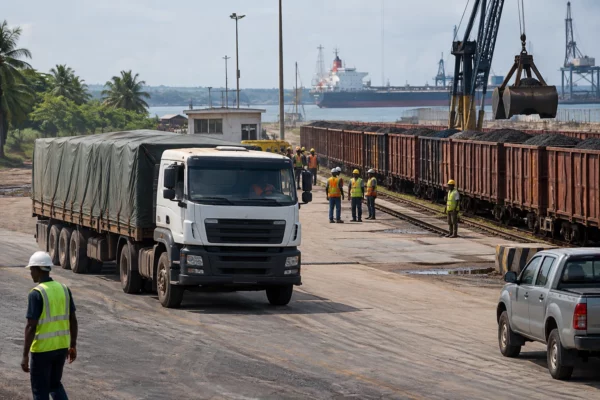
Maritime security is the other major issue. The two capitals want to strengthen ocean governance, intelligence-sharing and the fight against piracy and transnational crime in the Gulf of Guinea. This goes beyond bilateral ties. It affects ports, supply chains, shipping companies and coastal states throughout the region. For several years, the African Union has stressed that maritime security is inseparable from the blue economy and regional integration.
Economically, the partnership remains limited in scale. Trade between Ghana and Gabon is described as modest in data from the Observatory of Economic Complexity cited by several international trade publications. The point is not the figure itself. What matters most is the gap between the stated potential and the actual level of trade flows. In other words, the two states still have considerable room to make progress if the agreements signed translate into projects, logistical support and clearer market-access rules.
For Ghana, this cooperation could consolidate its position as a West African integration hub, particularly as the country hosts the AfCFTA Secretariat in Accra. For Gabon, it could serve as a gateway to new markets beyond the traditional model of raw-material exports. In both cases, the challenge is to move economic diplomacy from statements of intent to contracts, training and trade flows.
Cooperation to watch beyond the official photograph
This sequence reflects a broader trend across the continent: African states are increasingly seeking to engage directly with one another, exchange expertise and build functional alliances rather than defaulting to dependence on external partnerships. Ghana and Gabon are not starting from the same point. The former has recognised experience in regional trade and the AfCFTA architecture. The latter is emerging from a recent period of political transition and a reorganisation of its economic priorities. But they converge on one point: the need to turn political sovereignty into productive capacity.
The months ahead will show whether this rapprochement produces anything beyond a diplomatic signal. The sectors identified are numerous, perhaps too numerous. The real test will be the selection of projects, the implementation timetable and the administrations’ ability to follow through. In the coming weeks and months, the key things to watch will be whether political consultations lead to technical missions, whether diplomatic training results in regular exchanges, and whether the relevant ministries turn intentions into visible results for businesses, students, fishers, farmers and young entrepreneurs.