Algeria
 Egypt
 Libya
 Morocco
 Sudan
 Tunisia
 Benin
 Burkina Faso
 Cabo Verde
 Côte d'Ivoire
 Ghana
 Guinea
 Guinea-Bissau
 Liberia
 Mali
 Mauritania
 Niger
 Nigeria
 Senegal
 Sierra Leone
 The Gambia
 Togo
 Cameroon
 Central African Republic
 Chad
 DR Congo
 Equatorial Guinea
 Republic of the Congo
 São Tomé and Príncipe
 Burundi
 Comoros
 Djibouti
 Eritrea
 Ethiopia
 Kenya
 Madagascar
 Malawi
 Mauritius
 Mozambique
 Rwanda
 Seychelles
 Somalia
 South Sudan
 Tanzania
 Uganda
 Angola
 Botswana
 Eswatini
 Lesotho
 Namibia
 South Africa
 Zambia
 Zimbabwe
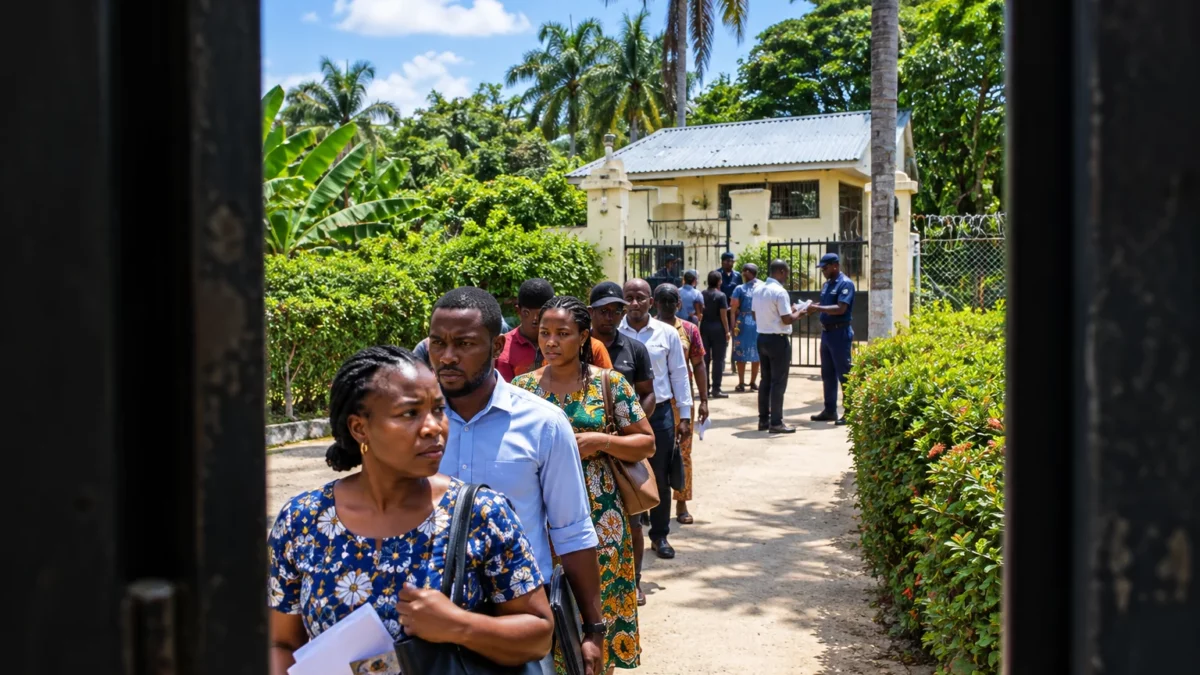
In Sibang, in Libreville’s sixth arrondissement, teenagers were playing football when gunfire seriously injured one of them. The case now involves far more than the fate of a former police chief: in a closely watched proceeding, it is testing the promise of equal justice for all.
Proceedings opened after gunfire in Sibang
The events date back to Friday 13 November 2026. The teenager Midioko Jayson Merlin Dylan was shot on a football pitch. Several Gabonese media outlets place the scene at Augustin-Monedan Stadium, in Sibang. The precise circumstances remain to be established by the investigation.
Public prosecutor Dick Fabrice Boungou Mikolo attributed the gunfire to Jean-Boniface Assélé, a former minister and former commander-in-chief of the Gabonese police. According to reported information, he allegedly asked the young people to leave before using a 16-gauge firearm. This account will have to be examined during the proceedings; Assélé remains presumed innocent.
The teenager, a pupil in the equivalent of Year 10, was admitted to intensive care and then operated on. Information published by Gabonese media indicates that his condition has stabilised, but that a projectile may remain in his body, in a delicate area. His health and medical details are primarily a matter for the victim and his family.
On Monday 16 November, Assélé was brought before the Libreville public prosecutor’s office and then remanded in custody at the central prison, according to the Gabonese Press Agency and several local media outlets. This measure means he is being held while the investigation continues; it does not amount to a finding of guilt. The case must now be investigated, with hearings and examination of the physical evidence.
A case closely watched by the public
The injury of a teenager in a place of recreation prompted widespread reaction in Gabon. On social media, users shared the hashtag “Justice for Dylan”. The boy’s father called for the full truth to be established, the national press reports.
President Brice Clotaire Oligui Nguema visited the teenager at his bedside on 16 November. He said that justice was the same for everyone, according to reports carried by Gabonese media. The presidential visit has given the case considerable political visibility. It does not, however, replace the investigation or the decisions of the magistrates.
The proceedings raise a concrete question: do the same rules apply to a former senior official as to any other person facing justice? Remand in custody alone is not enough to answer it. What happens next will depend on how the investigation is conducted, respect for the rights of the defence and the transparency of judicial decisions.
For the family, the medical emergency remains pressing. For local residents and young people who use the pitch, the question is how a dispute over access to a sporting facility could have escalated. The next findings should clarify who was present, what weapon was used and under what circumstances the shots were fired.
The Gabonese and regional context
The case comes after a major political period. The coup of 30 August 2023 ushered in a military transition, which ended with the presidential election of 12 April 2025 and the inauguration of Brice Oligui Nguema on 3 May. The African Union subsequently lifted Gabon’s suspension from its bodies. The return to constitutional order has placed the functioning of institutions and trust in the justice system among the issues under close scrutiny.
Gabon is a member of the Economic and Monetary Community of Central Africa (CEMAC), which brings together six countries in an economic and monetary union. The case falls first and foremost under the jurisdiction of the Gabonese courts, not a regional body. But equality before the law and the accountability of the authorities are questions that extend beyond Libreville: they matter to the credibility of institutions across the sub-region.
Three stages must therefore be distinguished: accusation, investigation and any eventual trial. At this stage, the reported events have led to remand in custody, while criminal responsibility remains to be established. Attention will now turn to the actions of the investigating judge, Dylan’s health and the ability of the institutions to allow the proceedings to take their course without pressure.