Algeria
 Egypt
 Libya
 Morocco
 Sudan
 Tunisia
 Benin
 Burkina Faso
 Cabo Verde
 Côte d'Ivoire
 Guinea
 Guinea-Bissau
 Liberia
 Mali
 Mauritania
 Niger
 Nigeria
 Senegal
 Sierra Leone
 The Gambia
 Togo
 Cameroon
 Central African Republic
 Chad
 DR Congo
 Equatorial Guinea
 Gabon
 Republic of the Congo
 São Tomé and Príncipe
 Burundi
 Comoros
 Djibouti
 Eritrea
 Ethiopia
 Kenya
 Madagascar
 Malawi
 Mauritius
 Mozambique
 Rwanda
 Seychelles
 Somalia
 South Sudan
 Tanzania
 Uganda
 Angola
 Botswana
 Eswatini
 Lesotho
 Namibia
 South Africa
 Zambia
 Zimbabwe
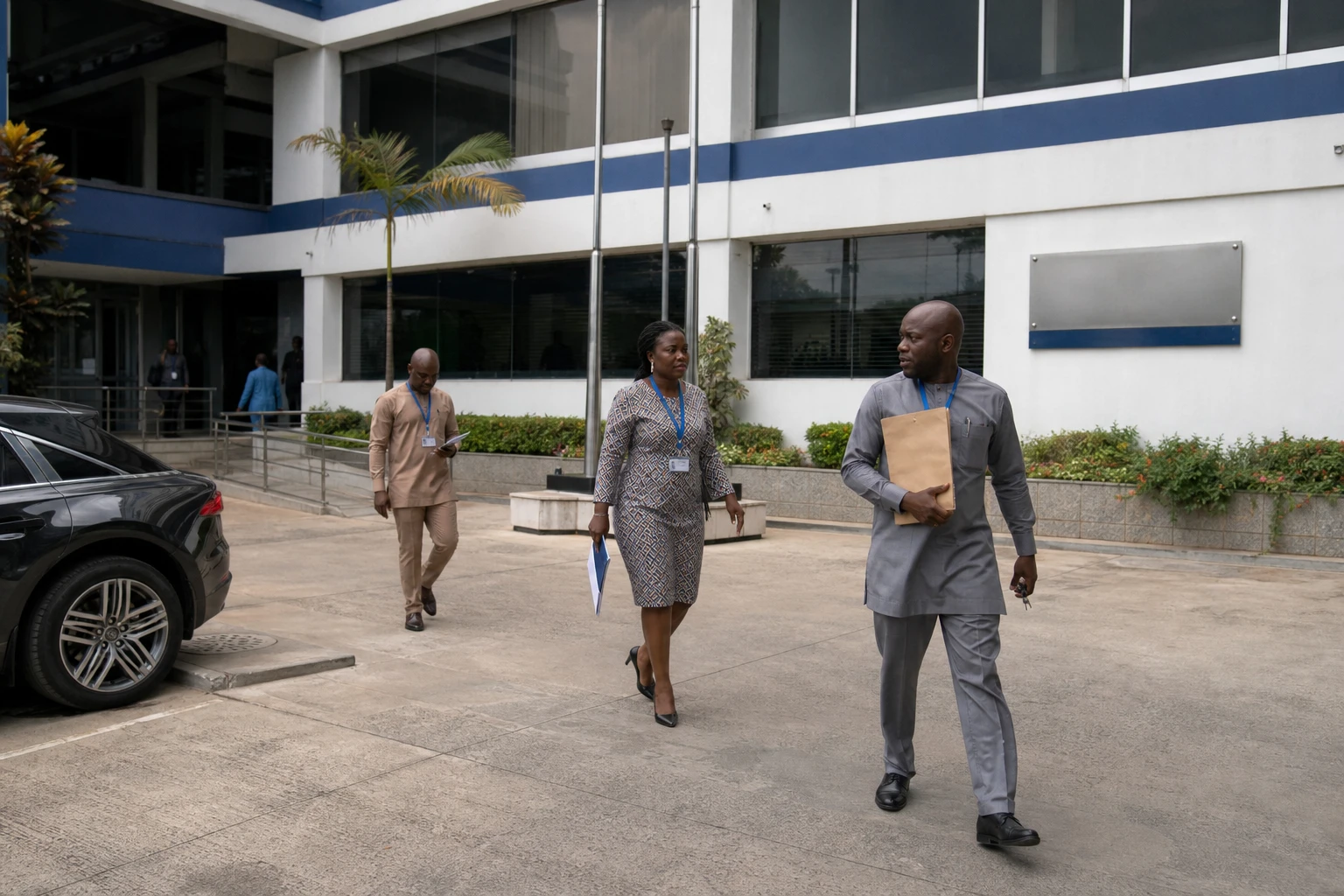
In Accra, the power sector is buying time, but has yet to win the battle
In Ghana, the electricity bill is measured not only in cedis. It is also measured in trust, payment discipline and the state’s ability to keep a system running that is costly even before it produces a single kilowatt-hour. In Accra, the question is no longer whether reform is needed, but how to ensure that an improvement on paper does not conceal deeper fragility.
The country is nevertheless making progress in a broader context of macroeconomic stabilisation. After several years of budgetary pressures and debt-related adjustments, the government is seeking to secure the sectors that weigh most heavily on public finances. Energy is one of them, as distribution losses, unpaid bills and commitments to independent power producers continue to undermine the accounts.
What the government has announced
On Tuesday 28 July 2026, the Ministry of Energy presented new gains from the renegotiation of contracts between the state and nine independent power producers. According to information reported locally, these adjustments are said to have generated savings of more than $240 million. The same official explained that some companies now receive between 80% and 90% of their monthly invoices, with the stated aim of reaching 100%.
The government also says it has strengthened a centralised mechanism for managing sector revenues, in order to reduce unpaid bills and improve the flow of payments between the state, distributors and producers. At the same time, a $500 million World Bank guarantee for projects considered key to the gas sector is said to have been reinstated. These steps point towards putting the sector’s finances in order, but are not, in themselves, enough to address its underlying weaknesses.
At the institutional level, Ghana also established a steering committee in 2025 to explore private-sector involvement in ECG’s billing and metering. The government presents this as a targeted modernisation effort, without privatising the company. This is a sensitive issue, as it touches on the boundary between public service, commercial efficiency and political control of a strategic sector.
Why the electricity crisis is not over
The core of the problem is well known. The World Bank recently downgraded its assessment of Ghana’s Energy Sector Recovery Programme from “moderately satisfactory” to “unsatisfactory”, citing implementation delays, financing constraints and administrative bottlenecks. It also estimated that the combined losses of ECG and the Northern Electricity Distribution Company, or NEDCo, remain around $1.5 billion, well above the target of $525 million set for the end of 2027.
These figures point to a simple fact: renegotiating contracts helps, but it does not fix technical losses in the network, commercial losses or weak bill collection. The Institute of Statistical, Social and Economic Research at the University of Ghana has also stressed that short-term savings do not resolve structural shortcomings, notably payment discipline and revenue leakage throughout the supply chain.
The International Monetary Fund, for its part, is pushing for greater private-sector involvement in distribution. In its latest Article IV consultation, the IMF recommended finalising private-sector participation in distribution, strengthening payment discipline and reducing inherited arrears. But this approach faces a clear political reservation: President John Dramani Mahama has defended keeping ECG as a central public-sector player. The debate is therefore not simply between two economic models; it also reflects a trade-off between management sovereignty and the urgent need for better performance.
For Ghanaians in their daily lives, this tension translates into a very tangible issue: the reliability of electricity and the cost of doing business. For urban households, power cuts and irregular bills weigh on domestic life. For businesses, particularly in industry and services in Accra, Kumasi and Takoradi, unreliable electricity drives up the cost of using generators and reduces competitiveness. In the northern areas served by NEDCo, bill collection remains more difficult and room for manoeuvre is more limited.
A Ghanaian issue, but a West African lesson
The issue extends well beyond Ghana’s borders. It is part of a broader West African debate about how to finance electricity without suffocating public companies or shifting all the risks on to households. Across ECOWAS, the reliability of the grid, payments to producers and the integration of electricity markets remain central concerns, particularly in a region where gas, hydropower and interconnections must support uneven industrialisation.
Ghana is also seeking to position itself within wider continental trends. The country hosted high-level African meetings in Accra in 2026, underscoring its diplomatic role on the continent. In the energy sector, this visibility matters: it allows Abuja, Abidjan, Lomé, Dakar and Nairobi to view the Ghanaian case as a testing ground where tariff reform, public-sector governance and selective recourse to private companies intersect.
What happens next will hinge on specific issues: the implementation of the committee’s report on private-sector involvement in ECG’s billing, the Treasury’s ability to contain sector arrears and the fulfilment of commitments made to lenders. If these steps move forward, Ghana will be able to consolidate a useful reform. If they stall, the announced savings will remain a temporary reprieve in a system still under pressure.