Algeria
 Egypt
 Libya
 Morocco
 Sudan
 Tunisia
 Benin
 Burkina Faso
 Cabo Verde
 Côte d'Ivoire
 Guinea
 Guinea-Bissau
 Liberia
 Mali
 Mauritania
 Niger
 Nigeria
 Senegal
 Sierra Leone
 The Gambia
 Togo
 Cameroon
 Central African Republic
 Chad
 DR Congo
 Equatorial Guinea
 Gabon
 Republic of the Congo
 São Tomé and Príncipe
 Burundi
 Comoros
 Djibouti
 Eritrea
 Ethiopia
 Kenya
 Madagascar
 Malawi
 Mauritius
 Mozambique
 Rwanda
 Seychelles
 Somalia
 South Sudan
 Tanzania
 Uganda
 Angola
 Botswana
 Eswatini
 Lesotho
 Namibia
 South Africa
 Zambia
 Zimbabwe
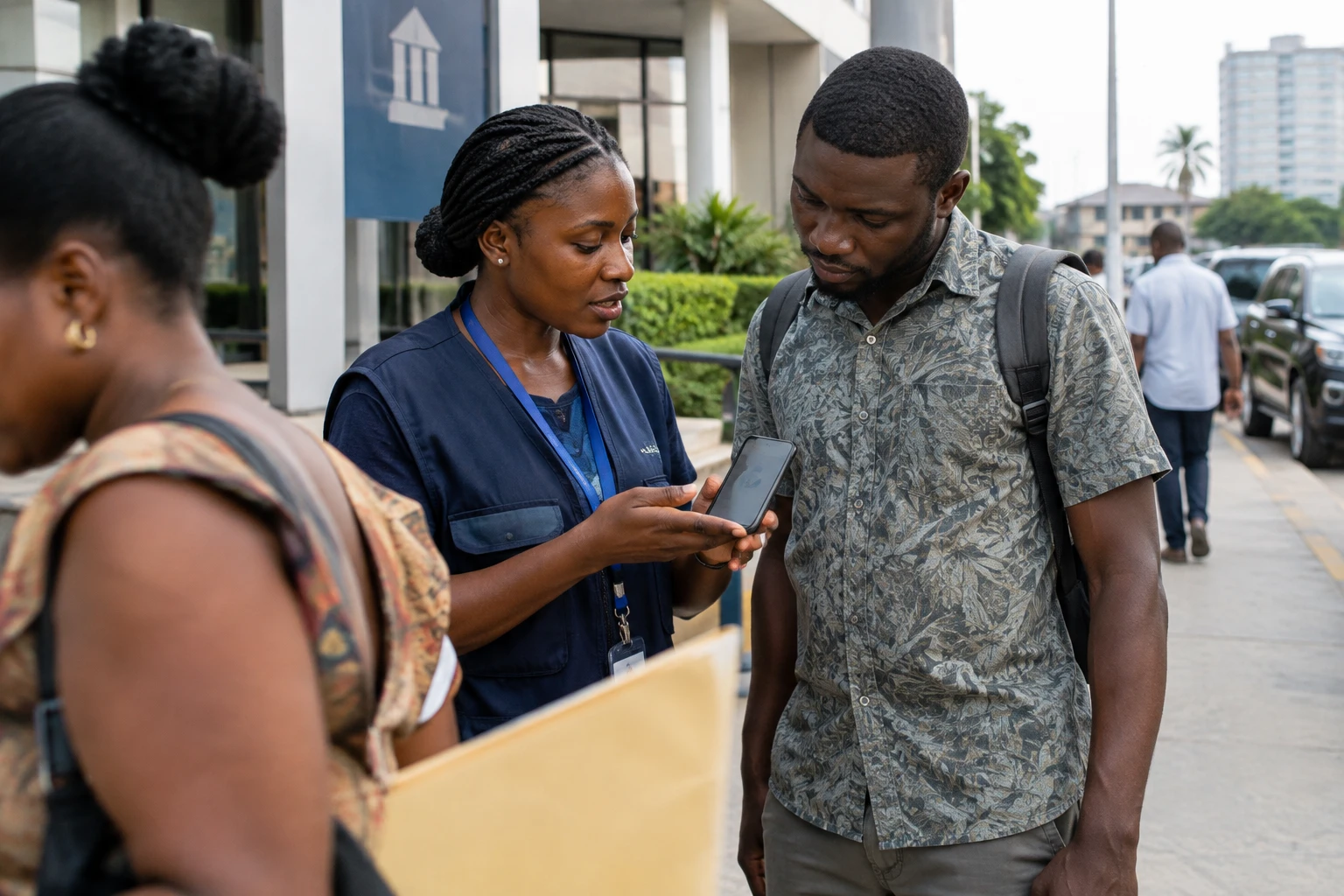
In an operation against online fraud, the number of people detained does not, by itself, tell us who is a suspect and who needs protection. In Ghana, that distinction raises another question: who is in charge of an investigation conducted on national territory with support from foreign agencies?
A Ghanaian operation supported by foreign partners
The debate erupted after an announcement published on 8 October 2026 by Kash Patel, director of the FBI, the US federal police. He presented the raid in Ghana as part of “Operation Blackout”, a US campaign targeting scam centres. He cited more than 130 people arrested or detained, 89 victims identified, nearly $10 million in losses identified and more than 300 devices seized.
The following day, Ghana’s Cyber Security Authority (CSA) clarified that the operation, also called “Cyber Hunt”, had been planned, coordinated and conducted by Ghanaian authorities. According to the CSA, foreign agencies did not exercise autonomous operational command. Their involvement was part of co-operation authorised by the country’s institutions.
The difference between the two accounts is therefore first and foremost about who conducted the operation and how it was presented. It does not mean Ghana is rejecting international assistance. The CSA acknowledged intelligence contributions from the FBI and the UK National Crime Agency (NCA).
The CSA lists among the institutions involved the National Security Council, the Ghana Police Service’s Criminal Investigations Department, the Immigration Service, the Office of the Attorney-General and a joint cybercrime task force. Nigeria’s Economic and Financial Crimes Commission (EFCC), the NCA and the FBI also took part. Ghanaian outlet Graphic Online reports the CSA’s details on the agencies involved.
Figures do not all describe suspects
The CSA reports that eight suspects were arrested and 120 people rescued, whom it describes as suspected victims of trafficking and exploitation in online fraud activities. This tally does not correspond directly to the “more than 130 people arrested or detained” announced by the FBI. The two statements do not use the same category to describe the people taken into custody during the operation.
This distinction matters. Someone present at a location suspected of hosting criminal activity is not automatically an organiser or accomplice. Some may have been recruited under false pretences, coerced or exploited. Individual responsibility remains to be established by the investigation and, where applicable, in court.
According to the CSA, the raids targeted several apartments in the Greater Accra Region, including in Kpone Katamanso, Ga North and Ga West. Investigators suspect that some premises served as bases for organised networks, including romance scams. The authority says the intelligence that triggered the operation dates back to 26 August 2026.
Ghanaian authorities say they seized 136 mobile phones, 130 laptops, internet equipment, four vehicles, jewellery and ten Nigerian passports. One of the vehicles was reportedly stolen in Canada. The devices still need to be examined: their seizure does not, in itself, prove that they were used to commit an offence. Investigations are continuing and authorities say they are preparing to repatriate the people rescued, most of whom are said to be Nigerian.
The US figures, meanwhile, remain attributed to Kash Patel’s announcement. They indicate estimated losses and identified victims, but do not mean that nearly $10 million has been recovered, or that everyone counted is a suspect. Ghanaian outlet 3News also highlights the distinction between people detained and victims who may be repatriated.
Sovereignty, co-operation and the regional framework
The CSA says that no foreign agency may exercise police powers or make arrests independently in Ghana. This places the debate on the question of public authority: partners can share intelligence and support an investigation, but legal authority on the territory remains with Ghanaian institutions.
This principle is particularly important in digital cases. Victims may be in the United States or other countries, those exploited may come from Nigeria, and evidence or financial flows may cross several borders. Investigators therefore need international co-operation, but also a clear chain of responsibility: who authorises the operation, who conducts the searches, who gathers the evidence and who takes charge of the people rescued?
Ghana is a member of ECOWAS, the Economic Community of West African States, which brings countries in the region together through economic and political co-operation. In this case, the link with Nigeria is concrete: Nigerian nationals are among those rescued and the EFCC took part in the operation. Regional co-ordination can facilitate investigations and the return of people, provided that the protection of victims is distinguished from the prosecution of suspects.
The Ghanaian context also heightens the institutional stakes. Tackling online scams is not limited to seizures and arrests: it requires robust digital investigations, prosecutions in accordance with the law, and mechanisms to identify and support people who may be victims of trafficking. For residents of Accra and other affected areas, as well as for families abroad, the outcome will depend as much on judicial follow-up as on the number of devices recovered.
What happens next will depend on investigations and support
The public controversy does not determine criminal responsibility and is not enough to establish the precise division of tasks between agencies. Authorities will now have to analyse the seized material, clarify the next steps in the legal process and explain how the 120 people rescued will be protected and repatriated. The distinction between victims and suspects must remain central to this process.
Across West Africa, the case is a reminder that a cross-border operation can be effective without diminishing the role of the country where it takes place. Co-operation against cybercrime depends on intelligence-sharing, but also on respect for national rules and accurate communication about each party’s contribution. In Ghana’s case, the final tally will be measured by the networks actually dismantled, the victims protected and the evidence admissible in court.