Algeria
 Egypt
 Libya
 Morocco
 Sudan
 Tunisia
 Benin
 Burkina Faso
 Cabo Verde
 Côte d'Ivoire
 Guinea
 Guinea-Bissau
 Liberia
 Mali
 Mauritania
 Niger
 Nigeria
 Senegal
 Sierra Leone
 The Gambia
 Togo
 Cameroon
 Central African Republic
 Chad
 DR Congo
 Equatorial Guinea
 Gabon
 Republic of the Congo
 São Tomé and Príncipe
 Burundi
 Comoros
 Djibouti
 Eritrea
 Ethiopia
 Kenya
 Madagascar
 Malawi
 Mauritius
 Mozambique
 Rwanda
 Seychelles
 Somalia
 South Sudan
 Tanzania
 Uganda
 Angola
 Botswana
 Eswatini
 Lesotho
 Namibia
 South Africa
 Zambia
 Zimbabwe
A valuable sector, still too reliant on raw beans
In Ghana, cocoa is more than an export crop. It is a test of economic sovereignty. The country produces some of the world’s most sought-after beans, but is still seeking to retain more value at home, in Accra as well as in producing areas. It is against this backdrop that the Ghanaian authorities are pushing for a new phase: processing more cocoa locally, rather than allowing too much raw material to leave the country unprocessed.
This direction forms part of a broader strategy by the Ghanaian government. In February 2026, the cabinet set a minimum target of 50% of beans to be processed locally from the 2026/2027 season. The same document announces a new financing model for COCOBOD, the public body responsible for the cocoa sector, and the revival of the Cocoa Processing Company, which is expected to become a central player in the sector’s industrialisation.
The debate therefore goes beyond production alone. It concerns how value is shared, industrial employment and Ghana’s place in the global chocolate supply chain. The question is simple: can a country that produces high-quality beans continue to be content with exporting a large proportion of them without sufficient processing?
Accra looks to Kuala Lumpur to strengthen its industrial base
It is in this context that co-operation with Malaysia is taking shape. On 15 September, the UK subsidiary of the Ghana Cocoa Marketing Company held talks with a delegation from the Malaysian Cocoa Board on processing, value creation, quality and traceability. The stakes are not symbolic. The aim is to see how a modest producer country can build a strong industry structured around grinding, processing and exports of higher-value products.
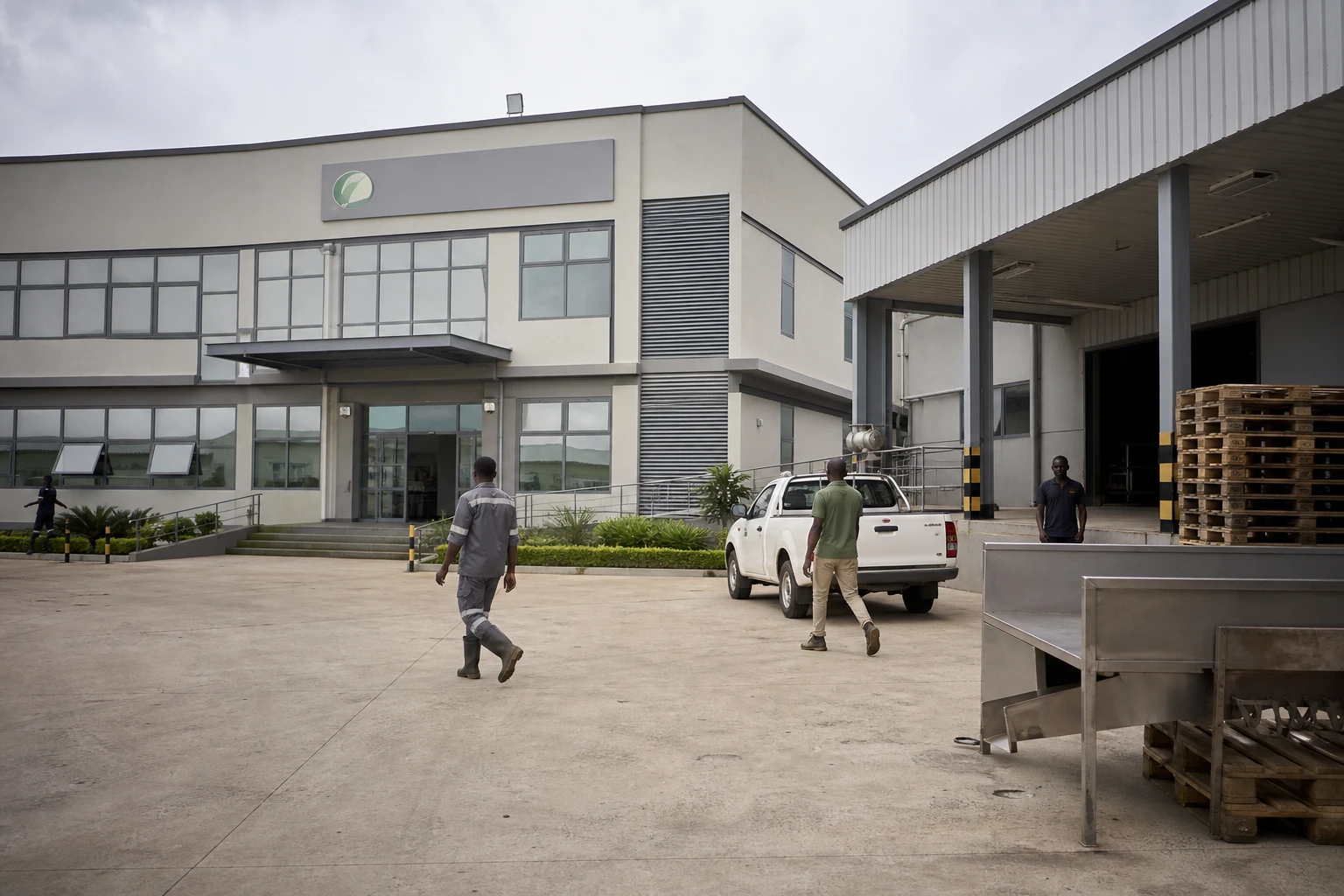
Ghana already has significant industrial capacity. COCOBOD says local factories have installed capacity of 504,780 tonnes, but often operate below their potential. Available data also show that local processing remains constrained by irregular access to beans, a problem at the heart of the reforms announced by the Ghanaian state.
This constraint is decisive. A modern factory is worth more than its machinery alone. It depends on predictable supplies, stable financing, a clear regulatory framework and a supply chain that avoids disruptions. This is precisely where the new financing model sought by Accra is intended to make a difference, giving local processors greater scope to buy beans.
Malaysia offers a useful counterpoint. Official statistics from the Malaysian Cocoa Board show a country that produces little cocoa but is highly active in importing and processing it. In 2024, local bean production remained low, while imports of cocoa and cocoa products continued to supply an industry focused on paste, butter, powder and chocolate. In other words, Kuala Lumpur has built a sector based on industrial expertise and foreign purchases, rather than a large domestic agricultural base.
What the reforms mean for farmers, factories and the state
For Ghanaian farmers, the promise is clear: stronger local processing could stabilise demand, support prices and anchor more activity in cocoa-growing regions. For processors, it could secure volumes and justify new investment. For the state, it could also broaden the industrial base and improve export earnings. But moving up the value chain requires concrete trade-offs. If too many beans are directed to local factories without appropriate financing, the risk is that tensions will emerge in the purchasing chain.
Recent figures nevertheless show that there is room for growth. According to the Ghana Export Promotion Authority, Ghanaian exports of cocoa products reached $1.8 billion in 2025, up 90% year on year. The Bank of Ghana has also reported that cocoa exports, including beans and processed products, generated $3.86 billion in 2025. These two figures do not describe the same thing, but together they confirm one reality: cocoa remains a major pillar of Ghana’s external earnings, and processing is becoming a strategic lever.
The social impact matters as much as the commercial one. When processing takes place in Ghana, it creates jobs in logistics, maintenance, quality control, packaging and exports. It also supports the formal economy around port and industrial areas, particularly in Accra and its export corridors. By contrast, when beans are shipped raw, the country captures fewer skilled jobs and less industrial margin.
The issue also has a regional dimension. In June 2026, at the high-level summit between Côte d’Ivoire and Ghana in Abidjan, the world’s two largest producers reaffirmed their intention to increase processing capacity, strengthen regional trade and secure greater value from cocoa on the continent. The joint declaration also notes that Africa accounts for most of global production but captures only a small share of the final value. Accra’s initiative is therefore part of a broader struggle for fairer returns and the industrialisation of cocoa in Africa.
A signal for West Africa and beyond
The closer ties between Ghana and Malaysia say something important: African producer countries are no longer seeking only to defend their bean volumes, but to control the more lucrative links in the supply chain. This matters for ECOWAS, for the two major West African producers and, more broadly, for the African Union, which has for several years been pushing the continent towards more local processing and greater intra-African trade in goods.
What happens next will depend on very practical details: COCOBOD’s actual ability to supply factories, the pace at which the 50% threshold is implemented, the revival of the Cocoa Processing Company and the resilience of trade arrangements with foreign buyers. Ghana’s challenge is not to turn its back on the global market. It is to engage with it more effectively, with more factories, greater traceability and more value created at home.