Algeria
 Egypt
 Libya
 Morocco
 Sudan
 Tunisia
 Benin
 Burkina Faso
 Cabo Verde
 Côte d'Ivoire
 Guinea
 Guinea-Bissau
 Liberia
 Mali
 Mauritania
 Niger
 Nigeria
 Senegal
 Sierra Leone
 The Gambia
 Togo
 Cameroon
 Central African Republic
 Chad
 DR Congo
 Equatorial Guinea
 Gabon
 Republic of the Congo
 São Tomé and Príncipe
 Burundi
 Comoros
 Djibouti
 Eritrea
 Ethiopia
 Kenya
 Madagascar
 Malawi
 Mauritius
 Mozambique
 Rwanda
 Seychelles
 Somalia
 South Sudan
 Tanzania
 Uganda
 Angola
 Botswana
 Eswatini
 Lesotho
 Namibia
 South Africa
 Zambia
 Zimbabwe
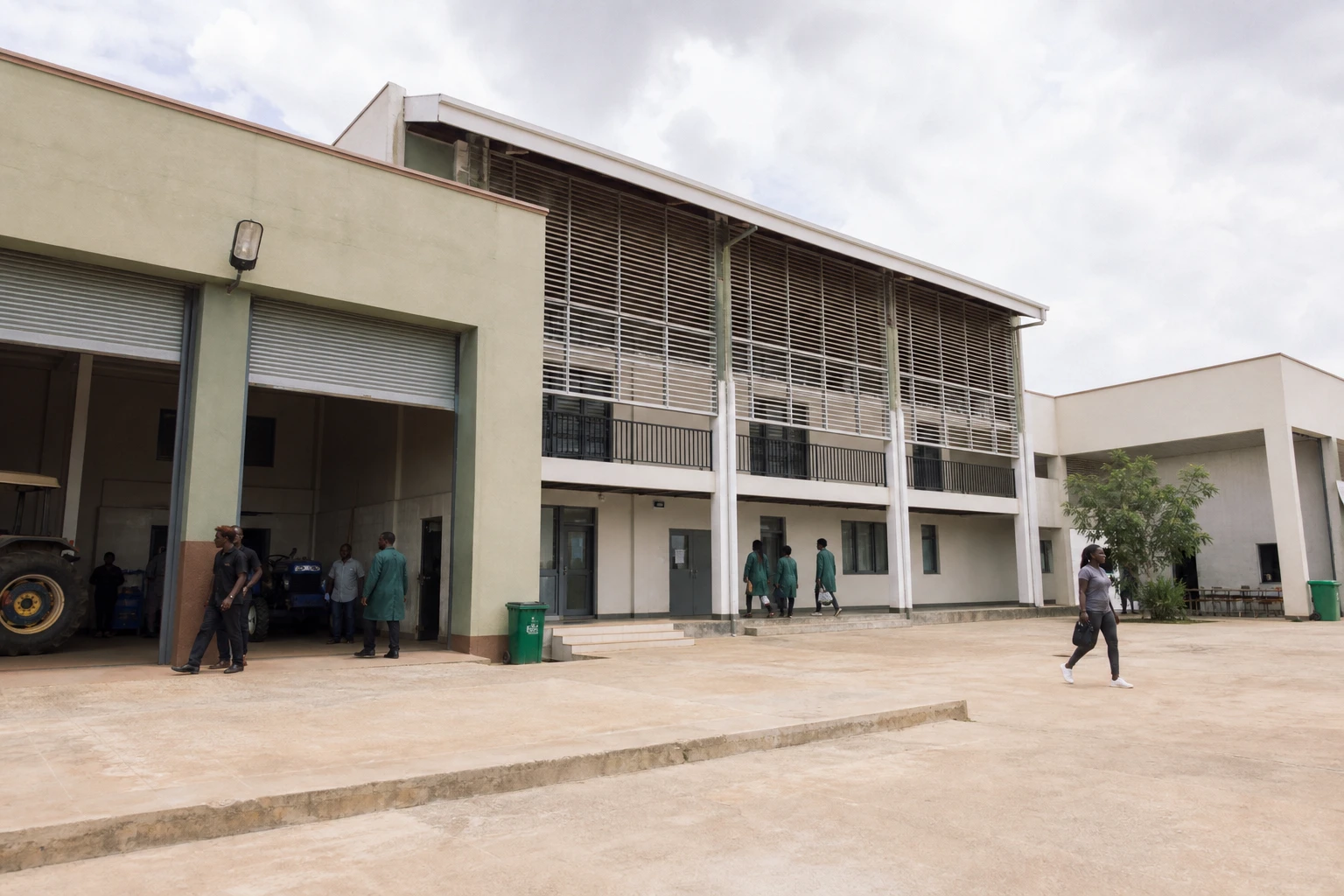
Train technicians before buying more machines
In Ghana, agricultural modernisation is no longer taking place only in the fields. It is also being shaped in workshops, laboratories and training centres. This is where the capacity to use, repair and adapt the equipment needed to keep pace with rising production is built. In a country where agriculture remains a mainstay of the economy and employment, this aspect matters as much as fertiliser or seeds.
The question is simple: how can the sector be transformed faster without enough technicians, trainers and researchers? That is the wager behind the Ghana Agriculture Fund for Education and Transformation, or GAFET, which aims to fund skills development at agricultural institutions through to 2028. The initiative is part of the food sovereignty agenda pursued from Accra, Ghana’s capital, and the broader strategy of mechanisation and rural industrialisation.
A fund aligned with Ghana’s agricultural strategy
GAFET operates in a specific context. In 2025, the Ghanaian government launched the Feed Ghana programme, presented as a four-year framework for agricultural transformation. The official document emphasises production, modern practices, rural infrastructure and agro-industrial zones. It also provides for shared mechanisation schemes, including Farmer Service Centres, which are intended to supply machinery, technical advice and inputs to selected districts.
This approach is not isolated. The Ministry of Food and Agriculture had already made agricultural modernisation a pillar of the Planting for Food and Jobs programme, and then its second phase, with an emphasis on value chains, access to credit and productivity. The new fund is therefore part of a policy continuum: produce more, but above all produce better, with technical services capable of keeping pace as the sector moves up the value chain.
What GAFET funds
According to information made public by the authorities, the fund aims to mobilise 100 million Ghanaian cedis by December 2028, or about $9 million at the exchange rate cited. So far, 3.5 million cedis have reportedly been raised from five agribusiness companies. The interim target is 10 million cedis by December 2026. The mechanism is intended to pool resources from the private sector, development partners, financial institutions and other contributors.
The planned spending is highly concrete: modernising laboratories and workshops, purchasing agricultural machinery, setting up demonstration farms, digital learning, applied research, innovation, scholarships, internships and work-based training. The fund is also expected to support 21 beneficiary agricultural institutions. In other words, this is not just a funding window. It is also a tool for linking technical education and research with the real needs of farms.
This approach addresses a documented need. The World Bank notes that agriculture remains a central sector of Ghana’s economy and a potential driver of growth and jobs. Ghana’s Statistical Service, for its part, shows that a significant share of the working population is still employed in agriculture, forestry and fishing. Exact figures vary by year and source, but they all point to the same reality: the sector remains too important to modernise without a strong skills base.
A question of productivity, but also employment
The debate is not only about yields. It also concerns the quality of rural employment. When a country invests in tractors, harvesters, irrigation systems or digital tools, it needs operators, mechanics, trainers and advisers. Without them, equipment quickly breaks down, costs rise and small-scale producers are left behind. It is precisely this shortage of practical skills that GAFET says it wants to address.
The issue is particularly pressing because Ghana’s agricultural policy is increasingly focused on shared mechanisation. The 2026 budget allocated substantial sums to Farmer Service Centres and irrigation. The Ministry of Finance has also said that a large share of the Ministry of Food and Agriculture’s budget had already been released to accelerate production and support agro-industrialisation. GAFET therefore serves as a complementary link: it prepares the human resources needed to run these schemes.
For agricultural institutions, the impact could be immediate. Better-equipped laboratories improve training. Workplace internships bring students closer to market needs. Demonstration farms make it possible to test solutions in local conditions. For young people, this could open up a wider range of career paths than crop farming alone: maintenance, advisory services, managing mechanised services, applied research or agricultural entrepreneurship.
A West African perspective
Across West Africa, the issue extends beyond Ghana. ECOWAS faces the same challenge: feeding growing cities, creating jobs for a young population and reducing dependence on food imports. In this context, Ghana is testing an approach that could be useful elsewhere in the region: investing in skills before, or alongside, investment in machinery.
The issue also connects with the priorities of the African Continental Free Trade Area (AfCFTA), which requires more productive and better-standardised value chains capable of supplying regional markets. Technical training is no minor detail in this equation. It is a condition of competitiveness. A high-performing agricultural laboratory, a machine maintained on time or a locally trained technician can matter as much as new funding.
Ghana is therefore pursuing a fairly clear course: boost production, professionalise agricultural occupations and develop downstream industry. A decisive test lies ahead in 2026 and then 2028: whether funding pledges can be turned into delivered equipment, modernised curricula and jobs actually created along value chains. That is where GAFET’s impact will be measured, far beyond its initial funding target.