Algeria
 Egypt
 Libya
 Morocco
 Sudan
 Tunisia
 Benin
 Burkina Faso
 Cabo Verde
 Côte d'Ivoire
 Ghana
 Guinea
 Guinea-Bissau
 Liberia
 Mali
 Mauritania
 Niger
 Nigeria
 Senegal
 Sierra Leone
 The Gambia
 Togo
 Cameroon
 Central African Republic
 Chad
 DR Congo
 Equatorial Guinea
 Gabon
 Republic of the Congo
 São Tomé and Príncipe
 Burundi
 Comoros
 Djibouti
 Eritrea
 Ethiopia
 Kenya
 Madagascar
 Malawi
 Mauritius
 Rwanda
 Seychelles
 Somalia
 South Sudan
 Tanzania
 Uganda
 Angola
 Botswana
 Eswatini
 Lesotho
 Namibia
 South Africa
 Zambia
 Zimbabwe
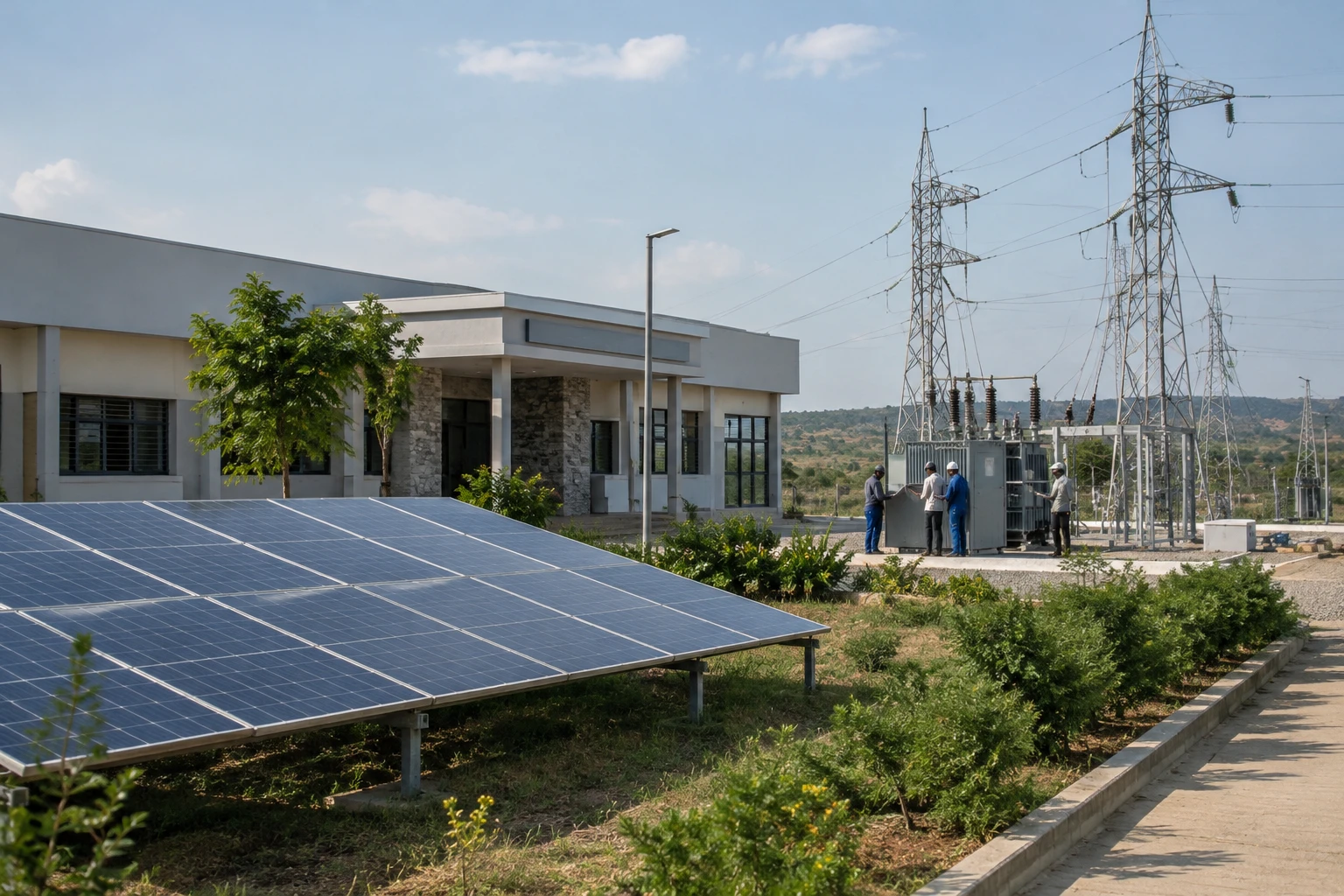
Extracting more value from minerals requires more than a mining concession: it also needs electricity, roads and industrial markets. In Gaza province, in southern Mozambique, authorities are presenting solar power as one part of this equation. The challenge is to turn the announcement into operational equipment, and then into tangible benefits for Mozambicans.
In Gaza, electricity becomes an industrial issue
Gaza governor Alfeu Cuna announced a $126m photovoltaic project in Nacala-Porto on 19 October 2026. It would be developed with the company Golden East Engineering. The plant’s capacity, timetable and financing arrangements were not specified in the information made public.
The project is intended in particular to serve mining activities in Chibuto, where heavy mineral sands are found, as well as possible limestone-processing units in the districts of Mabalane and Mapai. These minerals can supply industrial sectors, including the manufacture of construction materials. But geological resources do not automatically become local economic activity: access to reliable, competitively priced energy is one of the necessary conditions.
According to the governor, companies in Chibuto, including Dingxiang, could benefit from the electricity produced. He also cited the Lionde and Xai-Xai substations and existing power lines as potential support. These facilities alone, however, are not enough to guarantee that the future plant will be connected on schedule or that its power will meet industrial needs.
Announcements must be turned into reality, from the plant to the corridors
The announced solar project is part of a broader programme. Provincial authorities have referred to demarcating mining zones, organising access to land and developing roads, rail and the international airport. A deep-water port and a special economic zone are also among the projects envisaged near the airport and mining sites. For now, these remain announced prospects, not infrastructure whose completion is assured.
This distinction matters when assessing the scale of the investment. A power plant without a suitable grid cannot guarantee reliable supply. Likewise, connecting a mine does not necessarily create processing units, lasting jobs or Mozambican suppliers. Power-purchase agreements, storage or backup requirements, environmental and social assessments, and land-allocation conditions will all need to be known.
Gaza is not without other solar projects. A separate development in Chibuto, led by SAL Energia with Electricidade de Moçambique (EDM), предусматривает a 95-megawatt alternating-current plant, equivalent to 112 megawatt-peak, and grid connection lines to the national network. The available information does not establish that this project and the $126m announcement are part of the same undertaking. They should therefore be treated separately rather than their capacities or financing being added together.
At national level, the issue is linked to the local processing policy promoted at the Conference on Adding Value to Mineral and Energy Resources, CAVAME-d, held in Nacala from 19 to 24 October. The conference provided an occasion for investment announcements. President Daniel Chapo called for commitments to be translated into actual projects. However, announced sums and signed memorandums are not, in themselves, investments already disbursed or facilities in operation.
Who will benefit from the new capacity?
For mining operators, a more stable power supply could facilitate extraction and make local processing of some raw materials viable. For residents and small businesses, the impact will depend on how the plant is connected and how much priority is given to needs beyond those of the mines. If electricity mainly serves large consumers, benefits for households, public services and the informal economy could remain limited.
Land issues also warrant attention. Demarcating zones for mining and economic activities can provide clarity for projects, but must be accompanied by transparent procedures and engagement with the communities concerned. Conditions for access to land, any compensation and local employment opportunities will affect how benefits are distributed. Information published so far does not yet set out these mechanisms.
The challenge extends beyond Gaza. Mozambique, whose capital is Maputo, is a member of the Southern African Development Community (SADC). Its Southern African Power Pool, or SAPP, co-ordinates electricity trading between several grids in the region. SADC also stresses the importance of strengthening interconnections, including between Mozambique and its neighbours. New solar generation could therefore support national supply and, depending on connections and trading rules, contribute to regional momentum.
Execution will be the next measure
In the north of the country, at Moatize, Vulcan is separately developing a 300-megawatt thermal power plant fuelled by coal waste. The initiative is a reminder that mining energy needs are being addressed through different energy choices in different provinces. In Gaza, the announced solar project points to another path, but its contribution will depend on its actual capacity, availability and integration into the grid.
Monitoring should focus on concrete steps: publication of capacity and timetable, financing agreements, permits, connection works and, finally, commissioning. It will also be necessary to check whether processing units are actually established in Chibuto, Mabalane or Mapai, and whether activities create opportunities beyond extractive companies. CAVAME-d is due to return in 2027; until then, progress on announced projects will help distinguish intentions from achievements.
For Gaza, the challenge is therefore not simply to generate electricity. It is to link energy, resource processing and logistics, without confusing announcements with results. The economic significance of the project will be measured by this chain — and by how its benefits are shared.
Diário Económico’s report on the photovoltaic project ; the report by the Mozambique Information Agency, republished by AllAfrica ; the official presentation of CAVAME-d ; details of the separate Chibuto solar project ; SADC’s regional energy priorities.