Algeria
 Egypt
 Libya
 Morocco
 Sudan
 Tunisia
 Benin
 Burkina Faso
 Cabo Verde
 Côte d'Ivoire
 Ghana
 Guinea
 Guinea-Bissau
 Liberia
 Mali
 Mauritania
 Niger
 Nigeria
 Senegal
 Sierra Leone
 The Gambia
 Togo
 Cameroon
 Central African Republic
 Chad
 DR Congo
 Equatorial Guinea
 Republic of the Congo
 São Tomé and Príncipe
 Burundi
 Comoros
 Djibouti
 Eritrea
 Ethiopia
 Kenya
 Madagascar
 Malawi
 Mauritius
 Mozambique
 Rwanda
 Seychelles
 Somalia
 South Sudan
 Tanzania
 Uganda
 Angola
 Botswana
 Eswatini
 Lesotho
 Namibia
 South Africa
 Zambia
 Zimbabwe
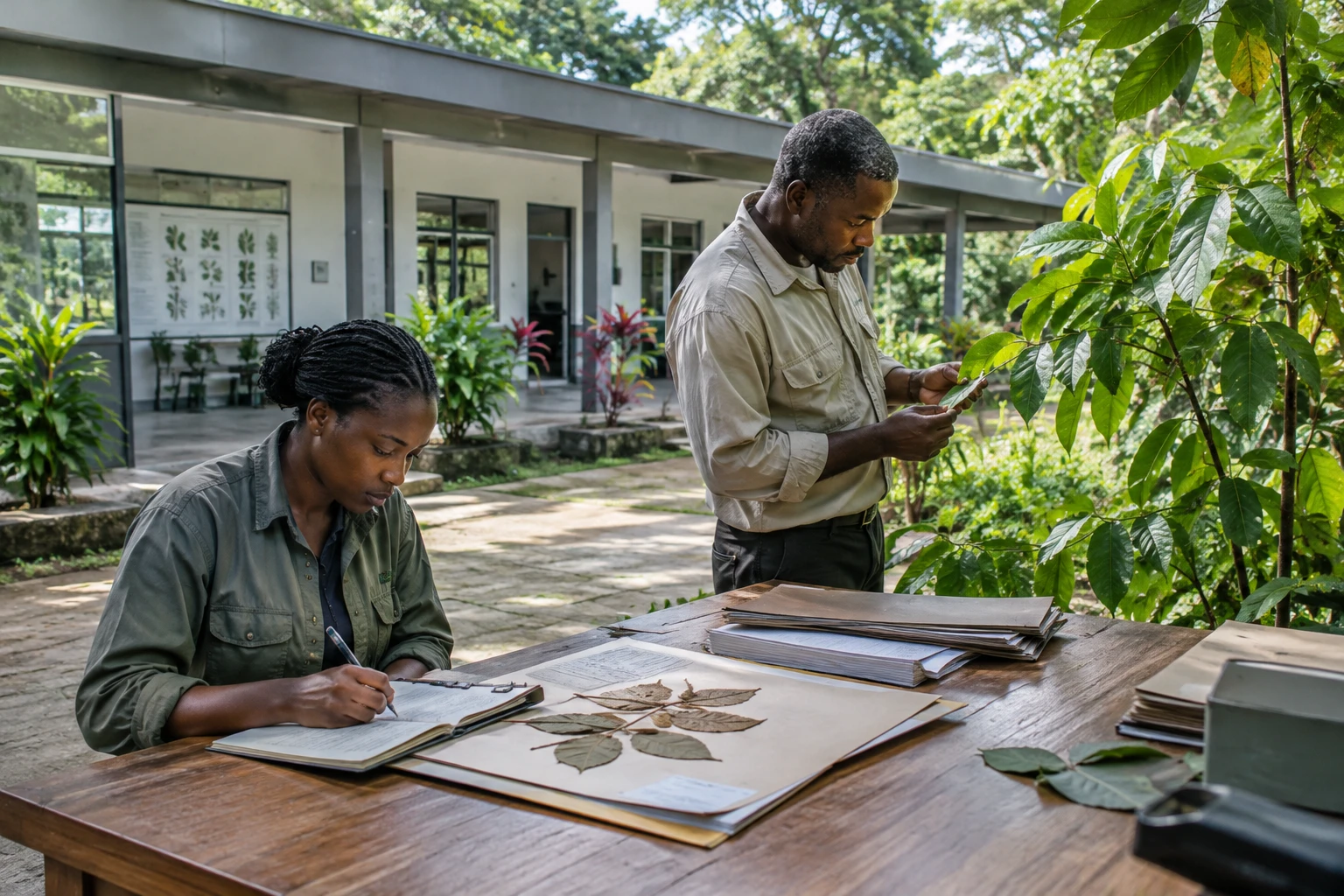
In a country where nearly nine-tenths of the territory is covered by forests, protecting nature means more than preserving landscapes. It also requires knowing which species live there, where they grow and what threatens their habitats. In Libreville, botanists at the Herbarium of Gabon are helping to build that knowledge, one plant at a time.
Documenting life at Sibang
At the Sibang arboretum, in the heart of the capital, Archange Boupoya leads work to catalogue and conserve the flora. Teams sometimes spend several weeks in the field. They collect samples, dry them, then describe them and compare them with botanical collections. This work creates a verifiable record of plants and helps identify rare species.
Estimates cited by botanists put the number of plant species in Gabon at between 7,000 and 10,000. Archange Boupoya says an average of about 10 new species are discovered each year during explorations. These figures reflect knowledge that is still being built: a “new” species is new to science, not necessarily to the people who know its habitat and uses.
For identification, Gabonese researchers work with specialists in other countries. These collaborations can broaden access to expertise and comparative collections. They also raise a central question: how can data, specimens and the benefits of research be kept accessible to the institutions and communities of the country where plants are collected?
Gabonese forest covers about 88% of the territory, according to the national climate contribution published as part of regional co-operation. The country is part of the Congo Basin, a vast forest area in Central Africa shared by several states. Its forests store carbon and are home to a diversity of species that extends beyond national borders. Their condition therefore depends on the policies of each country as well as regional co-operation.
Cataloguing to make better decisions
A botanical inventory is not simply a list. It helps identify endemic species, which grow only in a particular area, and those whose range or habitat is shrinking. It can also inform land-use decisions: roads, mines, plantations and energy infrastructure can transform natural environments, with different effects depending on the location and the species.
Aquatic plants in the Podostemaceae family illustrate the issue. They grow, among other places, on rocks exposed to currents near waterfalls. Changes to river flows or sites can put these specialised habitats under pressure. In the case of a hydroelectric project, a preliminary study should therefore examine the species present and the possible effects on the waterways concerned, rather than treating all vegetation as interchangeable.
Pressure on natural environments does not come from a single activity. Urban expansion around Libreville, resource extraction and infrastructure projects can affect habitats in different ways. The consequences are not distributed evenly either: economic decisions involve businesses and public authorities, while changes in access to land and resources can directly affect people in rural areas.
Research needs sustained resources to inform these trade-offs. Field missions, specimen preservation, laboratories and the training of botanists all require regular funding. Collections are scientific infrastructure: if they are poorly preserved or out of researchers’ reach, comparing species and tracking changes in their distribution becomes more difficult.
A Gabonese issue, a regional responsibility
Gabon has begun updating its national biodiversity strategy in line with the Kunming-Montreal Global Biodiversity Framework. Validated at a national workshop in July 2026, the strategy must still go through the required steps before it is officially submitted to the United Nations Convention on Biological Diversity. The challenge will be to translate its goals into monitored measures: protected habitats, funded inventories, accessible data and checks on the impacts of projects.
This policy is part of a regional landscape in which co-operation matters. The Central African Forests Commission, or COMIFAC, supports exchanges between Congo Basin countries on forest and biodiversity management. Species, waterways and ecosystems do not stop at borders. Regional co-ordination can therefore help share observations and better track pressures that shift from one territory to another.
COP17 on biodiversity, to be held in Yerevan from 19 to 30 October 2026, will be the first global review of progress in implementing the Kunming-Montreal framework. For forest countries such as Gabon, the issue is not limited to protection commitments. It also concerns funding, access to scientific data and the ability of national institutions to conduct their own research.
At Sibang and in the field, every documented specimen provides useful information. But discovering a species is not enough to preserve it. Its habitat must then be protected, findings incorporated into public decisions and research resources maintained. Only then can botanical knowledge have a tangible influence on decisions in Gabon and the Congo Basin.