Algeria
 Egypt
 Libya
 Morocco
 Sudan
 Tunisia
 Benin
 Burkina Faso
 Cabo Verde
 Côte d'Ivoire
 Ghana
 Guinea
 Guinea-Bissau
 Liberia
 Mali
 Mauritania
 Niger
 Nigeria
 Senegal
 Sierra Leone
 The Gambia
 Togo
 Cameroon
 Central African Republic
 Chad
 DR Congo
 Equatorial Guinea
 Republic of the Congo
 São Tomé and Príncipe
 Burundi
 Comoros
 Djibouti
 Eritrea
 Ethiopia
 Kenya
 Madagascar
 Malawi
 Mauritius
 Mozambique
 Rwanda
 Seychelles
 Somalia
 South Sudan
 Tanzania
 Uganda
 Angola
 Botswana
 Eswatini
 Lesotho
 Namibia
 South Africa
 Zambia
 Zimbabwe
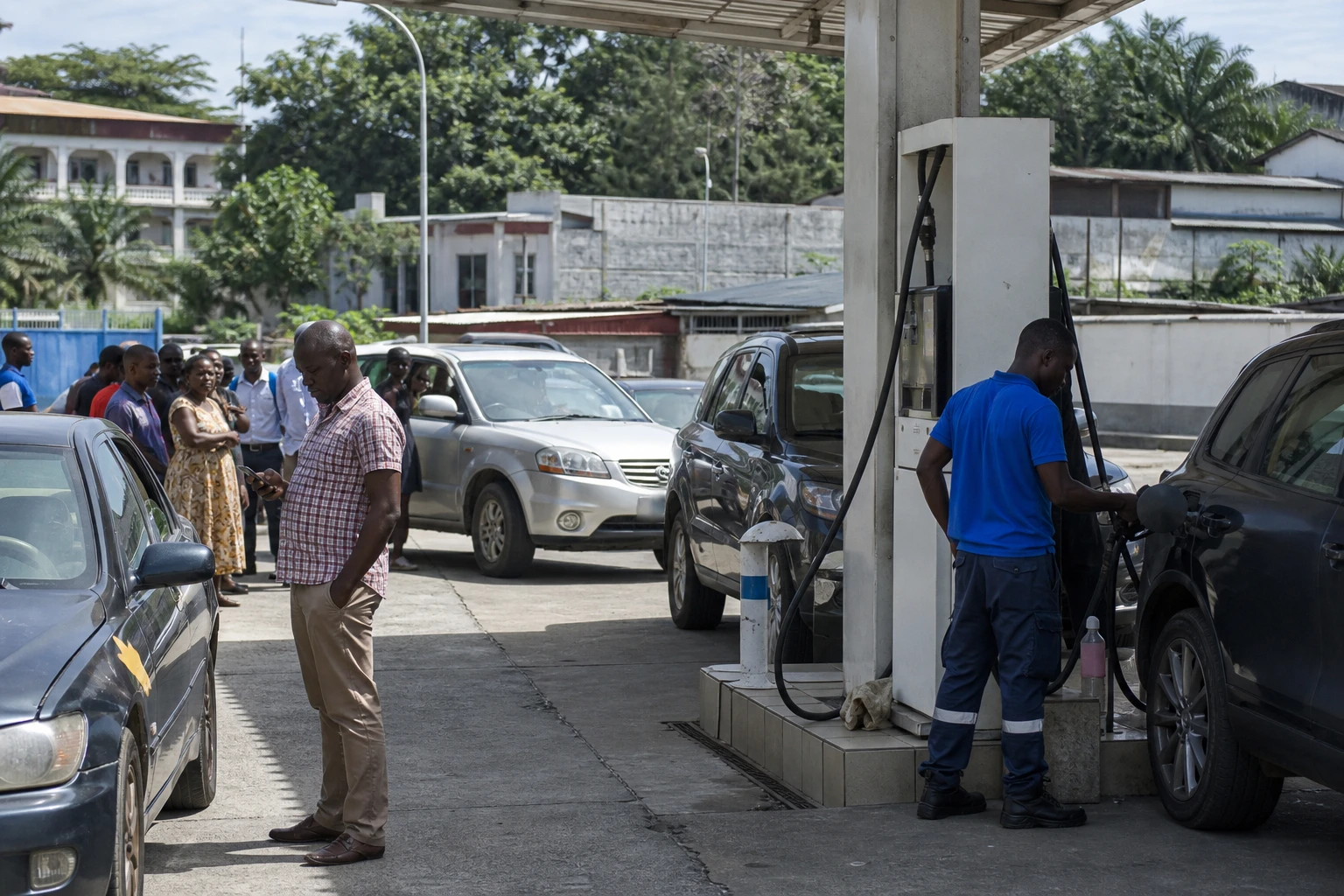
In Libreville, fuel can run short even before oil does. Since Friday 2 October 2026, several stations in Greater Libreville have been rationing gasoil. The Gabonese government is counting on a vessel arriving on Saturday 3 October to gradually restore distribution.
Shortages concentrated in Greater Libreville
Gabon’s Ministry of Petroleum and Gas has announced a drop in stocks available to marketers, the companies responsible for selling petroleum products to service stations.
To avoid a complete stockout before the next delivery, volumes held by the Gabonese Petroleum Products Storage Company, SGEPP, have been made available to distributors. The authorities have also introduced temporary rationing.
At several outlets in the capital, motorists have had to wait for hours. Gabonese media have reported long queues, particularly in the Nzeng-Ayong area. Some distributors reportedly capped purchases at 10,000 CFA francs per vehicle, while waits sometimes exceeded two hours.
These reports point to genuine pressure on supplies. However, they do not establish that all stations across the country are affected by a uniform shortage. The situation is primarily affecting Greater Libreville, the country’s main consumption hub and the centre of its administrative, commercial and logistical activity.
In a statement carried by Gabon 24, the ministry said a shipment was expected to arrive on the evening of Saturday 3 October 2026. A gradual return to normal was forecast from Sunday 4 October 2026.
The paradox of an oil-producing country
Gabon extracts crude oil, but it does not fully meet its needs for refined products. The distinction is crucial. Extracting crude does not automatically mean having enough gasoil, petrol or kerosene.
The country relies mainly on the Gabonese Refining Company, SOGARA, based in Port-Gentil. Its refinery processes some of the country’s crude into fuel for the domestic market. When its output is insufficient, Gabon must make up the shortfall with imports.
Public data from the Gabonese government illustrate this dependence. In 2021, SOGARA supplied about 439,536 tonnes of products to the domestic market, compared with 231,404 tonnes of imports, according to an official note on Gabon’s oil sector.
That year, domestic demand reached 670,940 tonnes. These figures do not directly describe the situation on 3 October 2026. They do, however, shed light on the underlying mechanism: a significant part of energy security depends on imported shipments, available stocks and the regularity of port operations.
The Port-Gentil refinery therefore remains a strategic link. The slightest delay to a delivery, a technical operation or an unexpected increase in consumption can quickly erode the market’s safety margin.
A vulnerability that first affects everyday activities
A gasoil shortage does not affect all Gabonese people equally. Taxi drivers, freight carriers, delivery workers and businesses using generators are among those most exposed.
For these groups, the immediate cost is not just the price of fuel. It also includes time lost in queues, cancelled journeys and delayed deliveries. In the informal economy, a day spent waiting can directly reduce household income.
The effects can also extend beyond Libreville. Distributors generally prioritise areas with the strongest demand and fastest turnover. Inland towns and rural areas may then face longer delays, depending on their storage capacity and access to supply routes.
Keeping pump prices unchanged does not remove the pressure. It shifts part of the cost to users, transport operators and businesses. When fuel is rationed, availability itself becomes a scarce resource.
A similar situation was reported in Gabon in July 2024. At the time, the authorities also cited a vessel being awaited and a technical incident, according to reports in the national press. This recurrence points to a structural vulnerability rather than an isolated incident.
SOGARA modernisation: from studies to an investment decision
On 14 April 2026, Technip Energies announced two front-end engineering design (FEED) contracts. This stage helps define the technical choices, costs and organisation of a future project before a possible final investment decision.
The first contract concerns debottlenecking the existing refinery. It includes a kerosene sweetening unit and four new storage facilities. Greater storage capacity would make it possible to hold products for longer between shipments.
The second project is a modular hydrocracking complex. This technology converts heavy oil fractions into lighter, more sought-after products such as gasoil. The programme also includes a marine jetty and unloading equipment.
Technip Energies’ announcement confirms, however, that these are still study contracts. It does not amount to a final decision to build the new facilities. The timetable, financing and actual start of work therefore remain decisive.
A national issue with implications beyond Gabon
The issue is directly linked to Gabon’s energy sovereignty. It is also part of debates within the Central African Economic and Monetary Community, CEMAC, which includes Gabon, Cameroon, the Central African Republic, Congo, Equatorial Guinea and Chad.
In the region, supply chains remain heavily dependent on ports, roads, storage capacity and national refineries. A local disruption can therefore affect transport prices, trade and industrial activity beyond the capital alone.
For Gabon, the next test will be whether supplies can in fact be restored after the vessel’s announced arrival on 3 October 2026. In the longer term, the challenge will be to turn SOGARA’s modernisation studies into operational capacity: more refining, greater storage and logistics less dependent on a single shipment.