Algeria
 Egypt
 Libya
 Morocco
 Sudan
 Tunisia
 Benin
 Burkina Faso
 Cabo Verde
 Côte d'Ivoire
 Ghana
 Guinea
 Guinea-Bissau
 Liberia
 Mali
 Mauritania
 Niger
 Nigeria
 Senegal
 Sierra Leone
 The Gambia
 Togo
 Cameroon
 Central African Republic
 Chad
 Equatorial Guinea
 Gabon
 Republic of the Congo
 São Tomé and Príncipe
 Burundi
 Comoros
 Djibouti
 Eritrea
 Ethiopia
 Kenya
 Madagascar
 Malawi
 Mauritius
 Mozambique
 Rwanda
 Seychelles
 Somalia
 South Sudan
 Tanzania
 Uganda
 Angola
 Botswana
 Eswatini
 Lesotho
 Namibia
 South Africa
 Zambia
 Zimbabwe
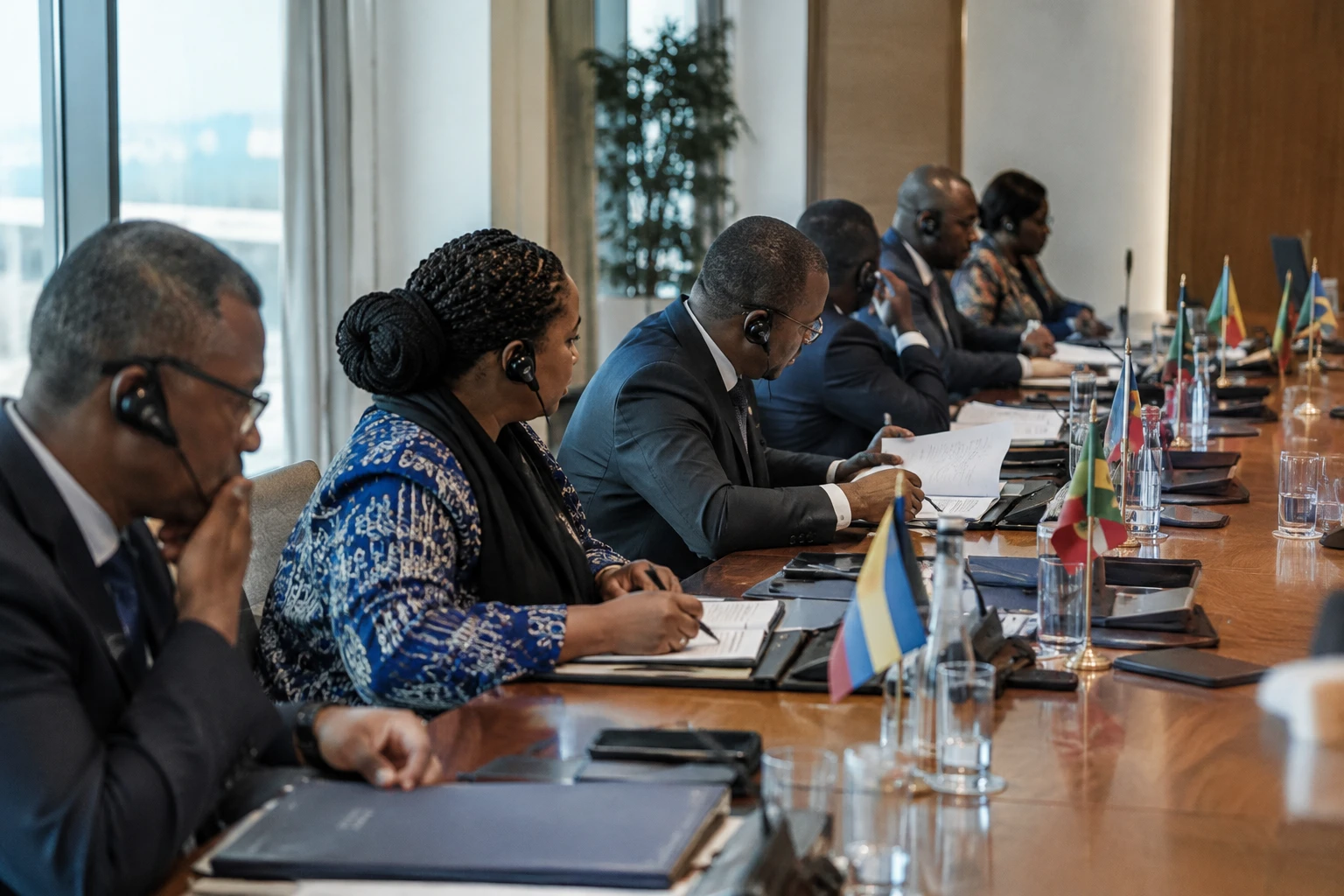
In the Democratic Republic of the Congo (DRC), discussions on peace in the east are now intersecting with another weighty issue: the rules governing power in Kinshasa. The Front for the Refoundation of the Nation (FRN), a political-military coalition led by former president Joseph Kabila, wants Qatar’s mediation to take up the issue before the next stage of talks.
A peace process in which the Constitution serves as a reference point
The request comes amid debate in the DRC over the legitimacy of its institutions and the future of the Constitution. Félix Tshisekedi, elected in 2018 and re-elected in 2023, is currently serving his second term. In May 2026, he said he was open to a constitutional revision or change put to a referendum, and said he could accept a third term if Congolese people asked him to. The remarks have fuelled concern among the opposition and several political actors, who see them as a risk to the term limit.
The Constitution in force since 2006 sets the presidential term at five years and limits the number of terms to two. Article 220 prohibits revising, in particular, “the number and duration of the terms of the President of the Republic”. The distinction between revising the Constitution and adopting a new one is therefore at the heart of the political debate. Supporters of reform point to the possibility of a referendum; opponents stress that constitutional safeguards cannot be circumvented by simply changing the text.
On security, the Doha talks between Kinshasa and the AFC/M23 produced a declaration of principles on 19 July 2025, followed by a framework agreement signed on 15 November of the same year. The documents refer to the fundamental principles of the Congolese Constitution and commitments relating to governance, reform, security and the restoration of state authority. The framework agreement sets out a negotiating path; on its own, it does not constitute a final settlement of the conflict.
The request to Qatari mediators
In a letter dated 1 November 2026 and signed by its vice-president Bertrand Bisimwa, the FRN asks Qatar to obtain an official clarification from Kinshasa on its constitutional intentions. The movement also wants the subject included on the agenda of the next consultation between the parties. It argues that any major change to the constitutional framework could affect the implementation of the Doha commitments.
The FRN acknowledges that the signed texts do not expressly prohibit all constitutional change. It argues, however, that a change of Constitution could alter the political conditions in which the agreements are to be implemented and, in its view, undermine the peace process. This is the movement’s analysis. It is not a conclusion agreed by the mediators or the two parties.
The letter also warns that the FRN would mobilise “all necessary means” to oppose a constitutional rupture, without specifying what means it has in mind. The wording carries particular weight because the FRN brings together political and armed forces, including groups previously associated with the AFC/M23. It amounts to a threat, but does not establish that any specific action has been decided.
A new coalition faces the AFC/M23 commitments
The FRN was created in Goma in October 2026 and announced that it would take over the AFC’s commitments in the Doha process. This reconfiguration raises a practical question for negotiators: how can commitments made by a coalition that changes its name and structure be maintained? Qatar will have to determine with the parties whether the FRN is recognised as the political successor to the AFC/M23 in the discussions.
This uncertainty adds to existing obstacles. The July 2025 declaration envisaged a path towards a ceasefire and a comprehensive agreement, but implementation depends on reciprocal commitments and monitoring mechanisms. Restoring Congolese administration in disputed areas, security arrangements and the fate of detainees remain sensitive issues. A dispute over the Constitution could divert attention from these matters, or give the protagonists grounds to question the other side’s willingness to honour its commitments.
The consequences are not limited to leaders and negotiating teams. In areas affected by fighting, access to public services, safe travel and the resumption of economic activity also depend on the agreements’ ability to bring about tangible change. In Kinshasa, the constitutional debate concerns political representation, the electoral timetable and trust in institutions. These issues are linked, but they are not the same: people in the east cannot be reduced to leverage in a stand-off over presidential terms.
A regional issue extending beyond Kinshasa and Goma
The Congolese crisis involves several diplomatic frameworks. Qatar is facilitating exchanges between Kinshasa and the AFC/M23. At the same time, the African Union, the Southern African Development Community (SADC) and the East African Community (EAC) have a role in peace efforts and regional security. Tensions in the eastern DRC have repercussions for neighbouring countries, notably through population displacement and relations between states. Lasting mediation must therefore be aligned with African initiatives and regional commitments, without local actors losing control of the process.
The Constitution is an internal Congolese matter; the consistency of peace agreements also bears on regional diplomatic credibility. If political change in Kinshasa calls signed commitments into question, negotiators will have to clarify their scope. Conversely, the constitutional argument cannot be used to evade security obligations or the responsibilities of armed groups. The mediation will have to uphold both requirements.
The next Doha consultation will therefore be a test on two levels: to establish whether the parties recognise the continuity of commitments following the creation of the FRN, and to determine whether the constitutional debate has a direct bearing on the peace texts. In Kinshasa, the course of any potential reform, the limits set by the Constitution and the political timetable will remain decisive. At regional level, the challenge will be to preserve a credible process without conflating security negotiations with arbitration of Congolese domestic politics.