
 Algeria
 Egypt
 Libya
 Sudan
 Tunisia
 Benin
 Burkina Faso
 Cabo Verde
 Côte d'Ivoire
 Ghana
 Guinea
 Guinea-Bissau
 Liberia
 Mali
 Mauritania
 Niger
 Nigeria
 Senegal
 Sierra Leone
 The Gambia
 Togo
 Cameroon
 Central African Republic
 Chad
 DR Congo
 Equatorial Guinea
 Gabon
 Republic of the Congo
 São Tomé and Príncipe
 Burundi
 Comoros
 Djibouti
 Eritrea
 Ethiopia
 Kenya
 Madagascar
 Malawi
 Mauritius
 Mozambique
 Rwanda
 Seychelles
 Somalia
 South Sudan
 Tanzania
 Uganda
 Angola
 Botswana
 Eswatini
 Lesotho
 Namibia
 South Africa
 Zambia
 Zimbabwe
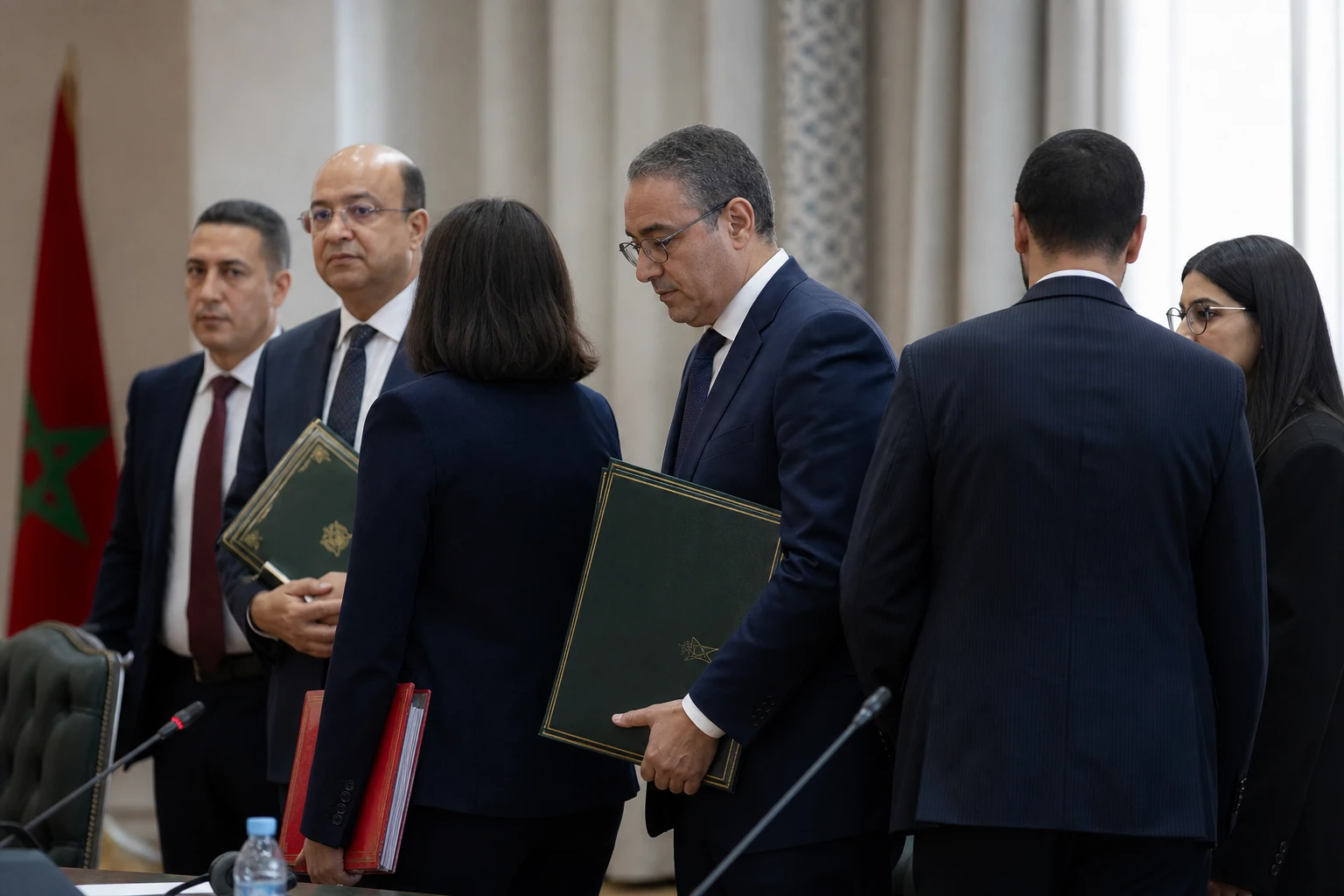
A tiny border, a major diplomatic issue
Between Rabat and Madrid, the question of Ceuta is about more than a few square kilometres on the southern shore of the Mediterranean. It touches on sovereignty, migration balances and a bilateral relationship in which every symbolic gesture matters. In this area, a royal visit, a border-post closure or a surge in migration can quickly take on a political significance far greater than its geographical scale.
For Moroccans and Spaniards alike, Ceuta and Melilla are no ordinary cities. Madrid presents them as two Spanish autonomous cities, integrated into the country’s constitutional order. Spanish law explicitly classifies them as “ciudades autónomas”, while their autonomy statutes give them a distinct status. Rabat, for its part, maintains its claim to these territories, a position reaffirmed in exchanges at the United Nations and never abandoned by the Moroccan authorities.
What the 2007 episode brings to mind
The episode that still serves as a point of reference dates back to November 2007. At the time, King Juan Carlos and Queen Sofía paid an official visit to Ceuta and Melilla. Madrid presented it as a normal act of sovereignty. Rabat, by contrast, saw it as a political provocation. Morocco recalled its ambassador to Madrid for consultations, and Mohammed VI later publicly condemned a visit he called “regrettable” and contrary to the feelings of the Moroccan people.
The crisis did not last for months, but it left a lasting mark on the diplomatic memory of both capitals. A few weeks later, gestures to de-escalate tensions enabled a gradual return to dialogue. But the substance of the dispute had not changed. Since then, every reference to a royal visit to Ceuta has revived the same subtext: Madrid would see it as an assertion of authority, while Rabat would read it as a hostile signal.
Contested sovereignty, essential cooperation
That is the paradox. The two countries continue to dispute the status of Ceuta and Melilla, but are still obliged to cooperate day to day. Border management, the fight against people-smuggling networks, cross-border trade, the movement of workers and maritime surveillance: none of these issues can be managed through constant confrontation. The crises of 2021 and 2026 have shown just how easily the border can become a lever of political pressure, whether intentionally or not, as soon as trust breaks down.
The significance of this border extends beyond the two cities themselves. Ceuta and Melilla form the only land border between the European Union and the African continent. They are therefore both a crossing point and a flashpoint, where European migration-control concerns intersect with the realities of neighbouring Moroccan communities, employment and mobility. In both enclaves, the Spanish authorities have also strengthened surveillance measures and border infrastructure over the years.
Felipe VI, a symbol of continuity, but no date announced
Since ascending to the throne in 2014, Felipe VI has not made an official visit to Ceuta or Melilla. The prospect of such a trip is therefore significant, even without a confirmed date. Under Spain’s institutional framework, a visit by the monarch to one of these autonomous cities would be read as support for its residents and an affirmation of Spanish sovereignty. On the Moroccan side, the signal would almost automatically be perceived as a reminder of Madrid’s position on a dispute that remains unresolved.
The current context adds further significance to this possibility. Recent migration tensions in Ceuta have revived security-focused interpretations on both sides of the Strait. The international press has reported in recent days a new influx of arrivals and mounting pressure on local reception capacity. In such situations, residents of the cities concerned, security forces and local authorities find themselves on the front line, while the bilateral relationship is often shaped elsewhere, in the capitals and foreign ministries.
What this issue says about North Africa
Ultimately, Ceuta and Melilla encapsulate some of the power dynamics in North Africa: unresolved colonial legacies, rival sovereignty claims, borders charged with symbolism and reliance on constant channels of dialogue. The issue also resonates at African Union level, as it touches on how the continent’s states continue to manage disputes inherited from history without breaking off the cooperation needed on security and mobility. The next signal to watch will therefore be less the royal protocol than how Rabat and Madrid manage the border, official statements and already fragile coordination mechanisms in the coming weeks.



