Algeria
 Egypt
 Libya
 Morocco
 Sudan
 Tunisia
 Benin
 Burkina Faso
 Cabo Verde
 Côte d'Ivoire
 Ghana
 Guinea
 Guinea-Bissau
 Liberia
 Mali
 Mauritania
 Niger
 Nigeria
 Sierra Leone
 The Gambia
 Togo
 Cameroon
 Central African Republic
 Chad
 DR Congo
 Equatorial Guinea
 Gabon
 Republic of the Congo
 São Tomé and Príncipe
 Burundi
 Comoros
 Djibouti
 Eritrea
 Ethiopia
 Kenya
 Madagascar
 Malawi
 Mauritius
 Mozambique
 Rwanda
 Seychelles
 Somalia
 South Sudan
 Tanzania
 Uganda
 Angola
 Botswana
 Eswatini
 Lesotho
 Namibia
 South Africa
 Zambia
 Zimbabwe
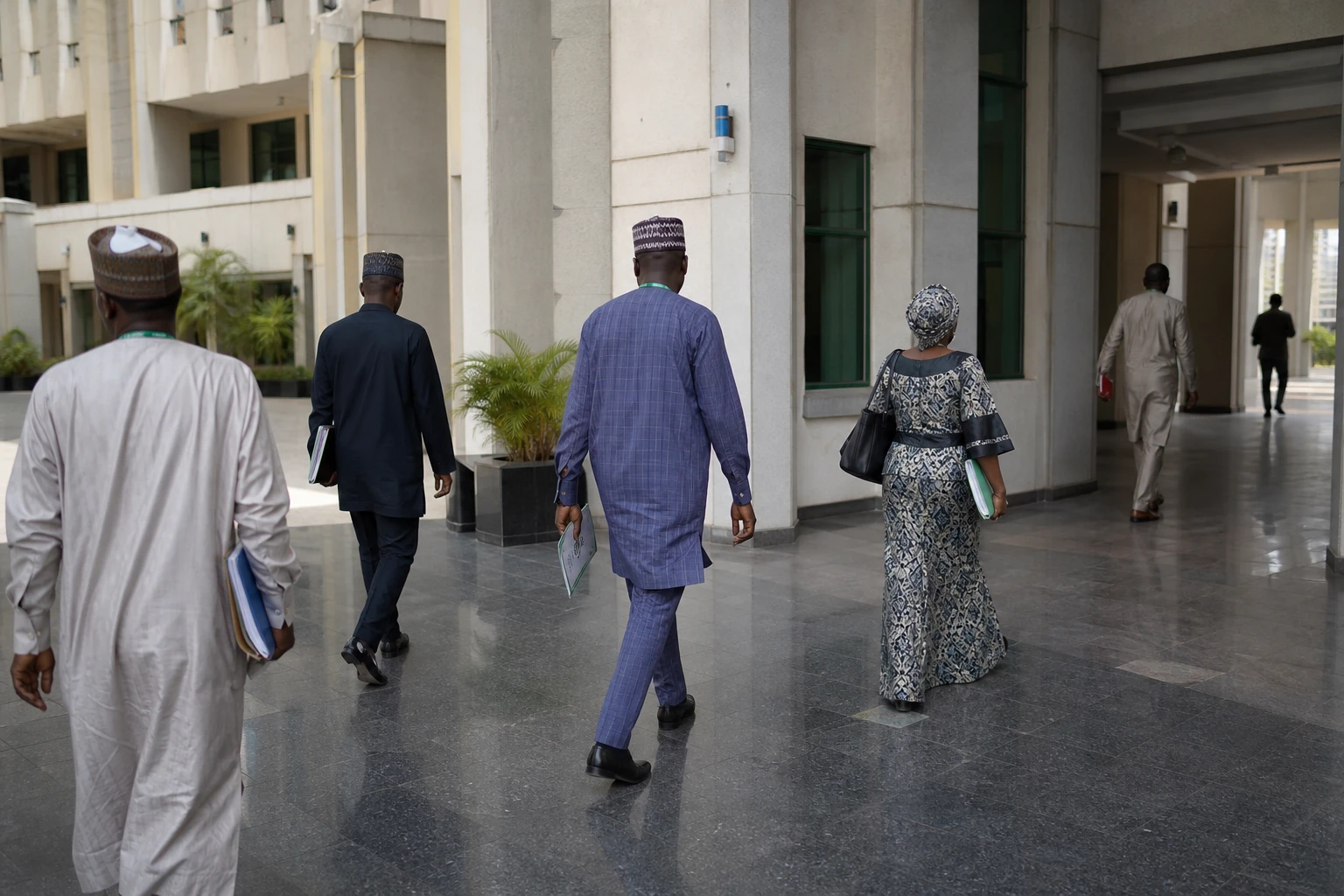
In Freetown, ECOWAS backs a much-anticipated political figure
In Freetown, the West African summit sent a clear signal: ECOWAS wants to take the initiative again as security concerns, institutional tensions and political divisions weigh on the region. By entrusting its rotating presidency to Senegalese President Bassirou Diomaye Faye, the heads of state put at the forefront a leader who has already made regional renewal a pillar of his diplomacy.
The choice comes at a delicate time. The organisation has 12 member states and is still working to advance its Vision 2050, which aims for an integrated, peaceful and prosperous region. At the same time, however, ECOWAS must contend with security crises in the Sahel, military transitions, economic difficulties and the still-sensitive question of dialogue with the Alliance of Sahel States countries, which are now outside Abuja’s traditional institutional orbit.
What the 2026 summit decided
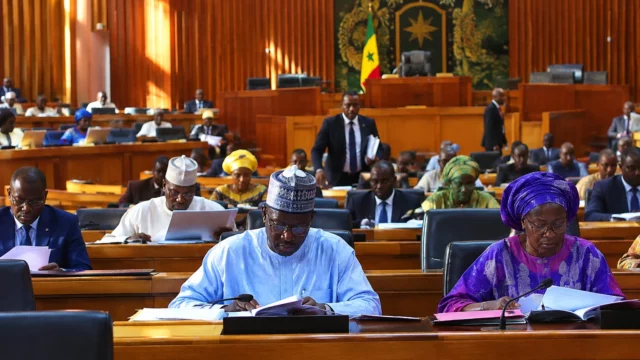
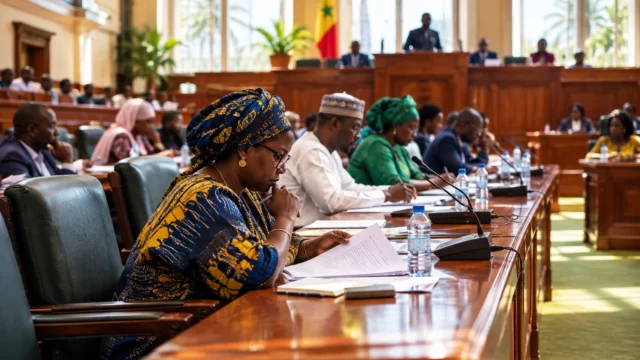
The final communiqué of the 69th summit, held on 19 July 2026 in Freetown, confirms that Bassirou Diomaye Faye has taken over as chair of the ECOWAS Authority of Heads of State and Government. The same session also appointed General Birame Diop, Senegal’s former defence minister, to head the organisation’s Commission. He is due to take office on 1 September 2026 at the Community headquarters in Abuja, Nigeria.
The summit therefore sealed a twofold transition. On the one hand, the institution’s political presidency moves to Dakar. On the other, the Community executive will also come under Senegalese leadership. This arrangement gives Senegal a responsibility that goes beyond a merely symbolic term. It puts Dakar at the heart of ECOWAS’s political, administrative and diplomatic direction in the months ahead.
Before the heads of state met, West African ministers gathered in Freetown had already discussed the Community’s financial situation, political and security issues, and the operationalisation of Community bodies such as ECOSOCC, ECOWAS’s civil society consultative council. This sequence shows that the summit was not merely a handover ceremony, but a moment of institutional recalibration.
Outgoing President Julius Maada Bio, for his part, emphasised regional solidarity and cooperation between member states. His appeal comes at a time when ECOWAS is seeking to demonstrate its practical value, as the public expects more results on security, mobility and the cost of integration.
Security, money and credibility: the term’s real challenges
Bassirou Diomaye Faye’s term begins with three stated priorities: fighting terrorism, institutional reform and financial autonomy. These are not abstract themes. They relate to very concrete and urgent concerns for Sahelian and coastal states, and for populations facing the combined effects of insecurity, high transport costs and slowing regional trade.
On security, ECOWAS is seeking to coordinate its early-warning and mediation mechanisms and, eventually, its standby force, while jihadist attacks and political violence continue to affect Burkina Faso, Mali, Niger and several border areas. The challenge is not only military. It is also institutional: without political trust and genuine coordination, regional mechanisms remain only partly theoretical.
Institutional reform addresses another problem. ECOWAS wants to modernise its operations, distribute responsibilities more effectively and make its decisions clearer. The organisation is also pursuing practical initiatives, including a more harmonised regional digital market, integration of the energy market and improvements to intra-regional trade. Its own strategic documents set out plans to expand internal trade, improve energy links and enable people and goods to move more freely.
The financial dimension is just as crucial. In Freetown, the Commission president called for a “Pact for the Future” focused on making ECOWAS less dependent on irregular contributions from states. Discussions in July 2026 also addressed the organisation’s financial health. In other words, the organisation wants to equip itself to meet its ambitions. Without its own resources, summits produce declarations. With stable funding, they can finance policies, infrastructure and monitoring mechanisms.
The timetable announced also points to an economic direction. Community officials have cited a target of 40% intra-regional trade by 2035, a single digital market by 2030 and deeper integration of the regional energy market by 2035. These goals build on ambitions already set out in Vision 2050 and in regional policies on industry, digital technology and infrastructure.
What this shift means for West Africa
For Senegal, this dual increase in responsibility is a rare diplomatic lever. For ECOWAS, it is an attempt to restore confidence in an institution tested by coups, the departure of some member states and doubts about its influence. For businesses, transport operators, cross-border traders and households, the stakes are measured differently: greater predictability, fewer barriers and regional rules that are actually enforced.
Senegal’s role will also be judged by its ability to engage partners with very different positions. Dakar remains an ECOWAS member, but also maintains dialogue with the AES capitals, whose relationship with the West African organisation remains tense. In this landscape, Bassirou Diomaye Faye’s presidency is about more than image. It becomes a test of approach: holding security, sovereignty, economic integration and political de-escalation together.
The immediate next steps will take place in Abuja and at technical meetings scheduled for the end of the year and the start of 2027. General Birame Diop’s assumption of office on 1 September 2026, followed by the budgetary and regulatory implementation of the Freetown decisions, will show whether ECOWAS wants only a change of face or a genuine change of pace.