Algeria
 Egypt
 Libya
 Morocco
 Sudan
 Tunisia
 Benin
 Burkina Faso
 Cabo Verde
 Côte d'Ivoire
 Ghana
 Guinea
 Guinea-Bissau
 Liberia
 Mali
 Mauritania
 Niger
 Nigeria
 Senegal
 Sierra Leone
 The Gambia
 Togo
 Cameroon
 Central African Republic
 Chad
 DR Congo
 Equatorial Guinea
 Gabon
 Republic of the Congo
 São Tomé and Príncipe
 Burundi
 Comoros
 Djibouti
 Ethiopia
 Kenya
 Madagascar
 Malawi
 Mauritius
 Mozambique
 Rwanda
 Seychelles
 Somalia
 South Sudan
 Tanzania
 Uganda
 Angola
 Botswana
 Eswatini
 Lesotho
 Namibia
 South Africa
 Zambia
 Zimbabwe

In Zalambessa, an Ethiopian town near the Eritrean border, troop movements carry implications that extend beyond the Tigray front. As internal fighting resumes, Addis Ababa and Asmara must prevent a local crisis from leading to a clash between states.
A tense border against the backdrop of war in Tigray
The contact between Washington and Addis Ababa comes amid an already tense period. Since September, fighting has pitted Ethiopian federal forces against Tigrayan fighters. The conflict is undermining the Pretoria Agreement, signed in 2022 to end the two-year war in the north of the country.
The Tigray region lies at the heart of a complex power struggle. Federal authorities and Tigrayan forces are vying for political and military control, while tensions with Eritrea revive memories of the 2020-2022 conflict. At that time, Eritrean troops fought alongside the Ethiopian federal army against the Tigray People’s Liberation Front (TPLF), before relations between the two countries deteriorated again.
The situation in Zalambessa is particularly sensitive. Conflict-monitoring agency ACLED reported Eritrean forces moving through the area at the beginning of the month. On 8 October, the Associated Press reported that the agency had said Eritrean soldiers had entered Ethiopia and that a drone strike had taken place near Guada. The news agency said it had been unable to verify the reports independently. Accounts of military movements by the parties should therefore be attributed with caution.
A US call, two different accounts
US Secretary of State Marco Rubio spoke by telephone with Ethiopian Prime Minister Abiy Ahmed on Wednesday 14 October, according to accounts published the following day. The date matters: contrary to some wording circulated in early reports, the call did not take place on the night of 15-16 October. Washington called for de-escalation and a resumption of dialogue, recalling the peace framework agreed between Ethiopia and Eritrea in 2018.
The US statement also emphasised respect for territorial integrity and the need to avoid cross-border incursions. The message is aimed at containing tensions between the two states, without publicly assigning responsibility for the reported troop movements in the border area.
Abiy Ahmed, for his part, described the exchange as “fruitful” in a message carried by the Ethiopian state news agency. He presented it as a discussion of bilateral, regional and multilateral issues, without explicitly mentioning Eritrea in the public summary. Eritrean Information Minister Yemane Gebre Meskel disputed this account, saying that the two governments’ reports did not match.
These differences illustrate a concrete diplomatic problem: the parties cannot even agree on how to present the exchange, while the military facts remain disputed. The US call may open a channel of communication. On its own, it is neither an agreement between Addis Ababa and Asmara nor an independent verification of events at the border.
Tigray’s civilians face immediate consequences
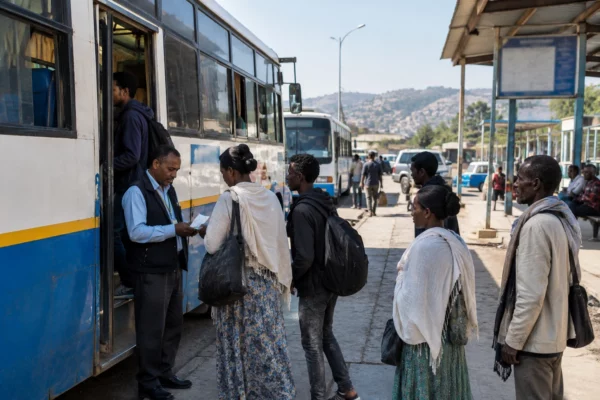
For people in northern Ethiopia, the consequences extend beyond diplomatic relations. Fighting and the movement of forces can disrupt travel, supplies and access to services. In Zalambessa, reports of movement restrictions and the deployment of military equipment should be treated as reported claims, not as independent confirmation of the situation on the ground.
Residents of border areas are directly exposed to operations and changes in control. In urban centres, infrastructure closures or restrictions can make it harder to access services and shops. In rural areas, remoteness and difficulties travelling make journeys riskier. Displaced families and people reliant on local trade may be affected by these disruptions without having any influence over military decisions.
The federal government, meanwhile, must manage several security fronts and preserve its authority. Tigrayan leaders are seeking to maintain their influence in the region. For the Eritrean government, any presence of foreign forces near its border is a matter of sovereignty. These interests are at odds, but their consequences are not borne equally by local populations.
Implications for the Horn of Africa
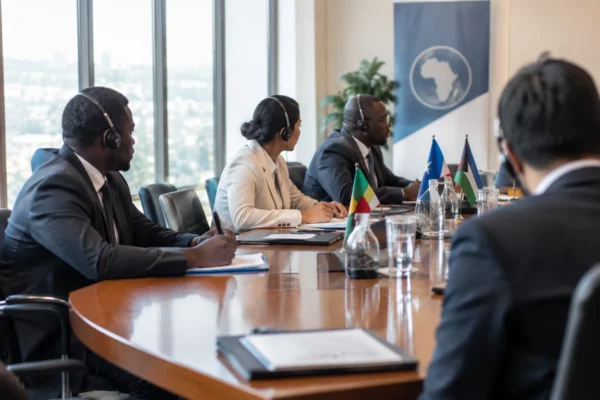
The crisis extends beyond the two capitals. Ethiopia and Eritrea are members of the Intergovernmental Authority on Development (IGAD), a regional organisation in the Horn of Africa. An escalation could complicate mediation efforts and affect a region already beset by several security and diplomatic crises. The African Union, whose headquarters are in Addis Ababa, also has a direct interest in preserving the agreements that ended previous fighting.
The 2018 precedent shows that rapprochement between the two countries is possible, but it did not resolve their disputes for good. The resumption of fighting in Tigray and mutual accusations have reopened rifts that the Pretoria Agreement did not resolve. Calls for calm will have little effect unless the parties clarify military movements and restore bilateral channels of dialogue.
What happens next will therefore depend less on public statements than on verifiable steps: any withdrawal of forces, fewer restrictions on civilians, diplomatic exchanges and implementation of peace commitments. For now, Rubio’s call signals Washington’s concern. It also highlights the central challenge: preventing Ethiopia’s internal conflict from spreading to the Eritrean border, while the governments’ accounts remain deeply divergent.
Verification sources: Associated Press account of the call, statement from Ethiopian news agency ENA, reports on movements reported in Tigray, ACLED incident monitoring, African Union response to renewed tensions.