Algeria
 Egypt
 Libya
 Morocco
 Sudan
 Tunisia
 Benin
 Burkina Faso
 Cabo Verde
 Côte d'Ivoire
 Ghana
 Guinea
 Guinea-Bissau
 Liberia
 Mali
 Mauritania
 Niger
 Nigeria
 Senegal
 Sierra Leone
 The Gambia
 Togo
 Cameroon
 Central African Republic
 Chad
 DR Congo
 Equatorial Guinea
 Gabon
 Republic of the Congo
 São Tomé and Príncipe
 Burundi
 Comoros
 Djibouti
 Ethiopia
 Kenya
 Madagascar
 Malawi
 Mauritius
 Mozambique
 Rwanda
 Seychelles
 Somalia
 South Sudan
 Tanzania
 Uganda
 Angola
 Botswana
 Eswatini
 Lesotho
 Namibia
 South Africa
 Zambia
 Zimbabwe

For Ethiopia, rivalry with Eritrea goes beyond closed diplomatic missions: it affects the security of the country’s north and a central economic issue, access to Red Sea ports. Against this backdrop, Beijing has announced a series of diplomatic visits to the region. Their significance will depend on whether neighbouring countries are willing to engage in dialogue, as mutual accusations remain heated.
A bilateral crisis at the heart of a fragile balance
The dispute is playing out on several fronts. The resumption of fighting in Tigray has weakened the November 2022 Pretoria Agreement, concluded between the Ethiopian federal government and the Tigray People’s Liberation Front with mediation by the African Union. On 23 September 2026, the AU Commission called for restraint and de-escalation.
Relations between Addis Ababa and Asmara subsequently broke down. On 1 October, Ethiopia announced the closure of its embassy in Eritrea and ordered ten Eritrean diplomats to leave the country. Asmara responded by ending diplomatic relations. Ethiopia accuses its neighbour of supporting armed groups; Eritrea rejects the allegations and portrays Ethiopia’s maritime ambitions as a threat. These accounts remain those of the governments concerned.
The question of the sea is fuelling this tension. Since Eritrea’s independence in 1993, Ethiopia has been landlocked. Djibouti has become its main maritime outlet: the Ethiopian News Agency (ENA) says more than 90% of its foreign trade passes through its ports. Seeking diversified access is a strategic issue for Addis Ababa, but it runs up against the sovereignty of coastal states and fears of escalation.
What Beijing has announced — and what remains to be seen
China’s foreign ministry set out the schedule for its regional diplomacy on 2 November. Liu Xianfa, the Chinese government’s special representative for African affairs, is due to visit Ethiopia, Djibouti and Egypt in early or mid-month. Hu Changchun, the ministry’s special envoy for the Horn of Africa, is due to visit Eritrea in early November.
Beijing describes the visits as “shuttle diplomacy”, intended to encourage talks, ease tensions and contribute to regional stability. China has not, however, publicly detailed the proposals to be put to the governments or the terms of any potential mediation. The announcement therefore confirms a diplomatic initiative, not the opening of negotiations or an agreement between the two neighbours.
The immediate context is fraught. Fighting has resumed in Tigray between federal forces and fighters linked to the TPLF, while tensions with Eritrea have raised fears of a wider conflict. The AU says the Pretoria Agreement remains the reference framework for peace in Ethiopia. But talks between the federal authorities and Tigrayan actors do not automatically resolve the dispute between Addis Ababa and Asmara.
Ports, trade and strategic presence
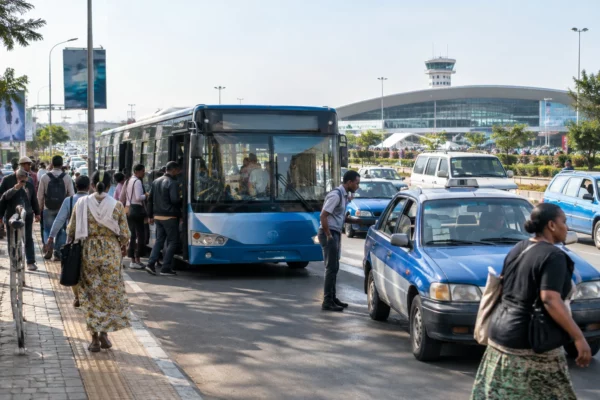
The tour involves countries that matter to the balance of power in the Red Sea and the Horn of Africa. Ethiopia is seeking to secure its trade and supplies. Djibouti derives a significant part of its regional role from the port and logistics services it provides to its large neighbour. For Ethiopian businesses and households, any disruption to the corridor could affect imports, transport costs and the availability of goods.
China also has direct interests in this geography. It has a military base in Djibouti and economic ties with several countries in the region. The Red Sea links Asia’s trade routes with those of Europe, so the stability of maritime passages matters to Chinese trade. By stepping up its diplomatic engagement, Beijing can defend its interests while seeking to present itself as an interlocutor able to engage with several capitals.
This dual dimension calls for a distinction between the stated aim of mediation and the interests that accompany it. An economic or military presence does not guarantee that an envoy will be accepted as a mediator by all parties. Trust, access to decision-makers and the governments’ political will will be decisive. Ultimately, the Ethiopian and Eritrean authorities remain responsible for their choices.
One mediation effort among many in a region under strain
The regional framework is itself weakened. Ethiopia is a member of the Intergovernmental Authority on Development (IGAD), the East African organisation charged, among other things, with cooperation and crisis prevention. Eritrea withdrew in December 2025, limiting the scope for dialogue within the organisation. The African Union remains a central actor, not least because of its role in the Pretoria Agreement.
The Chinese tour therefore replaces neither African mechanisms nor direct talks between the countries concerned. It is also part of a broader sequence: the same Chinese spokesperson announced separate visits to the Middle East, including Iran, Oman and Saudi Arabia. Beijing is thus expanding its diplomatic channels in areas where trade routes and security rivalries intersect.
For now, the points to watch are concrete: whether the visits actually take place, what meetings are secured in Addis Ababa and Asmara, and whether a channel of communication between the two capitals emerges. A lasting de-escalation would also require addressing the fighting in Tigray, cross-border accusations and the debate over Ethiopia’s access to the sea separately, but without treating them in isolation. Beijing’s announcements open a diplomatic window; on their own, they are not enough to turn it into a political settlement.