Algeria
 Egypt
 Libya
 Morocco
 Sudan
 Tunisia
 Benin
 Burkina Faso
 Cabo Verde
 Côte d'Ivoire
 Ghana
 Guinea
 Guinea-Bissau
 Liberia
 Mali
 Mauritania
 Niger
 Nigeria
 Senegal
 Sierra Leone
 The Gambia
 Togo
 Cameroon
 Central African Republic
 Chad
 DR Congo
 Equatorial Guinea
 Gabon
 Republic of the Congo
 São Tomé and Príncipe
 Burundi
 Comoros
 Djibouti
 Eritrea
 Kenya
 Madagascar
 Malawi
 Mauritius
 Mozambique
 Rwanda
 Seychelles
 Somalia
 South Sudan
 Tanzania
 Uganda
 Angola
 Botswana
 Eswatini
 Lesotho
 Namibia
 South Africa
 Zambia
 Zimbabwe
In Ethiopia, calls for peace come as weapons have already taken over again in the north of the country. In Addis Ababa, Prime Minister Abiy Ahmed is speaking of reconciliation. At the same time, his government is stepping up its military rhetoric amid fighting in Tigray and tensions with several neighbouring countries.
A 2022 peace already under strain
The latest cycle of violence broke out on 22 September 2026, before spreading to several areas of northern Ethiopia. Clashes are pitting federal forces against fighters linked to the Tigray People’s Liberation Front, the TPLF, the region’s former ruling party.
Fighting has been reported in Tigray, as well as in the neighbouring regions of Amhara and Afar. This geographical spread has fuelled fears of a return to a wider war, following the conflict that ravaged northern Ethiopia between November 2020 and November 2022.
The previous war ended with the Pretoria agreement, signed on 2 November 2022 under African mediation. The text provided, among other things, for a cessation of hostilities, the gradual disarmament of Tigrayan fighters and the restoration of federal authority. However, several commitments remain unfulfilled, particularly over disputed territories and the return of displaced people.
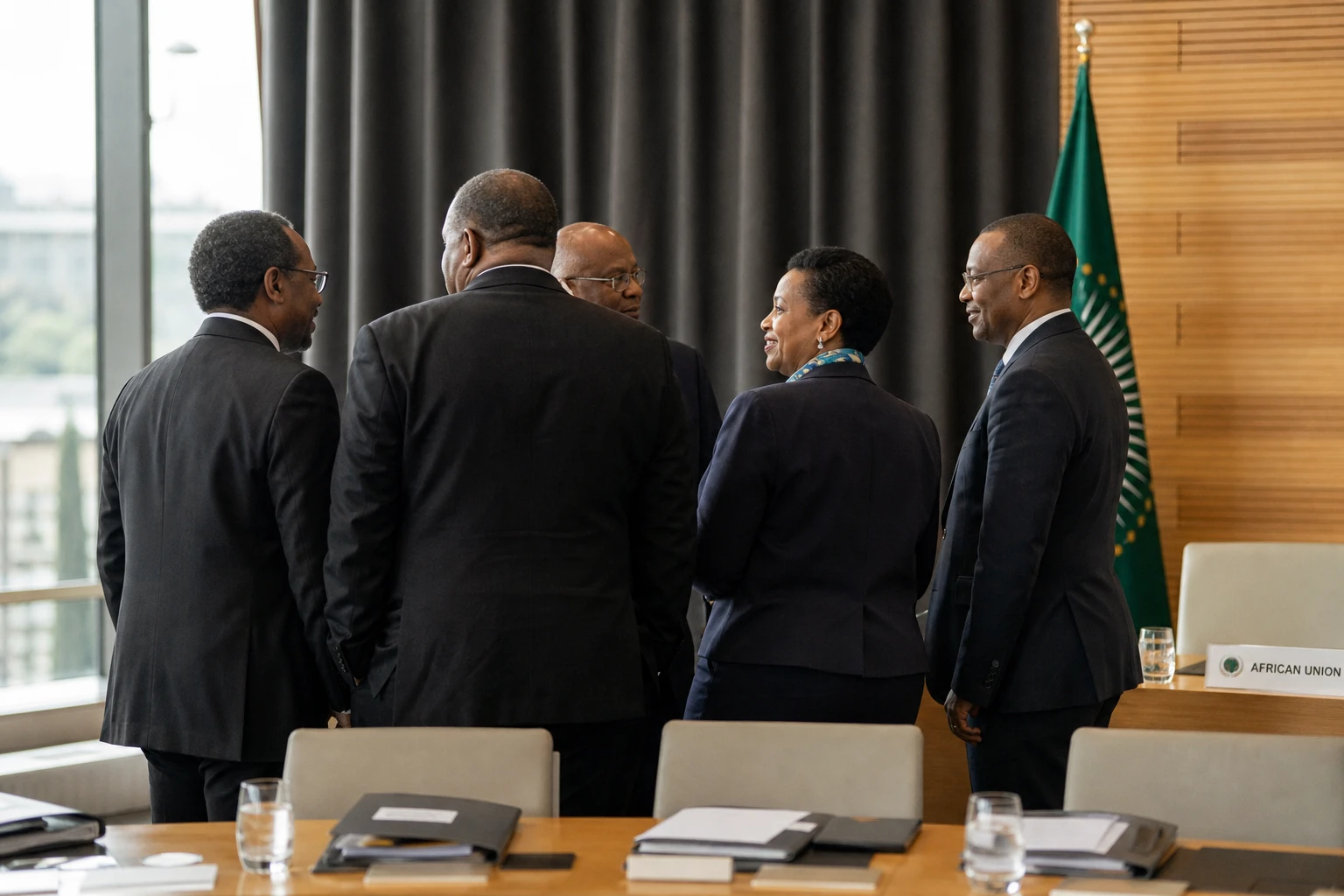
The African Union has called for restraint and immediate de-escalation. The continental organisation believes the renewed clashes threaten the gains made under the Pretoria agreement, particularly after Tigrayan forces seized several civilian airports.
Abiy Ahmed’s contradictory message
In his first public address after being reappointed as head of government, Abiy Ahmed called on fighters to abandon armed struggle. He urged them to join the political process, put forward their ideas by peaceful means and take part in national reconciliation.
The Prime Minister also said the Ethiopian army should have an air force capable of ensuring the country’s superiority in the region. He promised a modern, innovative defence, ready to respond to threats. These remarks underline the prominence of security in the government’s strategy.
This dual declaration creates a contrast that is hard to ignore. On the one hand, the government is calling for dialogue. On the other, it is emphasising military modernisation and the ability to conduct pre-emptive operations. For people in the north, then, the stakes go beyond rhetoric. They concern the possibility of avoiding another large-scale military campaign.
The federal government accuses its adversaries of seeking to destabilise the state. The Tigrayan authorities, for their part, say they responded to attacks by federal forces. Both sides thus portray events as a defensive response. Without independent access to several combat zones, these accounts should be reported with caution.
Immediate consequences for residents
The renewed fighting is already disrupting travel and trade. After Tigrayan forces seized the airports in Mekelle, Axum and Shire, air links to several cities in Tigray were suspended. The decision is complicating the arrival of travellers, medical staff and humanitarian aid.
In Mekelle, the capital of Tigray, residents have reported fears and departures for other regions. The consequences vary from one area to another. In urban centres, the closure of transport and services is slowing economic activity. In rural areas, the proximity of the front can disrupt markets, harvests and access to healthcare.
The Tigrayan population remains particularly exposed. It is only just emerging from a conflict that destroyed infrastructure, disrupted public services and caused extensive displacement. Estimates of the death toll from the 2020-2022 war vary widely. The figure of 600,000 deaths, cited in public debate, should therefore remain attributed until a complete, independent count has been established.
Neighbouring regions are also at risk. Amhara already has a strong presence of armed groups opposed to the federal government. Afar, which lies on the routes linking Ethiopia to Djibouti and the Red Sea, occupies a strategic position for transport and trade. Any spread of the conflict could therefore affect economic corridors beyond the areas of fighting themselves.
The regional factor complicates de-escalation
The Ethiopian crisis is unfolding in a tense regional environment. Ethiopia accuses Eritrea, Sudan and Egypt of supporting its adversaries, directly or indirectly. These countries have rejected the accusations or disputed their validity. At this stage, no publicly available evidence can definitively establish the extent of any external support.
Relations between Addis Ababa and Asmara have deteriorated sharply since the end of their military cooperation against the TPLF. The question of Ethiopian access to the Red Sea adds a strategic dimension to this rivalry. Landlocked Ethiopia is seeking to secure access to the sea. Its coastal neighbours, however, fear that this ambition could turn into political or military pressure.
The crisis is also unfolding within the area covered by the Intergovernmental Authority on Development, IGAD, which brings together several countries in the Horn of Africa. The organisation is operating in a context already marked by war in Sudan, tensions between Ethiopia and Eritrea, and persistent fragility in Somalia.
Conflict observers stress that the renewed fighting does not depend solely on the standoff between the federal government and the TPLF. ACLED’s analysis highlights the proliferation of fronts, the activity of armed groups in Oromia and the risk of greater coordination among several forces hostile to Addis Ababa.
A test for the Pretoria agreement and the African Union
The immediate priority remains protecting civilians and reopening humanitarian access routes. This requires a verifiable halt to the fighting, the securing of airports and the resumption of monitoring mechanisms accepted by the parties.
The federal government will also need to clarify the role of political dialogue in its response. A strategy based mainly on military superiority could push back its adversaries without resolving the issues that fuelled the crisis: power-sharing, the status of disputed territories, disarmament and the return of displaced people.
The TPLF, for its part, will need to respond to accusations that it has resumed hostilities and clarify its political objectives. Seizing strategic positions or civilian infrastructure cannot replace a negotiation process. On the contrary, it risks increasing the region’s isolation and narrowing the scope for mediation.
For the African Union, based in Addis Ababa, this latest escalation is a major test. The Pretoria agreement was presented as proof of Africa’s ability to contribute to resolving a complex conflict. Its survival now depends on the willingness of Ethiopian actors to return to the negotiating table before the fighting turns into a regional war.
The next signals to watch will be how long flights to Tigray remain suspended, how fighting develops in Amhara and Afar, whether foreign forces are present, and whether the monitoring mechanisms for the 2022 agreement resume.