Algeria
 Egypt
 Libya
 Morocco
 Sudan
 Tunisia
 Benin
 Burkina Faso
 Cabo Verde
 Côte d'Ivoire
 Ghana
 Guinea
 Guinea-Bissau
 Liberia
 Mali
 Mauritania
 Niger
 Nigeria
 Senegal
 Sierra Leone
 The Gambia
 Togo
 Cameroon
 Central African Republic
 Chad
 DR Congo
 Equatorial Guinea
 Gabon
 Republic of the Congo
 São Tomé and Príncipe
 Burundi
 Comoros
 Djibouti
 Eritrea
 Kenya
 Madagascar
 Malawi
 Mauritius
 Mozambique
 Rwanda
 Seychelles
 Somalia
 South Sudan
 Tanzania
 Uganda
 Angola
 Botswana
 Eswatini
 Lesotho
 Namibia
 South Africa
 Zambia
 Zimbabwe
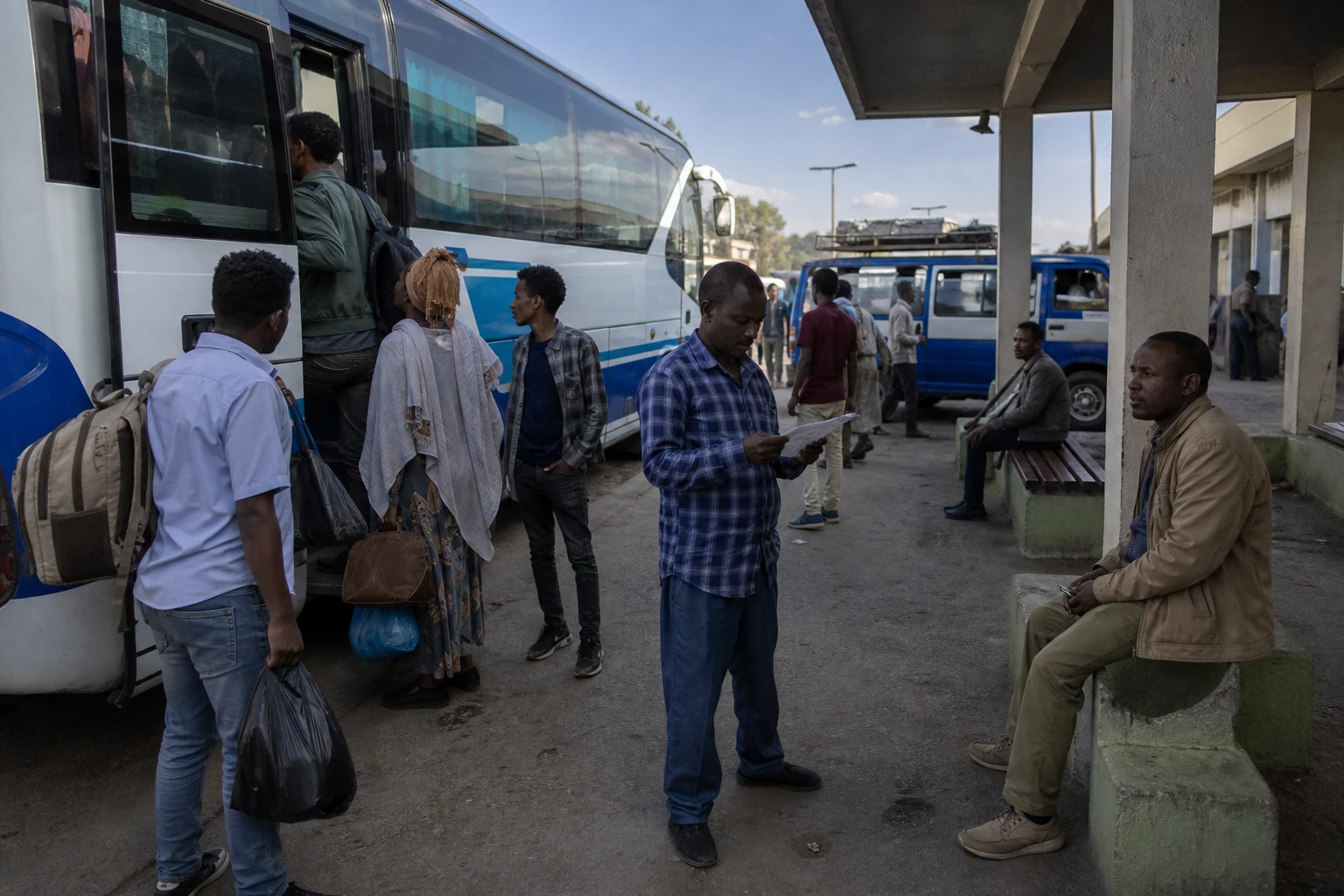
Peace signed in 2022 is showing new cracks in northern Ethiopia. Renewed hostilities in and around Tigray have revived a central question for people in Mekele, Afar and Amhara: how can a former war front be prevented from becoming a regional conflict again ?
In Addis Ababa, the tensions come as the country continues to face several armed flashpoints. The federal government is seeking to preserve its authority in a system where regions have extensive political and security powers. At the same time, rivalries between federal forces, regional authorities and armed groups are making peace agreements harder to implement.
Religious appeal amid renewed fighting
At the end of the general audience on Wednesday, 30 September 2026, Pope Leo XIV expressed his « deep concern » about the situation in Tigray and the neighbouring regions of Afar and Amhara. He called on all sides to lay down their arms and resume dialogue.
The pontiff said armed conflicts did not resolve disputes. He also asked the international community to help deliver humanitarian aid quickly. His remarks come as several roads in the north of the country are reportedly becoming difficult to access and communications have been disrupted in some areas.
The Vatican has not given a death toll from the recent clashes. In the absence of independent, consolidated data, no figure for those killed or injured can be confirmed. Available information remains fragmentary, particularly in rural areas along the administrative borders of Tigray, Afar and Amhara.
The Vatican’s statement on Tigray, Afar and Amhara focuses above all on the urgent need to de-escalate. It assigns blame to no one and does not repeat allegations made by the various sides.
The fragile legacy of the Pretoria agreement
The latest warning brings to mind the toll of the war fought between 2020 and 2022. The conflict was primarily between Ethiopia’s federal government and its allies and the Tigray People’s Liberation Front, often referred to by its English acronym, TPLF. The Eritrean army and forces from Amhara were also involved at various points.
Hostilities ended with the agreement signed in Pretoria, South Africa, on 2 November 2022. Negotiated under the auspices of the African Union, the text provided for a permanent cessation of hostilities, the disarmament of Tigrayan forces and the gradual return of federal authority to the region.
The end of the fighting did not, however, resolve every issue. The status of disputed territories, the return of displaced people, the presence of foreign forces and the reintegration of combatants remain sensitive matters. In several localities, residents are still waiting for public services to be rebuilt and their land to be returned.
The war’s toll remains difficult to establish. Olusegun Obasanjo, the African Union’s mediator for the conflict, said in 2023 that the number of victims could reach 600 000. This estimate includes deaths caused by fighting, as well as those resulting indirectly from displacement, hunger and the collapse of health services. It is not an exhaustive count.
Conflict-monitoring research notes that figures vary according to the methods used and the areas covered. Such caution is essential as access restrictions continue to hamper field investigations.
Tensions extend beyond Tigray’s borders
The current situation is not limited to a stand-off between Addis Ababa and Mekele. Afar occupies a strategic position between Tigray, Djibouti and the Red Sea. The region is home to important trade and logistics routes for Ethiopia, a landlocked country that relies heavily on corridors connecting it to neighbouring ports.
Amhara, meanwhile, remains affected by clashes between federal forces and Amhara armed groups, particularly fighters grouped under the term Fano. The tensions concern territorial control, local security and the role of regional authorities in Ethiopia’s federation.
The consequences for people vary by area. In cities, disruption affects transport, markets and public administration. In rural areas, it can prevent access to crops, healthcare and schools. Displaced people remain particularly vulnerable, as many still depend on humanitarian aid and family networks weakened by war.
Businesses are also feeling the effects of the instability. Formal companies may suspend operations when roads become impassable. Small traders and transport operators, who play a major role in the local economy, see their incomes fall as soon as a route is closed or military checkpoints become more restrictive.
A test for East Africa and the African Union
Renewed tensions are testing the African Union’s ability to preserve the Pretoria agreement. The continental organisation, headquartered in Addis Ababa, played a direct role in mediating in 2022. It is therefore expected to monitor the ceasefire, secure humanitarian access and prevent the fighting from spreading.
The issue also concerns the Intergovernmental Authority on Development, or IGAD, a regional organisation bringing together several countries in the Horn of Africa. Stability in northern Ethiopia could affect Djibouti, Eritrea, Sudan and South Sudan, all of which are already facing their own security and humanitarian crises.
The next challenge will be to establish the true scale of the clashes and whether the authorities can keep humanitarian routes open. Preserving the dialogue mechanisms set out in the Pretoria agreement will also be a priority. Without progress on disputed territories, the return of displaced people and disarmament, any local incident risks taking on national significance.
Pope Leo XIV’s appeal is not a mediation effort. It nevertheless comes at a time when African diplomacy will need to take the initiative again. For Ethiopia, the issue goes beyond simply ending the shooting: it concerns rebuilding trust between regions, protecting civilians and the possibility of a functioning federation after several years of crisis.