Algeria
 Egypt
 Libya
 Morocco
 Sudan
 Tunisia
 Benin
 Burkina Faso
 Cabo Verde
 Côte d'Ivoire
 Ghana
 Guinea
 Guinea-Bissau
 Liberia
 Mali
 Mauritania
 Niger
 Nigeria
 Senegal
 Sierra Leone
 The Gambia
 Togo
 Cameroon
 Central African Republic
 Chad
 DR Congo
 Equatorial Guinea
 Gabon
 Republic of the Congo
 São Tomé and Príncipe
 Burundi
 Comoros
 Djibouti
 Eritrea
 Kenya
 Madagascar
 Malawi
 Mauritius
 Mozambique
 Rwanda
 Seychelles
 Somalia
 South Sudan
 Tanzania
 Uganda
 Angola
 Botswana
 Eswatini
 Lesotho
 Namibia
 South Africa
 Zambia
 Zimbabwe
In south-eastern Ethiopia, protecting a national park is about far more than the rare animals that live there. The Bale Mountains are also a water tower on which communities in Ethiopia and neighbouring countries depend. Preserving these highlands therefore means protecting unique species, forests and resources that are essential to local people.
Habitats spanning nearly 2,900 metres
Bale Mountains National Park is in the Oromia region, about 400 kilometres by road from Addis Ababa. It covers 215,000 hectares in the Bale-Arsi massif. In 2023, UNESCO added it to the World Heritage List, recognising both the distinctiveness of its landscapes and the importance of its biodiversity. Ethiopia’s public news agency ENA also reported the listing, which was decided at a session of the World Heritage Committee in Riyadh.
The landscape changes markedly with altitude. In the north, the Sanetti Plateau stretches above 3,500 metres, with Afro-alpine moorlands, wetlands and small lakes. Giant lobelias rise above this low-growing vegetation. Tullu Dimtu reaches 4,377 metres, making it Ethiopia’s second-highest peak.
Further south, the slopes descend towards Harenna Forest, where bamboo groves, montane forests and cloud-covered areas alternate. This rapid transition from high moorland to forest habitats explains much of the park’s biological richness. It connects habitats that are often separated elsewhere.
According to UNESCO, inventories record 1,660 species of flowering plants, 79 mammal species and 363 bird species. Of the plants, 31 species are unique to the Bale Mountains. The organisation also notes that more than 80% of the species associated with the area’s Afro-alpine habitat are endemic. These figures give a sense of the living heritage concentrated in a relatively small area.
A refuge for iconic species
The Bale Mountains are home to the main remaining population of the Ethiopian wolf, a canid found only in the Ethiopian highlands. The mountain nyala, an endemic antelope, also has a major refuge there. Harenna Forest, meanwhile, is home to the Bale monkey, whose range is limited to a few areas of the highlands.
This wildlife is more than a tourist attraction. It is evidence of how ecosystems function, with high-altitude grasslands, rodents, forests and wetlands closely interconnected. The park also protects medicinal plants and wild coffee varieties, resources of interest to researchers and local communities.
The international recognition in 2023 is part of a broader national effort. Ethiopia has established measures to protect and manage the park, which is administered by the Ethiopian Wildlife Conservation Authority. UNESCO listing raises the site’s profile, but in itself it does not guarantee the preservation of habitats or the equitable distribution of benefits from tourism.
Conservation also depends on everyday practices
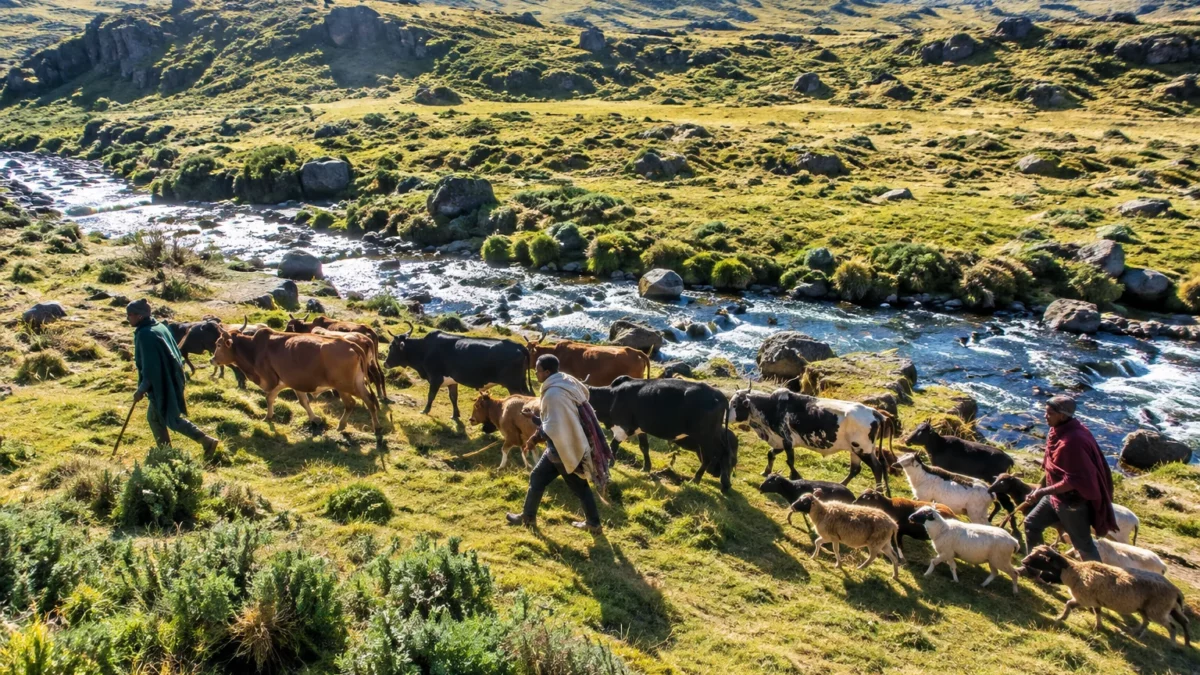
The pressures are tangible: the expansion of farmland and settlements, livestock grazing, the harvesting of forest resources and disruption caused by the road that crosses sensitive areas. Afro-alpine grasslands are also used as pasture for livestock. For families living nearby, they are therefore a resource for their livelihoods, not land without human use.
The Ethiopian wolf faces another risk. Diseases such as rabies and canine distemper can pass from domestic dogs to wild canids. The Ethiopian Wolf Conservation Programme describes these transmissions, habitat loss and epidemics as significant threats. Episodes of mortality followed by recovery have been observed in the Bale Mountains, demonstrating both the resilience of populations and their vulnerability.
The response cannot therefore rely solely on bans. UNESCO recommends management involving regional authorities, districts and representatives of neighbouring communities. Local forums and participatory forest management co-operatives are intended to help balance species protection with sustainable access to resources. Success will depend in particular on the role residents have in decision-making and on how economic benefits are shared.
An East African issue, reaching into the lowlands
The issues extend beyond the park’s administrative boundaries. Several major rivers rise in the massif. Their waters support activities and populations in Ethiopia, as well as in neighbouring territories, notably Somalia and Kenya. UNESCO estimates that the ecosystems of the park and its surroundings help supply water to millions of people.
This dimension links conservation in the Bale Mountains to the regional concerns of IGAD, the Intergovernmental Authority on Development, which brings together countries in the Horn of Africa and East Africa to address shared challenges, including natural resource management. It is also a reminder that changes to forests or high-altitude wetlands can have consequences far from the peaks, affecting farming practices and access to water downstream.
For Ethiopia, the challenge now is to match the site’s global recognition with management that protects habitats without marginalising neighbouring communities. Monitoring species, preventing diseases transmitted by dogs and managing grazing will be critical. In this region of East Africa, the health of the Bale Mountains will be measured as much by the state of their wildlife as by the ability of local people to continue living there and depending on the area sustainably.
For more information, see the UNESCO listing for Bale Mountains National Park, the Ethiopian news agency ENA’s report on the 2023 listing and information from the Ethiopian Wolf Conservation Programme on threats facing the species.