
 Algeria
 Libya
 Morocco
 Sudan
 Tunisia
 Benin
 Burkina Faso
 Cabo Verde
 Côte d'Ivoire
 Ghana
 Guinea
 Guinea-Bissau
 Liberia
 Mali
 Mauritania
 Niger
 Nigeria
 Senegal
 Sierra Leone
 The Gambia
 Togo
 Cameroon
 Central African Republic
 Chad
 DR Congo
 Equatorial Guinea
 Gabon
 Republic of the Congo
 São Tomé and Príncipe
 Burundi
 Comoros
 Djibouti
 Eritrea
 Ethiopia
 Kenya
 Madagascar
 Malawi
 Mauritius
 Mozambique
 Rwanda
 Seychelles
 Somalia
 South Sudan
 Tanzania
 Uganda
 Angola
 Botswana
 Eswatini
 Lesotho
 Namibia
 South Africa
 Zambia
 Zimbabwe
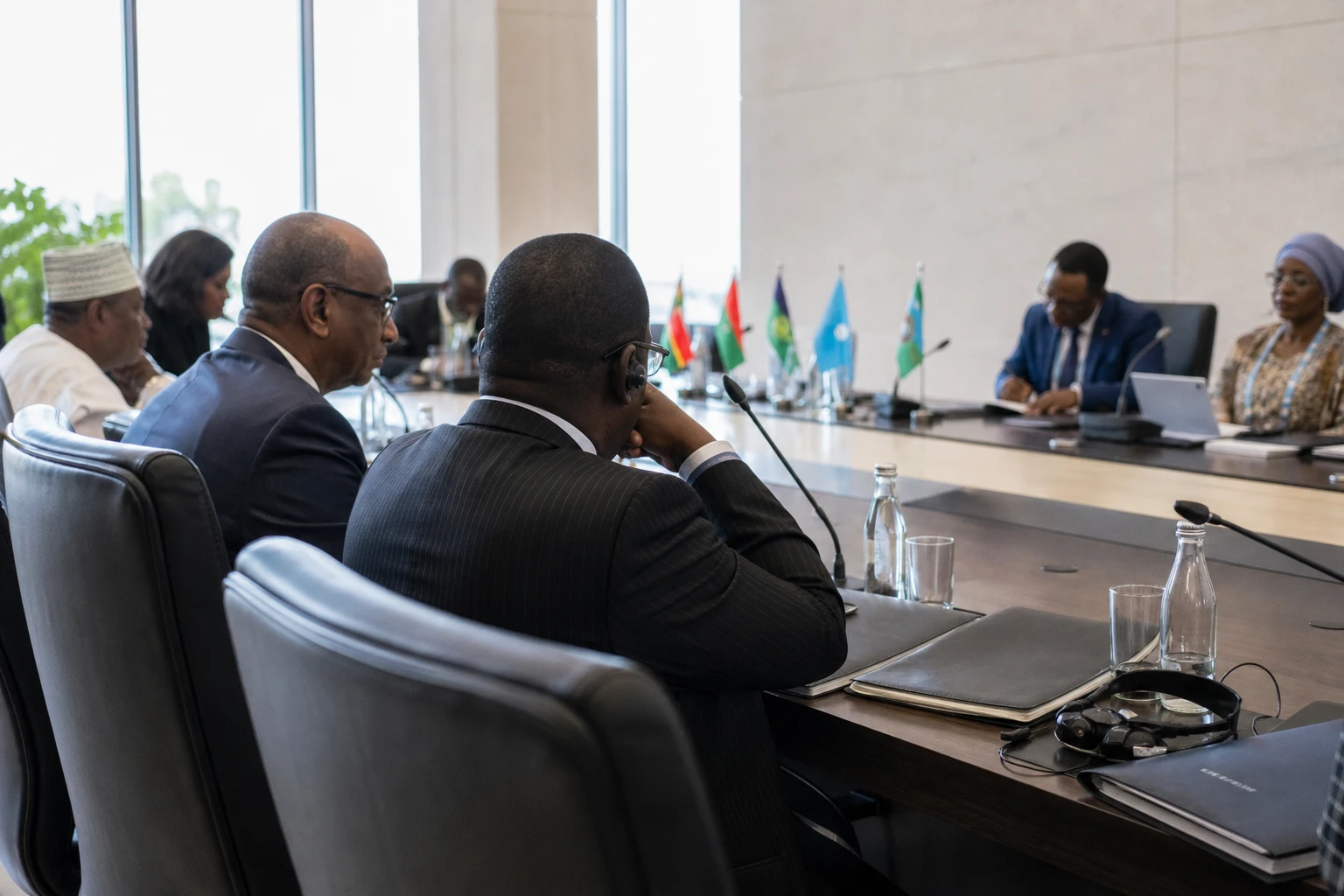
In Mekelle, residents saw the uniforms return before they saw peace return. Within days, the Tigray capital had once again become the centre of a crisis extending beyond Ethiopia’s borders and reigniting rivalries in the Horn of Africa.
A four-year peace that did not resolve disagreements
Fighting resumed in northern Ethiopia on 23 September 2026. It pits federal forces against fighters linked to the Tigray People’s Liberation Front, the TPLF, the former dominant party in the ruling coalition until 2018.
The conflict comes nearly four years after the Pretoria Agreement, signed on 2 November 2022. The agreement ended the Tigray war, which began in November 2020. It provided for a cessation of hostilities, the gradual disarmament of fighters and the return of federal authority to the region.
But several issues remain unresolved. The status of disputed territories, the return of displaced people, the reorganisation of the regional administration and accountability for crimes committed during the war have continued to fuel mistrust.
The renewed fighting is also taking place against a broader political backdrop. Prime Minister Abiy Ahmed’s government is seeking to strengthen Addis Ababa’s authority. The TPLF, for its part, refuses to lose all influence over the governance of Tigray. Other armed groups, particularly in Amhara and Oromia, are also challenging federal power.
Seizure of Mekelle shifts the balance of power, not the outcome
Ethiopian federal forces entered Mekelle on Saturday 3 October 2026, after retaking the city’s airport. The following day, patrols were reported in several neighbourhoods. Tigrayan fighters withdrew from the regional capital, according to several corroborating sources.
The African Press Agency APA reports that federal forces retook control of Mekelle after fighting in several parts of Tigray. Clashes were also reported in the neighbouring regions of Afar and Amhara.
The advance gives the government an immediate military advantage. It does not, however, mean that the TPLF has been neutralised. Tigrayan forces retain local networks, knowledge of the terrain and the ability to retreat into mountainous areas.
The humanitarian situation remains difficult to assess. Communications were disrupted during the fighting and several essential services were interrupted. Casualty figures circulating online have not been confirmed by a sufficiently reliable independent source. They should therefore be treated with caution.
For residents, the issues are first and foremost practical. The restoration of telecommunications, access to banks, the functioning of hospitals and the movement of goods will matter more than the military control claimed by either side.
From the Tigray crisis to regional rivalry
The risk of the conflict spreading stems first from geography. Tigray shares a border with Eritrea and lies close to Sudan, which has been engulfed in war since April 2023. Any additional military presence in the area could alter the balance between Addis Ababa, Asmara and Khartoum.
Ethiopian authorities accuse Eritrea, Egypt and some Sudanese forces of supporting their adversaries. These countries dispute the accusations or deny any direct involvement. At this stage, public statements are not enough to establish military coordination between these actors.
Tensions with Eritrea, however, have deep roots. The two countries were allies during the Tigray war, before drawing closer and then drifting apart again. The question of Ethiopia’s access to the Red Sea has since further strained relations.
Ethiopia has been landlocked since Eritrea’s independence in 1993. It depends mainly on the ports of Djibouti for its imports and exports. Addis Ababa wants to diversify its access to the sea. Asmara, for its part, fears any pressure on its sovereignty and ports.
Rivalry with Egypt adds another dimension. For several years, Cairo has opposed the management of the Grand Ethiopian Renaissance Dam, built on the Blue Nile. Egypt fears a reduction in its water resources. Ethiopia defends its right to energy development.
These disputes do not automatically trigger a regional war. They do, however, create an environment in which every military move is interpreted through the lens of several simultaneous crises: Tigray, Sudan, the Red Sea and the sharing of Nile waters.
The expected role of the African Union and IGAD
The African Union has significant political leverage. The Pretoria Agreement was negotiated under the auspices of the continental organisation. Its credibility now depends on its ability to keep a channel open between Addis Ababa and Tigrayan representatives.
The African Union Commission has called for tensions between Ethiopia, Eritrea and Egypt to be defused. But effective mediation will have to go beyond diplomatic statements alone. It will need to address territorial issues, disarmament and the security of the population.
The Intergovernmental Authority on Development, IGAD, is also involved. The organisation brings together several countries in the Horn of Africa and is already seeking to contribute to efforts to find a solution to the conflict in Sudan. It can provide a regional framework, but its effectiveness will depend on cooperation among member states.
Ethiopia’s population is paying the most direct price for this renewed confrontation. In Tigray, displaced families continue to face destroyed infrastructure and uncertainty. In neighbouring regions, farmers and traders risk being hit by movement restrictions and rising prices.
In Addis Ababa, the government will also have to weigh the political cost of a prolonged military campaign. A quick victory could strengthen its authority. A lasting occupation, by contrast, could fuel a new resistance.
A narrow diplomatic window
The mini-summit held in Egypt on Sunday 4 October shows that Ethiopia’s neighbours fear the crisis could spread. It also reveals their desire to influence the future of the Horn, even as their interests diverge sharply.
The immediate priority is to prevent new fronts from opening and preserve humanitarian access routes. The implementation of the Pretoria Agreement must then be revived with stronger guarantees and independent monitoring.
The recapture of Mekelle is therefore a military turning point, but not a political solution. The coming weeks will show how serious three risks are: Eritrean intervention, greater involvement by actors linked to the Sudan conflict, and the spread of fighting to Amhara or Afar.
For the African Union, the stakes go beyond Tigray alone. It must show that an African peace agreement can survive the first serious crisis to test it. For Ethiopia, the main challenge is to prevent the war halted in 2022 from becoming a regional war once again.



